


When people talk about Extreme Championship Wrestling, the conversation usually goes straight to violence, weapons, and chaos. And yes, ECW absolutely built its reputation on all of that. But that’s only half the story.
ECW was also a promotion built on authenticity. It thrived on characters who felt real, crowds that were deeply invested, and a mix of styles that didn’t exist anywhere else in American wrestling at the time. Hardcore wrestling, lucha libre, gritty brawlers, cult personalities, and emotional storytelling all coexisted under one roof in a way that felt raw and unpredictable.
That same spirit raises an interesting question today. Which wrestlers from today’s wrestling landscape would have thrived in the original ECW? These nine names, three each from AEW, WWE, and the independent scene, stand out as natural fits.
AEW: The Emotional Core & Chaos of ECW
Mark Briscoe
Mark Briscoe is the definition of unfiltered authenticity. His promos and in-ring style feel less like a performance and more like someone simply being himself.
He’d fit perfectly in the mold of the blue-collar ECW brawlers who made the promotion feel grounded in reality. The kind of guy who could cut a chaotic promo in front of a rowdy crowd and have every word land because it feels real.
Plus, Mark Briscoe has the style that could’ve fit well with anyone else. If need be, he can get hardcore. He can have a great straight-up wrestling match, and he can even bring a little humor into the ring.
Had ECW survived, it’s easy to imagine Mark and his late brother, Jay Briscoe, becoming fixtures of the promotion.
Eddie Kingston
If there is a modern wrestler who feels spiritually connected to ECW, it’s Eddie Kingston. ECW wasn’t afraid of emotion. It embraced it. And Kingston wrestles and speaks like every moment matters on a deeply personal level.
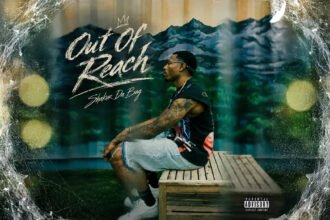

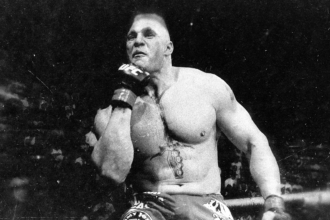
Eddie Kingston is the definition of gritty and raw. That raw emotional intensity would’ve made him a centerpiece of ECW storytelling, leaving the crowd hanging on every word. Not only would he have been a fan favorite, Eddie Kingston in ECW would have built a legendary following behind him.
Darby Allin
Darby Allin represents the evolution of ECW’s risk-taking mindset. Where ECW pushed boundaries with what was possible in the ring, Allin pushes what a body can physically endure in the modern era.
ECW had a guy like Spike Dudley, who was undersized, but used that to his advantage. With Darby, he’d be in a similar situation, but amped up 200%. He’s someone who accepts consequences as part of the performance. That mindset would’ve made him a highlight reel machine in ECW, similar in spirit to the extreme legacy of performers like Sabu.
WWE: Heat, Style, and Identity
Rey Fenix
ECW helped showcase lucha libre to American audiences, featuring names like Rey Mysterio, Psicosis, and Super Crazy in some of its most exciting matches.
Rey Fenix fits directly into that lineage, but modernized. His speed, unpredictability, and willingness to take risks would have made him a standout attraction in ECW’s chaotic environment.
Fenix has the ability to bring a crowd to its feet. Imagine what he could’ve pulled off in an ECW ring against some of his predecessors.
Dominik Mysterio
ECW crowds were not just crowds, they were a fixture of each show. Heat was weaponized in the land of Extreme. Dominik Mysterio would have been a natural target for that environment.
As the son of Rey Mysterio, he carries legacy automatically. But his character work, especially as a smug, disrespectful heel, would have made him a lightning rod in ECW. Every promo, every entrance, every mistake would’ve been amplified by a crowd looking to tear him apart.
In ECW, Dominik Mysterio would’ve had that crowd in the palm of his hand, giving fans every reason to keep coming back to see him get humbled.
Shiloh Hill
This may feel like a wild-card pick. But ECW was also a playground for unconventional, borderline unsettling characters who felt unpredictable in ways that went beyond their wrestling style.
With the right creative direction, something similar to what Paul Heyman often crafted, Shiloh Hill’s darker, more eccentric presentation could’ve been shaped into something uniquely ECW.
While Shiloh is still developing as a talent, he has the edge. ECW often took rough, unconventional ideas and shaped them into something memorable.
Hill’s persona fits that experimental spirit: a character that feels slightly off-center, a little uncomfortable, and therefore compelling. He also has a look that screams ECW. Big guy, jeans, cutoff flannel, missing tooth, hardcore.
The Indies: ECW’s Spiritual Successors
Nick Gage
Nick Gage is as close as modern wrestling gets to ECW’s underground identity. The connection between wrestler and audience, the violent reputation, and the cult-like following all mirror ECW’s most intense era.
Few wrestlers on the independent scene inspire the kind of devotion Nick Gage does. His following, style, and intensity could’ve made him one of ECW’s biggest stars.
In theory, Nick Gage would’ve been right up there with the likes of Sandman, Sabu, RVD and all the other ECW legends we know and love. MDK plus ECW equals money.
Jun Kasai
ECW occasionally brought in international talent, but few would have pushed its boundaries like Jun Kasai. Known for his extreme, unpredictable style in Japan, Kasai embodies the idea of wrestling as controlled chaos taken to its limit.
Much like Hayabusa’s appearance in ECW, a visit from Kasai could’ve felt like a special attraction, offering a spectacle of danger and creativity that fans would pay to see.
Jun Kasai is often considered the best current deathmatch wrestler in Japan. Had he competed in ECW at his peak, his legend could’ve grown even larger.
Matt Tremont
Matt Tremont represents the bridge between ECW’s past and the modern deathmatch scene it helped inspire. His body of work deserves a place in discussions about the greatest deathmatch wrestlers of all time.
His style, presentation, and connection with fans align closely with ECW’s appreciation for gritty, hard-earned respect. He feels like someone who would’ve been a blue-collar brawler in the same spirit as the promotion’s original cult favorites. Alongside Nick Gage, Tremont would’ve been another top guy that grappled with the best of the best.
The Spirit Lives On
ECW was never just about violence. It was about connection, unpredictability, and authenticity. It was a promotion where a luchador could steal the show, a brawler could become a cult hero, a completely unhinged character could feel like the most important person in the room, and an extreme moment would stick in infamy forever.
Looking at today’s wrestling landscape, it’s clear that ECW’s influence didn’t disappear. It just evolved. These nine wrestlers don’t just fit the ECW mold because they’re extreme. They fit because they understand something deeper. Wrestling works best when it feels real, even when it isn’t.
While Extreme Championship Wrestling isn’t around anymore, the spirit still is. The feeling never dies.
Long live ECW.