





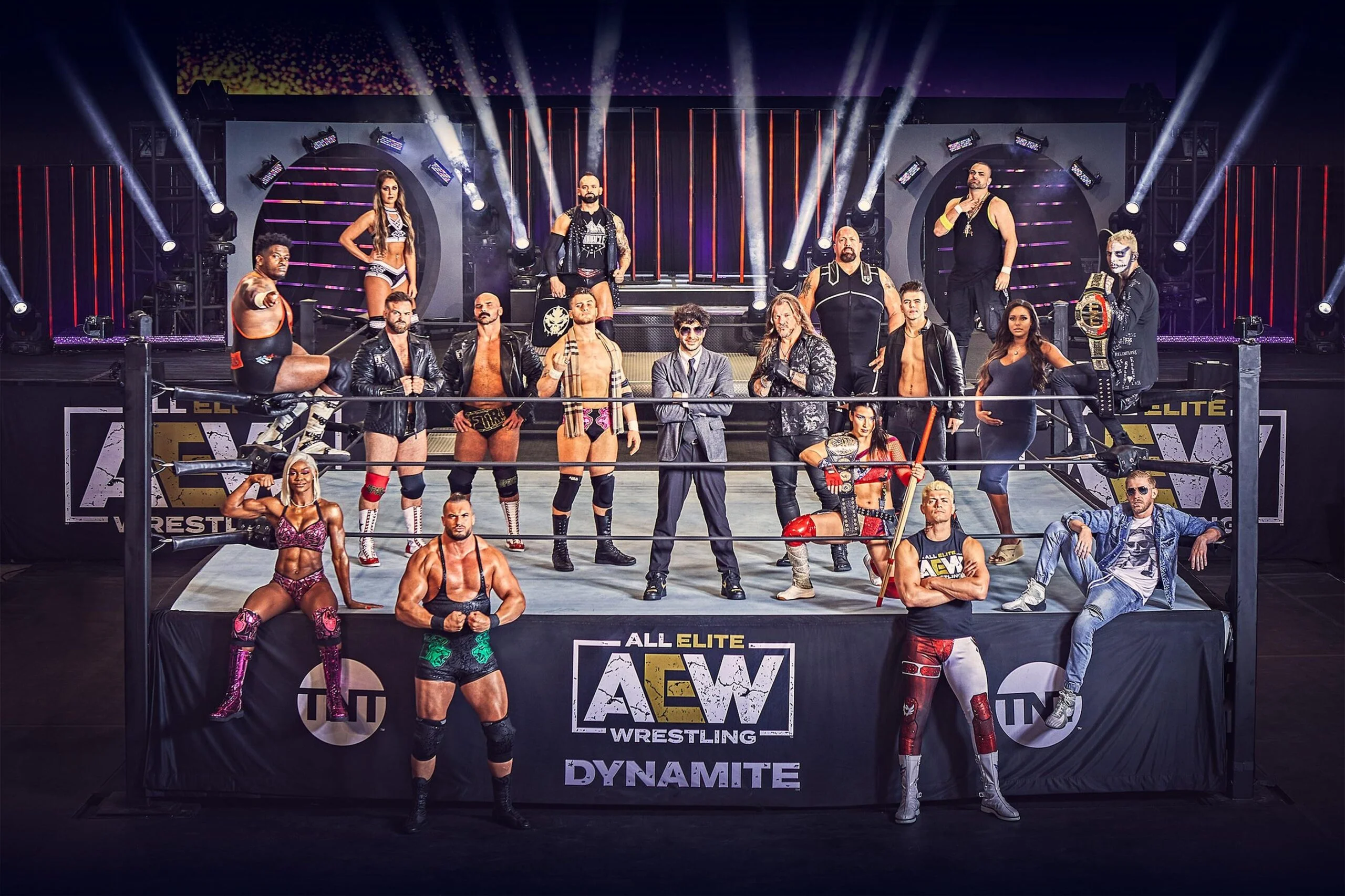

AEW and WWE gave wrestling fans another rivalry to argue about. Every major signing, competing broadcast, and ratings result became part of a larger debate over who was gaining ground.
Behind those arguments was a more meaningful change. Wrestlers had another major American television platform to pursue, and fans had another weekly promotion competing for their attention.
That made the stakes bigger than which company won on a Wednesday night.
The Audience Was There Before AEW
AEW’s beginnings owe plenty to an audience that already supported wrestling outside WWE.
Promotions such as TNA, Ring of Honor, and New Japan gave fans different styles, introduced future stars, and offered wrestlers places to build their reputations. The independent scene helped Cody Rhodes and the Young Bucks develop the following that made All In possible.
In 2018, their independently promoted event sold out in less than 30 minutes. Fans bought tickets before the full card was announced, showing how much faith they had in the people behind the event. That demand helped make the case for something bigger.
Tony Khan brought the financial backing to turn that opportunity into a promotion. AEW launched in 2019 with a roster that included Cody, the Young Bucks, Kenny Omega, Chris Jericho, and Jon Moxley. A television agreement with TNT gave that roster a weekly national stage.
Selling tickets to a special event was one challenge. Giving people a reason to watch every week would be another.
The Wednesday Night Wars Made Competition Immediate
Dynamite debuted on TNT on October 2, 2019. NXT, which already aired on Wednesdays through the WWE Network, had expanded to a live, two-hour format on USA Network beginning that September. The two shows were competing directly for viewers.
The pairing made the rivalry especially compelling. NXT had built its appeal around wrestlers and matches that attracted many of the same fans AEW wanted to reach. This was competition for an audience with overlapping interests, even if viewers enjoyed both products.
The ratings became a weekly scoreboard. According to Wrestlenomics, Dynamite led NXT in total viewers on 63 of their 75 head-to-head Wednesdays. It led among adults aged 18–49 on 74 of those nights. NXT would later move to Tuesdays in April 2021.
Those results demonstrated that AEW could establish a weekly audience opposite a WWE program. Beating NXT and competing with the full reach of WWE were different measures of success.
Still, the significance was clear. A new promotion had entered a contested television slot and given viewers a reason to choose it.
The Signings That Expanded AEW’s Possibilities
AEW’s arrival became harder to ignore as established stars chose to join.
CM Punk debuted on Rampage in August 2021, making his long-awaited return to wrestling in Chicago. His first AEW match followed at All Out against Darby Allin. The pairing connected a returning star with a wrestler AEW had helped introduce to a larger audience.
That same All Out ended with Adam Cole joining The Elite and Bryan Danielson arriving to confront them. In one closing sequence, AEW added two major names and opened up a roster full of potential matches.
Danielson’s explanation for leaving WWE captured something the rivalry often overlooked. He spoke positively about his former employer, describing a difficult decision driven by his desire to push himself and explore AEW’s wrestling environment. A wrestler could appreciate WWE and still want a different experience.
That made AEW’s appeal broader than a home for people unhappy with their previous jobs. It could also attract wrestlers who had already succeeded elsewhere and wanted to find out what another chapter might offer.
The challenge was turning those arrivals into lasting reasons to watch. A surprise debut creates anticipation. The matches, rivalries, and follow-through determine what happens to it.
“Enjoying one company does not require defending every decision it makes.”
Talent Could Move in Both Directions
The competition also created opportunities for WWE.
Cody Rhodes returned at WrestleMania 38 in 2022 after helping establish AEW. CM Punk returned at Survivor Series in 2023. Two wrestlers closely associated with AEW’s biggest moments became major WWE arrivals.
Those moves complicated the idea that every signing represented a permanent victory for one company and a lasting defeat for the other. Careers develop. Priorities change. A wrestler’s history with one promotion can become part of their appeal in another.
For talent, another major employer creates another possible destination. It can offer a different role, new opponents, or another way to build value.
For fans, movement between promotions also keeps possibilities open. A match that once seemed unlikely can become realistic when a contract ends or a wrestler chooses a different direction.
Why the WCW Comparison Only Goes So Far
WWE’s purchase of WCW in 2001 gave the Monday Night Wars a decisive ending. That history makes it tempting to view every major wrestling rivalry as a contest that must eventually leave one company standing.
It also encourages a narrow way of judging AEW. If replacing WWE becomes the only acceptable outcome, then building a promotion with its own audience and opportunities for talent gets treated as insufficient.
WWE’s size matters when comparing the companies. So do AEW’s decisions about the audience it wants to serve. A promotion needs reasons for people to choose its shows beyond the existence of a larger competitor.
The same applies to fans. Enjoying one company does not require defending every decision it makes. Competition becomes more useful when viewers expect both promotions to earn their time.
Give Fans a Reason to Keep Watching
A head-to-head broadcast makes the rivalry easy to measure for a night. It cannot fully explain why someone becomes invested in a wrestler, buys a ticket, or returns the following week.
That is where the more demanding competition happens. Both promotions have to give viewers wrestlers to care about, matches worth watching, and stories worth following.
AEW’s arrival expanded the possibilities for wrestlers and audiences. What both companies do with those opportunities will determine how much the rivalry matters.
Because winning the ratings battle means little if fans have no reason to come back.