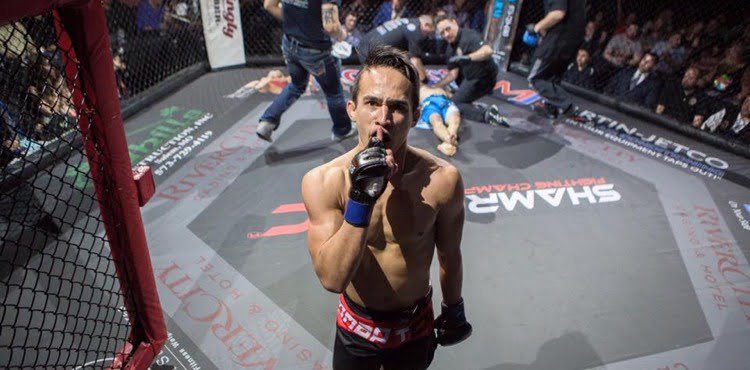






Justin Gaethje’s WSOF run helped establish a blueprint for making the jump to the UFC. He built his name, dominated his division, completed his contract, and arrived undefeated with a reputation that demanded an immediate test.
Eddie Alvarez had already shown that a champion from outside the UFC could reach its summit. But Gaethje’s story offered a different example of how to get there.
Before the Michael Chandlers and Michael Pages of the world made their UFC debuts, Justin Gaethje arrived carrying the expectations of fans who had watched him tear through another promotion.
He wasn’t coming in to start building his name. He had already done that. The question was whether everything that made him special outside the UFC would hold up against its best.
And he did not just do it “the right way.” He did it in a way that would set the standard for what success outside the UFC could look like inside it.
The King of WSOF
Before the bright lights, before the bonuses, before the chaos inside the Octagon, Gaethje built his name in World Series of Fighting. Not quietly. Not gradually. Violently.
From 2013 to 2017, Gaethje wasn’t just on the roster, he was the promotion’s identity. He went unbeaten in all 10 WSOF appearances, leaving with a perfect 17-0 professional record.
He became the inaugural lightweight champion by stopping Richard Patishnock in just over a minute, then successfully defended the belt five times. The only lightweight champion in WSOF’s history. Ten wins, nine by KO/TKO.
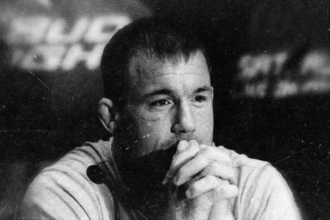


Gaethje’s style became his brand. Fans knew they could count on relentless forward pressure, crippling leg kicks, and a willingness to absorb damage that bordered on reckless. Every fight felt like it could fall apart, or end spectacularly, at any second.
And more often than not, it ended with a stoppage. Wins over names like Melvin Guillard and Nick Newell added credibility. His two all-out wars with Luis Palomino added legend.
By the time his WSOF run ended, Gaethje wasn’t a prospect. He was an established champion.
A Risk Worth Taking
In 2017, WSOF transitioned into the Professional Fighters League, introducing a new format and a new future. Gaethje chose to walk away from it.
He had already established himself in WSOF. Staying offered little of the challenge he wanted. There were no fresh matchups left. No new challenges. Just what he described as “lose-lose fights.” High risk, low reward, and little motivation to endure another brutal training camp.
So, he bet on himself. Free agency gave him options, including interest from Bellator. But Gaethje wasn’t chasing comfort or familiarity. He wanted the UFC.
Once the money aligned and the promise of top-tier competition became real, the decision was easy. He signed and immediately stepped in to headline The Ultimate Fighter 25 Finale against Michael Johnson in his debut.
No tune-up. No slow introduction.
The Arrival
On July 7, 2017, from the opening seconds, it was clear this wouldn’t be a typical debut. Justin Gaethje and Michael Johnson went to war, back-and-forth, with momentum swinging and damage piling up on both sides.
The fight wasn’t clean or always technical. But the chaos was perfect.
Gaethje stopped Johnson in the second round, earning two bonuses in a single night and delivering what many still consider one of the greatest debuts in UFC history.
In one fight, he proved everything. His style translated. His toughness held up. And his reputation? It undersold him.
Violence as a Calling Card
If Gaethje’s debut introduced him, the fights that followed tested him. Matchups with Eddie Alvarez and Dustin Poirier gave him exactly the elite competition he had wanted. Both ended in defeat, slowing his climb without erasing what made him compelling.
Gaethje refined his approach without losing the aggression that made him a draw. He earned post-fight bonuses in each of his first seven UFC appearances. By his victory over Paddy Pimblett in January 2026, he had stacked one of the most ridiculous stats in company history. Fifteen bonuses in 15 UFC fights.
Along the way, he built a championship résumé:
- Interim lightweight gold with a dominant win over Tony Ferguson in 2020
- The BMF title with a knockout of Dustin Poirier in 2023
- A second interim lightweight title by defeating Paddy Pimblett in January 2026
- The undisputed lightweight championship by stopping Ilia Topuria at UFC Freedom 250 in June 2026
In an era where safe fights were few and far between, Gaethje wasn’t just exciting, he was essential. He became a blueprint for how to build your name outside the UFC, step in, stumble if you must, and still rise to the top by fighting the best.
The Blueprint
Established stars from other promotions can enter the UFC with momentum, expectations, and an immediate test against elite competition. Gaethje’s success helped reinforce the value of arriving with a name and résumé already built.
He showed that dominance outside the UFC was not a question mark. It was a warning. He proved you could build a résumé and a legacy elsewhere, then step in and face the best right away. And he showed that fans would invest in a fighter they had never seen inside the Octagon, as long as the résumé demanded it.
Most importantly, he proved the gap was not as wide as people thought.
Justin Gaethje didn’t just make the jump from WSOF to the UFC. He defined what that jump could look like. He cleared out his division, won gold, stayed undefeated, fought out his contract, and then made his move.
“The Highlight” arrived as a problem, setting a standard for fighters determined to build their names outside the UFC before testing themselves against its best.