



Most successful MMA fighters spend years building their skills before reaching the highest level. Some grow up wrestling, boxing or practicing Brazilian jiu-jitsu. Others discover combat sports later, after pursuing completely different careers.
But not everybody who enters MMA late starts from scratch. Some arrive with an established reputation in another combat sport, giving them a significant head start in certain disciplines. Others return to training after years away.
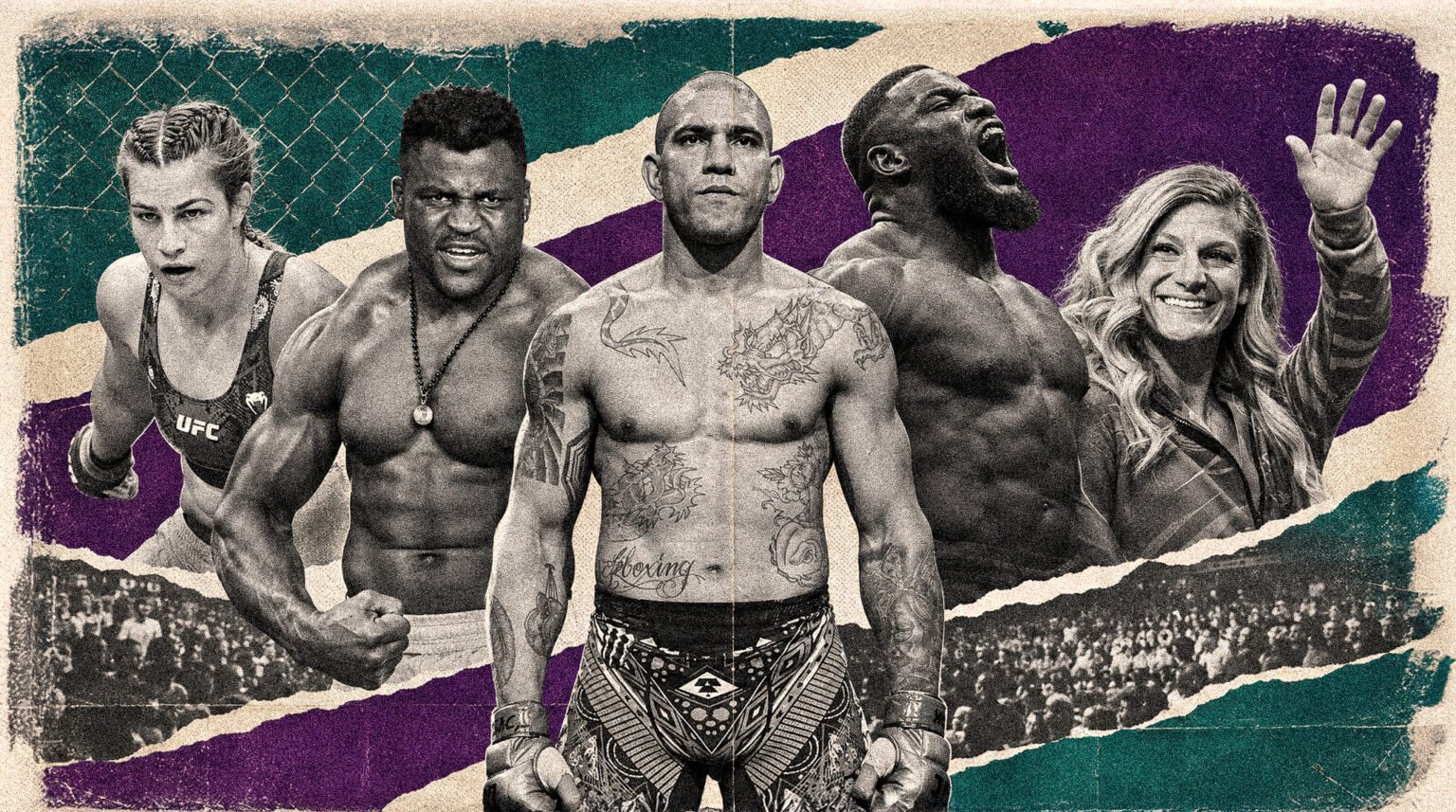
Francis Ngannou was already in his mid-20s when he began training MMA. Alex Pereira built an elite kickboxing career before committing more fully to the cage. Jasmine Jasudavicius didn’t discover martial arts until she was 26.
Their journeys are different, but each faced the challenge of developing a complete MMA skill set later in life. Here are 10 fighters who took an unconventional route into the sport.
Not everybody who enters MMA late starts from scratch.
Finding Their Way Into MMA Later in Life
These fighters discovered MMA relatively late or returned after spending years away. Some had little previous experience in organized combat sports. Others brought athletic backgrounds that helped them make the transition.
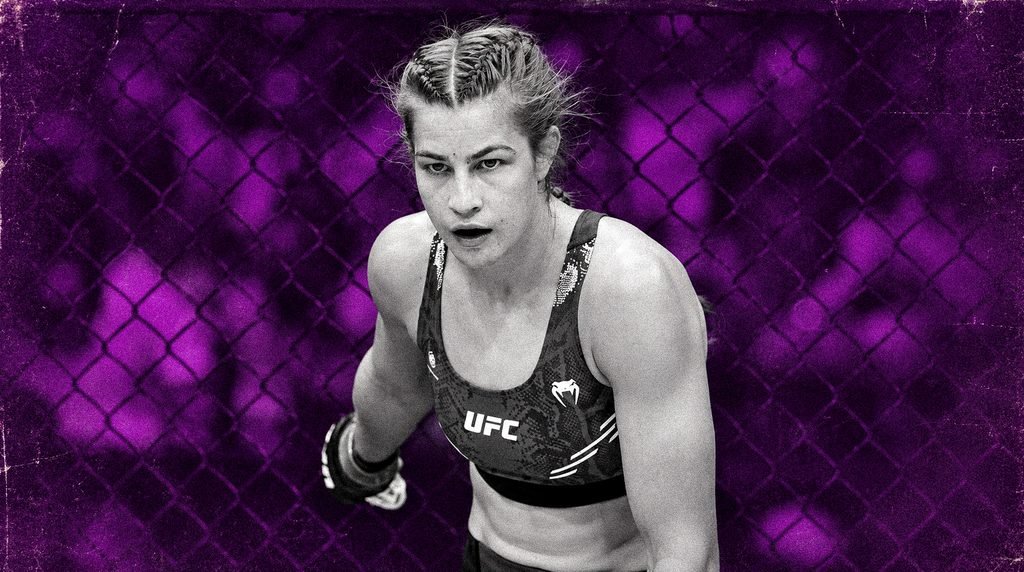
Jasmine Jasudavicius
Jasmine Jasudavicius didn’t grow up dreaming of becoming a professional martial artist. In fact, she didn’t discover combat sports until she was already 26.
Before fighting, Jasudavicius worked at a youth homeless shelter and attended college for policing. She had a relatively conventional career path ahead of her. That changed after accompanying her now-coach and fiancé on a trip where he was cornering UFC fighter Jason Saggo. Watching the training and sparring piqued her curiosity, and she decided to give martial arts a try.
In an interview with FightBook MMA, Jasudavicius explained that she was 26 when she first discovered martial arts. She became hooked after experiencing her first fight. Her amateur career began in 2017, before she turned professional in 2019. She later earned her UFC opportunity through Dana White’s Contender Series in 2021.


Her progression was quick. Within a few years of discovering the sport, she was competing against established UFC fighters. She had to build an entire skill set against athletes with considerably more experience.
However, her progression demonstrates that discovering MMA later doesn’t automatically prevent someone from reaching the highest level. Jasudavicius worked her way into the UFC’s flyweight rankings after taking a path she hadn’t originally imagined.
Angela Hill
Angela Hill built a lengthy UFC career despite finding combat sports relatively late.
Before becoming a professional fighter, she worked at an animation studio. Long days sitting at a desk left her wanting to become more active, and she had always wanted to learn how to fight. She began Muay Thai classes in 2009, when she was 24.
Hill was still working at the studio when she began training and competing. After the studio laid off staff, she decided to pursue fighting more seriously, as she explained in a 2014 interview.
Her amateur Muay Thai career began at the 2010 WKA North American tournament. She went unbeaten across 14 amateur fights before turning professional in 2013. After two professional Muay Thai victories, Hill made her professional MMA debut in April 2014, aged 29.
Despite having just one MMA fight, Hill was cast for season 20 of The Ultimate Fighter. The tournament brought together 16 strawweights to compete for the UFC’s inaugural championship in the division. She won her UFC debut at the finale before losing to Tecia Pennington, then competing as Tecia Torres, and Rose Namajunas. The promotion later released her.
That didn’t deter her. A four-fight winning streak in Invicta, including a strawweight championship victory and successful defense, led her back to the UFC for a second stint. Hill reached her 30th UFC appearance in May 2026, establishing herself as a mainstay of the division.
She has also experienced the difficulties that come with competing at the highest level. Her career has included setbacks, difficult matchups and periods where she struggled to maintain momentum. However, longevity has become one of her biggest achievements.
Hill’s experience demonstrates that reaching the UFC isn’t necessarily the hardest part. Staying there is another challenge entirely.
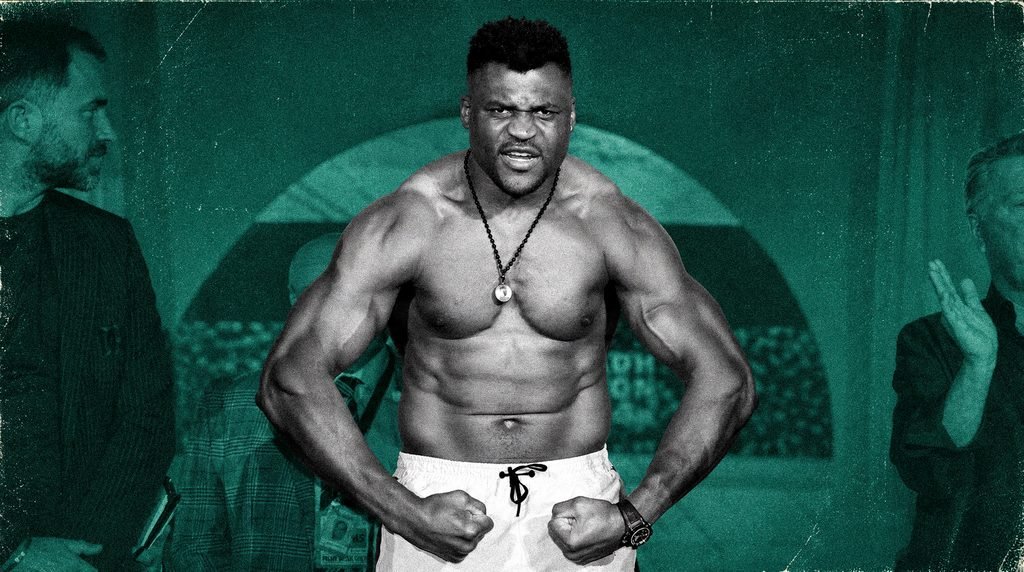
Francis Ngannou
Francis Ngannou’s journey into MMA is one of the most remarkable stories in combat sports. Growing up in Cameroon, Ngannou worked in sand mines from a young age. He eventually traveled to Europe, arriving in France with very little money and no established career in professional sports.
His original ambition was to become a boxer. However, after arriving in Paris, he was introduced to MMA and began training around the age of 26. According to BBC Sport, he reached the UFC after roughly three years of training.
His physical attributes were immediately noticeable. Ngannou became famous for his punching power. UFC president Dana White once claimed that Ngannou held a world record for the most powerful punch. He even compared it to being struck by a Ford Escort at full pelt.
But developing into a complete heavyweight required considerably more than extraordinary punching power. Ngannou had to learn wrestling, grappling, defensive positioning and the many technical aspects of MMA. His early UFC run showed his enormous potential, but his first championship opportunity exposed some of those limitations.
His attempt to win the heavyweight title ended in defeat against Stipe Miocic at UFC 220. Rather than abandoning his ambitions, Ngannou rebuilt his game. He eventually returned to defeat Miocic in 2021, becoming UFC heavyweight champion.
But his career took him beyond the UFC, including high-profile boxing contests against Tyson Fury and Anthony Joshua. After returning to MMA against Renan Ferreira in 2024, he competed at MVP’s first MMA event on Netflix in 2026, knocking out Philipe Lins in the first round.
Ngannou’s achievements are extraordinary considering how little time he had spent developing his MMA skills before entering the UFC. His championship breakthrough also showed how much he could improve after reaching the sport’s biggest stage.
Shamil Gaziev
Shamil Gaziev’s journey into professional MMA is slightly different. His younger years included volleyball and martial arts before he stepped away from sport.
Gaziev represented Dagestan in volleyball and trained in martial arts as a teenager, including under Abdulmanap Nurmagomedov. In an interview with RIA Dagestan, he described winning a pankration World Cup title at 17 before leaving sport to work.
Gaziev became an electrical repair engineer, repairing equipment at a substation. Years later, an invitation from childhood friend Eldar Eldarov brought him back into a training environment.
“In 2017, he invited me for training camp in Bahrain to help local guys in preparation,” Gaziev explained in an interview with UFC.
He liked the atmosphere and accepted an opportunity to represent Bahrain in IMMAF amateur competition in 2018. Gaziev continued competing as an amateur before turning professional in 2020, aged 30.
His progress through the professional ranks was relatively rapid. After establishing himself on the regional circuit, he earned a UFC opportunity through Dana White’s Contender Series in 2023. Gaziev made his promotional debut later that year, stopping Martin Buday in the second round.
His UFC career has been less straightforward. Heavyweight is an unforgiving division, and defeats against Jairzinho Rozenstruik, Waldo Cortes-Acosta and Brando Peričić demonstrated the level required. However, his knockout victory over Kennedy Nzechukwu in August 2026 showed that he remained a dangerous competitor.
Gaziev’s route into professional MMA included volleyball, teenage martial arts training and years working outside sport. His story highlights how returning to the right environment can revive an ambition that once appeared to be behind someone.
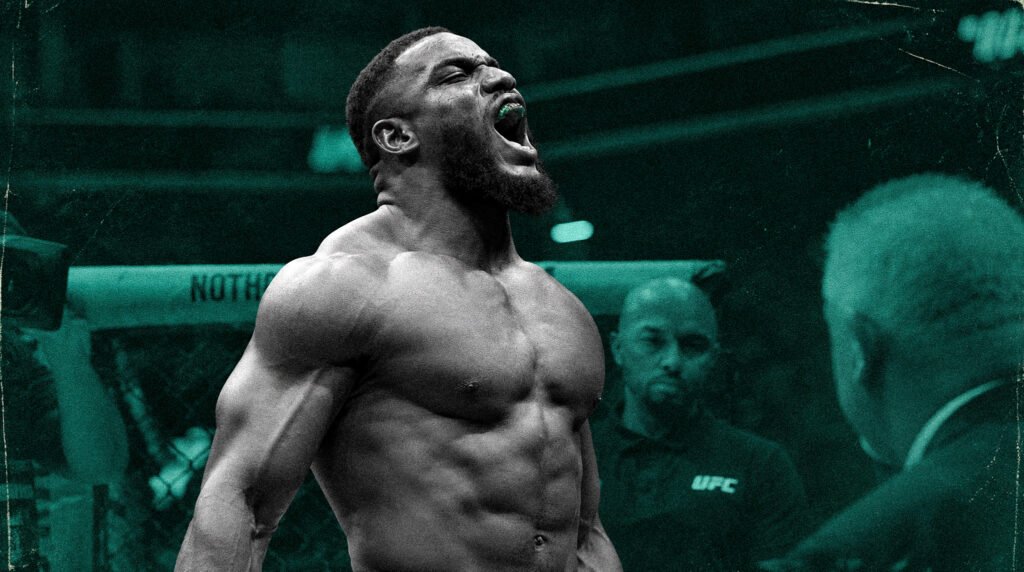
Anthony Wint
Anthony Wint’s journey into MMA began after his opportunities in professional football came to an end.
Wint played college football at Florida International University, where he established himself as an accomplished linebacker. Despite going undrafted in 2018, he earned an opportunity with the New York Jets, appearing in two NFL games.
He then signed with the Hamilton Tiger-Cats in the Canadian Football League. However, the cancellation of the 2020 CFL season disrupted his plans, leaving him to consider his next move.
Encouraged by his agent, Wint decided to pursue MMA. According to his UFC profile, he began training in 2021, aged 26, and made his professional debut in April 2023.
There was an advantage that separated him from somebody entering a combat-sports gym for the first time. Wint had wrestling experience dating back to when he was nine. He competed throughout high school, earned All-County honors and qualified for the Florida state wrestling championships.
That experience provided a foundation for his transition. His physicality and wrestling background gave him something to build on, although he still needed to develop his striking and adapt his grappling to MMA.
His progress was remarkably quick. After establishing an undefeated professional record, Wint earned an opportunity on Dana White’s Contender Series in August 2026. A 34-second stoppage secured his UFC contract.
Wint then won two UFC fights within two months of his Contender Series performance, submitting Terrance Chatman in August and stopping Lucas Armand in October.
Wint’s story demonstrates how experience in another sport can accelerate development. Football provided an athletic foundation, and wrestling as a youngster gave him experience in individual combat competition.
Reaching the UFC after only a few years of dedicated MMA training is an impressive achievement. The next challenge is turning that fast start into sustained success against more experienced heavyweights.
Professional Fighters Who Transitioned Into MMA
The next group had established careers in other combat sports before committing to MMA. From Olympic gold medalists to kickboxing world champions, these athletes brought highly developed skills in specific disciplines.
Having world-level ability in one aspect of MMA isn’t enough on its own. Each still had to learn how to make those strengths work under a different ruleset.
Yoel Romero
Yoel Romero made his professional MMA debut in 2009, aged 32, after a decorated international wrestling career.
The Cuban began wrestling as a child, eventually developing into one of the world’s best freestyle wrestlers. His achievements included a silver medal at the 2000 Sydney Olympics and gold at the 1999 World Wrestling Championships.
He also represented Cuba at the 2004 Athens Olympics, finishing fourth in the 84kg division. By the time he considered MMA, Romero had spent years competing at the highest level of international wrestling.
In a 2011 interview with LowKick MMA, Romero explained that he wanted to continue competing after retiring from wrestling. His brother was a professional boxer, and Romero had also boxed as a child. MMA offered an opportunity to combine those experiences with his world-class wrestling.
Romero initially wanted to become a boxer, but his father discouraged the idea. As he later explained to UFC, wrestling became one of his alternatives.
His wrestling background provided an advantage. However, Romero recognized that he needed to develop his Brazilian jiu-jitsu and become a more complete fighter.
After making his professional MMA debut in 2009, he eventually joined the UFC in 2013. Despite starting later, he quickly established himself among the middleweight division’s elite, recording memorable victories over Chris Weidman, Luke Rockhold and Lyoto Machida.
His explosive athleticism became one of his defining characteristics. Even in his forties, Romero remained an exceptionally difficult opponent to deal with.
His journey demonstrates the advantages of transferring an established sporting career into MMA. He didn’t need to learn wrestling, understand elite competition or develop the discipline required to compete professionally. Instead, he needed to adapt those existing skills to a different environment.
Romero continued competing beyond his UFC career, including in bare-knuckle boxing and Gamebred Bareknuckle MMA. His career remains an example of how an elite athlete can enter MMA relatively late and still reach the highest level.
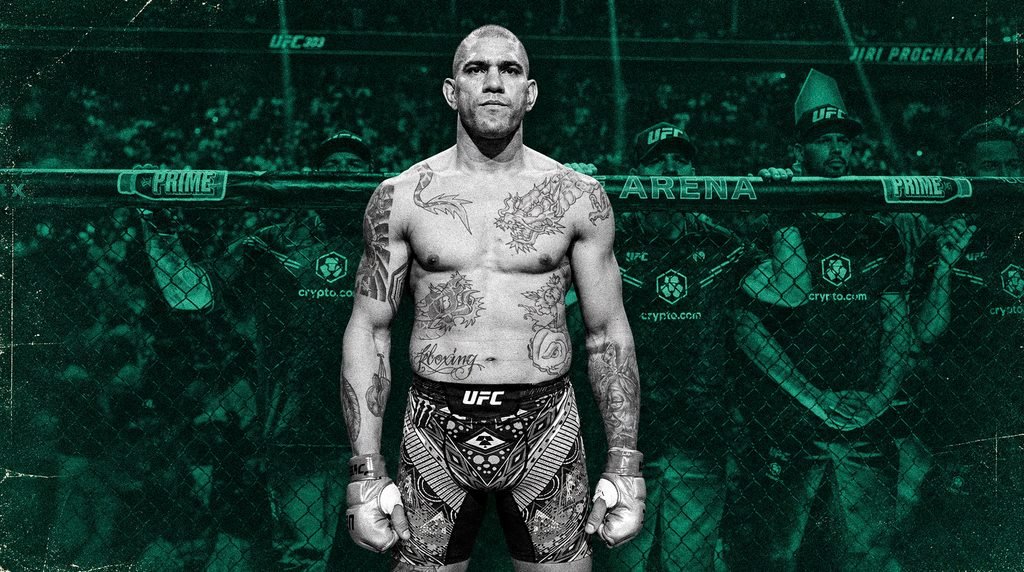
Alex Pereira
Alex Pereira is arguably the most successful example of a combat-sports crossover in modern MMA. Before entering the UFC, he had established himself as one of the world’s leading kickboxers.
He began training in 2009, initially looking for a way to improve his quality of life and move away from alcohol. His professional MMA career began in 2015, when he was 28, but kickboxing remained a major part of his career.
Pereira won GLORY’s middleweight championship in 2017. He added the interim light heavyweight title in 2019 before becoming undisputed champion in that division in 2021. Those achievements came after his first MMA fight but before his UFC arrival, a distinction reflected in UFC’s career timeline.
His kickboxing achievements also included victories over Israel Adesanya and Dustin Jacoby. By the time he entered the UFC, Pereira wasn’t learning how to fight from scratch. He was adapting an exceptional striking game to opponents who could also wrestle and grapple.
However, kickboxing success doesn’t automatically translate into MMA success. Pereira needed to develop his wrestling defense, grappling and ability to manage opponents who could threaten him on the ground.
His early MMA career included a professional debut defeat, but he went on to establish himself as a dangerous prospect. After joining the UFC in 2021, his rivalry with Adesanya helped build interest in a championship meeting with his former kickboxing adversary. Pereira won the middleweight title before moving up to light heavyweight and capturing another championship.
His rise through the UFC was remarkably quick. Within a relatively short period, he had become one of the promotion’s biggest stars. His elite striking gave him a head start, but learning to protect and apply it in MMA made the difference.
Beatriz Mesquita
Bia Mesquita is another example of an elite grappler transitioning into MMA.
Her background is particularly impressive. Mesquita began training Brazilian jiu-jitsu at just five years old. She went on to become one of the most decorated female grapplers in the sport.
Her achievements include ten IBJJF world championships and an ADCC world title. By the time she entered MMA, she had spent decades developing her grappling ability.
She made her professional debut in June 2024 at 33, before joining the UFC in 2025. Her early performances showcased the submission ability that had made her so successful in Brazilian jiu-jitsu.
However, she has also spoken about the challenges of adapting her game. In her UFC profile, she discusses the importance of developing her striking, wrestling and ground-and-pound.
MMA opponents aren’t necessarily going to engage in the same positions as a grappling competitor, especially given Mesquita’s reputation. They can use strikes to create space, defend submissions differently and avoid playing into her strengths.
Mesquita’s transition began quickly. She competed five times in just over a year, winning the LFA bantamweight championship before moving to the UFC.
Her grappling pedigree made her an immediate addition to watch in the bantamweight division. Developing the rest of her game gives her more ways to bring that pedigree into a fight.
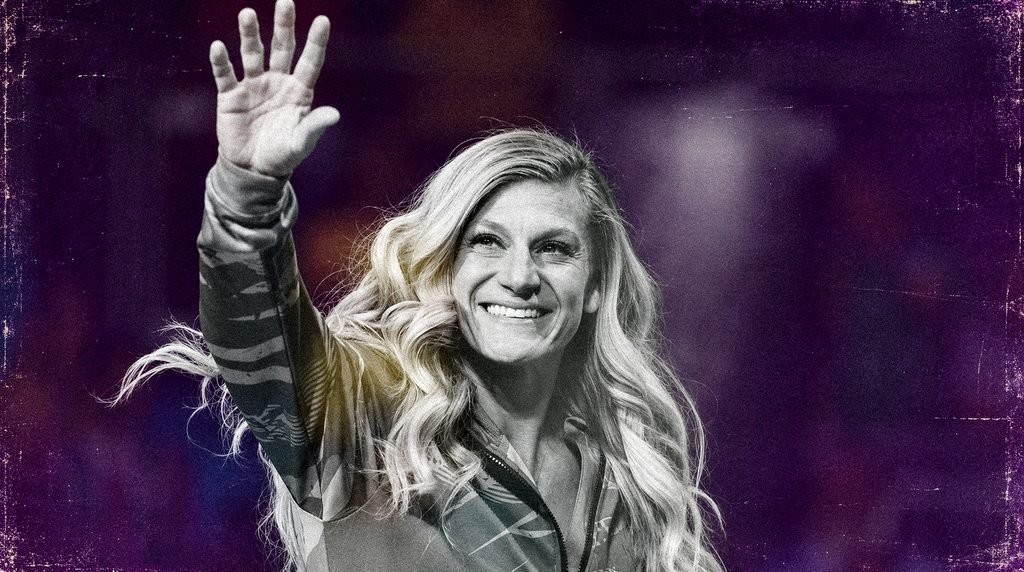
Kayla Harrison
Kayla Harrison’s transition into MMA was built on one of the strongest sporting foundations imaginable.
She began practicing judo at six years old and eventually became one of the most successful athletes in American judo history. Harrison followed in MMA trailblazer Ronda Rousey’s footsteps, going from Olympic medallist to UFC champion.
She won Olympic gold medals in 2012 and 2016, following a world championship in 2010. By the time she considered MMA, she had already achieved almost everything possible in her original discipline.
Her transition came after the 2016 Olympics. In her UFC profile, Harrison explained that she struggled to work out what came next after completing her second Olympic campaign.
She had seen teammates try MMA and decided to take a striking class herself. After discovering that she enjoyed sparring, she relocated to South Florida to train at American Top Team.
Her professional debut came in 2018, and she quickly established herself as a force in women’s MMA. Harrison’s judo background gave her an advantage in the clinch and when taking opponents down. However, she still had to develop her striking and adapt her groundwork to complement it.
Harrison has credited a beginner’s mindset as part of her approach. Despite being an Olympic champion, she recognized that she needed to commit to learning MMA as seriously as she had pursued judo.
After winning two PFL lightweight season championships, Harrison moved down to bantamweight to join the UFC in 2024. She made her promotional debut at UFC 300 before capturing the bantamweight championship in 2025.
Her journey is a reminder that elite sport experience can be an enormous advantage. But even Olympic champions have to start somewhere when entering MMA.
Jena Bishop
Jena Bishop’s path to MMA shares many parallels with Mesquita’s.
Before competing in MMA, Bishop had developed into an accomplished Brazilian jiu-jitsu competitor. She won an IBJJF World No-Gi Championship at black belt and represented the United States at the ADCC World Championships.
Her transition into MMA took shape after COVID-19 led to the shutdown of jiu-jitsu competition. Around this time, Bishop trained with Cat Zingano and helped her prepare for a Bellator fight. The experience encouraged her to pursue MMA herself.
In a 2021 interview with BJJ Heroes, Bishop explained that she had previously wanted to try MMA but hadn’t wanted to take time away from BJJ. The interruption gave her an opportunity to reconsider what she wanted next.
Training at Alliance in San Diego, Bishop worked alongside Angela Hill as she developed her striking and wrestling. She made her professional MMA debut in October 2021 at 35. After four wins in LFA, she was picked up by Bellator.
Her achievements continued after moving into PFL competition, where she faced the likes of Dakota Ditcheva and Liz Carmouche. Despite coming up short in those matchups, Bishop continued to develop her game.
In October 2026, she avenged her loss to Carmouche, capturing the inaugural PFL women’s flyweight world championship in the process. The unanimous decision followed a dogged and gutsy performance over five rounds, bringing her journey from late MMA newcomer to champion full circle.