

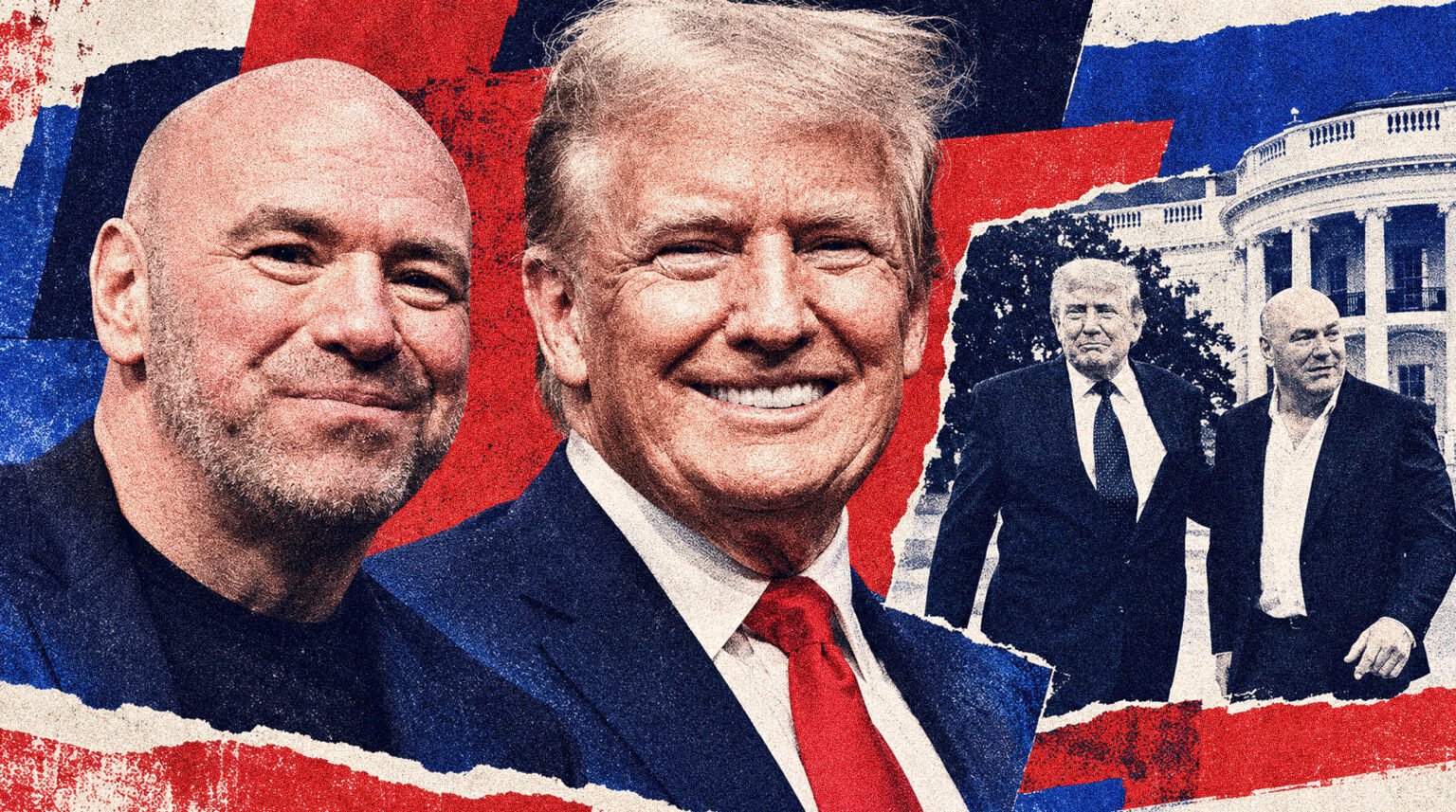

UFC has spent years bringing Donald Trump closer to the action. At UFC Freedom 250, the action came to him.
The June 2026 event on the White House’s South Lawn offered the clearest image yet of a relationship that has grown beyond a promoter’s friendship with a politician. The UFC brand, the presidency, and Trump’s public persona shared the same stage.
That relationship has delivered extraordinary visibility. It also leaves a question UFC will eventually have to answer.
What happens when the political power changes hands?
UFC’s Political History Was Never That Simple
UFC’s relationship with politics began long before Trump became one of its most visible supporters. For years, the company needed government approval to bring its fights into major American markets.
Republican Senator John McCain became an influential opponent of early MMA, describing it as “human cockfighting” and urging governors to prohibit it. Decades later, Democratic Governor Andrew Cuomo signed the legislation legalizing professional MMA in New York in 2016, opening the door to UFC at Madison Square Garden.
MMA’s rules and oversight changed considerably between McCain’s campaign and New York’s legalization. But McCain’s opposition and Cuomo’s support show why UFC’s political history cannot be reduced to Republican allies and Democratic enemies.
UFC grew by convincing officials across party lines that its events deserved approval. Its embrace of Trump turned political cooperation into a much more visible partisan identity.

Political relationships can open doors. A political identity can make others harder to walk through.
How Trump Became Part of the UFC Story
Dana White’s loyalty to Trump predates his presidential campaigns. UFC’s own records place UFC 30 and UFC 31 at the Trump Taj Mahal in 2001.
The more sweeping claim that Trump saved UFC deserves scrutiny, however. Yahoo Sports reported that the previous ownership had already staged UFC 28 at the venue and booked UFC 30 before Zuffa completed its purchase.
White later brought his support onto the campaign stage, speaking at the 2016 Republican National Convention and introducing Trump at the 2024 convention. By the time UFC staged fights at the White House, their friendship had become part of the promotion’s public identity.
Their connections extended beyond those appearances.
Trump invested in UFC’s parent company, TKO, adding a financial connection to the promotion. He later publicly floated White as White House press secretary on November 7, briefly raising the prospect of UFC’s most recognizable executive becoming his official spokesperson. Trump clarified the following day that he had been joking and that White’s planned visit concerned other matters.
Dana has every right to support whatever candidate he chooses. But the UFC has given that loyalty a platform that reaches well beyond his personal endorsement.
A Political Logo Changes the Conversation
Turning Point USA’s logo puts a political organization directly into the viewing experience.
In their August 2026 coverage of UFC BJJ 10, Fighting Matters hosts Steve Kwan and Stephan Kesting discussed Turning Point USA branding visible on the competition mat.
Turning Point USA is a nonprofit organization with an explicitly conservative mission. Under CEO Erika Kirk, it has continued the Christian outreach established under Charlie Kirk, including through TPUSA Faith’s Make Heaven Crowded tour. Giving that brand space inside UFC programming exposes fight fans to an organization seeking political and religious influence beyond sports.
Political messaging has also appeared during commercial breaks. In October 2026, Luke Thomas reported that advertisements from MAGA Inc., a super PAC supporting Trump, ran during the Paramount+ broadcast of UFC’s Edmonton event.
A critical message encountered a different reception. Freedom of the Press Foundation said Paramount rejected an advertisement it submitted for placement around UFC Freedom 250. The ad criticized Trump and Paramount’s proposed merger with Warner Bros. Discovery. According to the foundation, Paramount cited a conflict of interest.
Paramount’s advertising decisions are separate from UFC’s decisions about branding inside the competition space. Both, however, shape the political messages fans encounter when they watch.
The Politics Behind the Promotion
Asked in November 2020 whether a Biden presidency could create problems for UFC, White mocked Biden’s mental awareness before saying he did not think Biden would come after the company.
White’s own description of his politics complicates the picture further. In a 2026 interview with David Remnick, he called himself an “eighties, nineties Democrat” and said his political views had not changed. His support for Trump does not fit neatly into the party label he gives himself.
Nor does UFC’s public identity tell the whole story of its corporate leadership. Ari Emanuel, executive chair and CEO of UFC’s parent company TKO, has described himself as a lifelong Democrat. Asked by PBS whether UFC’s deepening relationship with Trump made that a difficult line to walk, Emanuel said it did not.
UFC’s embrace of Trump has not required its leaders to share a party affiliation. Emanuel’s Democratic ties could help the company build relationships under another administration. But publicly changing course could be harder after years of celebrating Trump.
The Business Is Built to Outlast a Presidency
UFC’s growth depends on reaching audiences far beyond American politics.
Paramount’s U.S. agreement runs seven years beginning in 2026 and includes UFC’s numbered events and Fight Nights. The companies also announced a six-year Canadian agreement beginning in 2027, covering all 13 numbered-event main cards at no additional charge to Paramount+ subscribers.
Those agreements span multiple election cycles. They give UFC and Paramount a shared interest in attracting subscribers who may care about the fights without sharing White’s political loyalties.
The announcements do not establish that UFC is preparing for a Democratic return to power. But they do show that the company is building a business intended to keep growing regardless of who wins an American election.
That expansion also brings relationships with other governments.
UFC’s partnership with Abu Dhabi’s Department of Culture and Tourism extends through 2028. The agreement serves both UFC’s expansion and the emirate’s efforts to attract visitors and promote itself internationally.
Working with different governments is already part of UFC’s business. Its international reach gives it options, but does not erase the political associations attached to its brand.
UFC can survive a change in government. Changing what its brand represents could be harder.
UFC’s Choices Beyond Trump
A future Democratic administration would not have to target UFC for UFC’s ties to Trump to become a liability. Business partners could become more cautious about political appearances. New officials could keep their distance. Attempts to build fresh relationships could invite scrutiny of how the company used its platform under Trump.
Those potential costs matter even if the fights keep selling.
The first path is to carry the alliance forward. White could support another Republican presidential candidate, and UFC could remain a welcoming platform for the movement Trump built. As another election cycle approaches, the promotion’s audience could remain valuable to candidates seeking visibility.
Continuing along this path would preserve a recognizable identity. It could also make UFC’s political commitments harder to describe as one man’s loyalty to a longtime friend.
The second path is to build stronger relationships with Democrats. Emanuel’s own affiliations mean UFC’s leadership would not be starting from unfamiliar ground. His brother Rahm served as Obama’s White House chief of staff.
The difficulty would be making that shift publicly. Routine cooperation with elected officials is one thing. Giving a Democratic president the celebratory treatment associated with Trump could be read as a reversal by viewers who embraced UFC’s partisan identity.
Trump supporters could see the shift as a betrayal. Democrats could doubt whether it was sincere. UFC would have to weigh the benefits of those new relationships against the backlash a public shift could bring.
The third path is a future under different leadership. A UFC without White at the center could have more room to change its political presentation. His successor would inherit the business without necessarily sharing the friendship that helped define its relationship with Trump.
But replacing White would not automatically change UFC’s politics. TKO, advertisers, and distribution partners could still see value in the same associations. A new leader would have to decide which appearances and partnerships to continue.
The Cost of Staying Close to Power
UFC’s international deals and political connections give it reasons to expect continued success after Trump. But commercial success alone will not settle what happens to the political identity it has built around him.
Keeping that identity means carrying the alliance forward; changing it means explaining a shift to the audiences and partners who embraced it.
For years, Dana White has explained his loyalty through what Trump did for UFC when the company needed support. That history will remain, but it cannot settle every decision that follows. When power changes hands, UFC will have to decide how much of its future it wants to commit to that past.