




Washington’s MMA history stretches from the sport’s early heavyweight champions to Demetrious Johnson’s record-setting flyweight reign. Its fighters have helped establish weight classes, won titles across major promotions, and built careers that began long before a UFC contract arrived.
The connections run through places like Tacoma, Spokane, Vancouver, and Enumclaw. Some fighters grew up in the state before finding success elsewhere. Others developed their skills in Washington gyms and continued representing those communities on the biggest stages.
This unranked list considers championship accomplishments, quality wins, longevity, and influence across major organizations and the regional circuit. Fighters qualify through their birthplace, upbringing, or substantial ties to Washington’s MMA community.
Demetrious Johnson
Raised in Parkland, Demetrious Johnson developed his game under Matt Hume at AMC Pankration. His ability to move between striking, wrestling, and submissions made him difficult to prepare for. Opponents had to defend every phase of a fight, often within the same exchange.
Johnson became the UFC’s inaugural flyweight champion in 2012 and defended the belt 11 consecutive times. His success continued in ONE Championship, where he won the Flyweight World Grand Prix and later captured the divisional title from Adriano Moraes. He beat Moraes again in their trilogy bout to retain it.
Those accomplishments give Johnson the strongest argument for being Washington’s greatest MMA fighter. His championship record also places him firmly in the sport’s broader greatest-of-all-time discussion.
Randy Couture
Randy Couture’s wrestling foundation took shape in Washington, where he won a state championship at Lynnwood High School. Military service and college wrestling followed before he entered professional MMA.
Couture became the first fighter to win UFC championships in two weight classes, capturing heavyweight and light heavyweight gold. His six championship reigns include an interim light heavyweight title, which he unified by defeating Tito Ortiz.

His return against Tim Sylvia remains one of his defining performances. At 43, Couture beat a much larger opponent over five rounds to reclaim the heavyweight championship. Clinch control, wrestling, and careful preparation allowed him to compete successfully across generations of fighters.
Benson Henderson
Born in Colorado, Benson Henderson grew up in Federal Way and Tacoma. His Washington roots preceded the Arizona-based training career that helped make him one of his generation’s most accomplished lightweights.
Henderson won championships in both WEC and UFC. After taking the UFC title from Frankie Edgar, he defended it against Edgar, Nate Diaz, and Gilbert Melendez. His wrestling, conditioning, and ability to escape dangerous positions helped him handle opponents with very different strengths.
His career continued in Bellator, where he challenged for championships at both lightweight and welterweight. Wins over Roger Huerta, Myles Jury, Islam Mamedov, and Peter Queally kept him in contention across several years.
He never captured a Bellator belt, but he did earn another lightweight title opportunity against Usman Nurmagomedov more than a decade after becoming UFC champion.
Miesha Tate
Tacoma’s Miesha Tate built her championship résumé in Strikeforce before reaching the top of the UFC. She won Strikeforce’s one-night bantamweight tournament in 2010, defeating Maiju Kujala and Hitomi Akano. The following year, she submitted Marloes Coenen to capture the promotion’s bantamweight title.
After losing that championship to Ronda Rousey and falling short in their UFC rematch, Tate worked her way back into contention. Victories over Liz Carmouche, Sara McMann, and Jessica Eye helped earn another opportunity. Against Holly Holm at UFC 196, she secured a fifth-round rear-naked choke to become UFC bantamweight champion.
Her competitive success also reached television. In 2022, Tate won the third U.S. season of Celebrity Big Brother, defeating Todrick Hall in a 7–1 jury vote. She became the first athlete to win the American celebrity edition, adding a mainstream television victory to championships in two major MMA organizations.
Julianna Peña
Julianna Peña grew up in Spokane and developed her career through its MMA community before becoming the first woman to win The Ultimate Fighter. She stopped Jessica Rakoczy in the Season 18 final, beginning a UFC career that would eventually include two bantamweight championship reigns.
After taking time away to have her daughter, Peña returned to competition and worked her way into title contention. At UFC 269, she submitted Amanda Nunes in one of the sport’s biggest upsets, becoming the first woman to win a UFC championship after giving birth.
Her return to The Ultimate Fighter as a coach brought another achievement. On Season 30, Team Peña claimed three of the four finalist spots, with Mohammed Usman and Juliana Miller winning their respective tournaments. She returned to help guide both of the season’s winners.
Nunes reclaimed the championship in their rematch, but Peña later regained the belt with a split-decision victory over Raquel Pennington. That made her only the second woman, after Nunes, to win the UFC bantamweight championship twice.
Josh Barnett
Seattle’s Josh Barnett built a heavyweight career across UFC, Pancrase, PRIDE, and Strikeforce. His catch-wrestling background made him a dangerous submission fighter and helped him establish a second career in professional wrestling.
Barnett stopped Randy Couture to win the UFC heavyweight championship in 2002, although a positive test for a banned substance resulted in him being stripped of the title. In Japan, he defeated Yuki Kondo for the Pancrase openweight championship. Victories over Mark Hunt and Antônio Rodrigo Nogueira later helped carry him to the final of PRIDE’s 2006 Openweight Grand Prix.
His pro wrestling debut came on a major stage. Barnett challenged Yuji Nagata for the IWGP Heavyweight Championship in the Tokyo Dome main event on January 4, 2003. He went on to make the connection between MMA and pro wrestling central to Josh Barnett’s Bloodsport, presented with GCW.
Bloodsport’s stripped-down presentation removed the ring ropes and emphasized grappling, strikes, and stoppage finishes. Its cards brought together MMA veterans and professional wrestlers, including Shayna Baszler, Jon Moxley, and Minoru Suzuki.
Through his own matches and his work shaping those events, Barnett gave his crossover career an identity built around the fighting style that made him successful.
Jens Pulver
Born in Sunnyside, Jens Pulver became a two-time state wrestling champion at Tahoma High School in Maple Valley. He later helped establish a place for lighter fighters at the highest level of MMA.
Pulver defeated Caol Uno to become the UFC’s inaugural 155-pound champion in 2001. Successful defenses against Dennis Hallman and B.J. Penn followed, with the Penn victory remaining one of the most significant results of his career.
His wrestling and powerful left hand gave opponents different problems to solve, and his career eventually took him through PRIDE, WEC, and Shooto. Inducted into the UFC Hall of Fame in 2023, Pulver holds a foundational place in lightweight history.
Maurice Smith
Seattle’s Maurice Smith entered MMA with an established kickboxing background. His most important victory came against Mark Coleman at UFC 14, when he challenged an unbeaten champion whose wrestling and ground-and-pound had overwhelmed every previous UFC opponent.
Smith survived underneath Coleman, made him work, and took advantage as the champion tired. The decision victory earned him the heavyweight title and demonstrated how conditioning, defensive grappling, and striking could work together against a dominant wrestler.
He successfully defended the championship against Tank Abbott before losing it to Randy Couture. Smith’s influence extends beyond the length of that reign. His performance against Coleman remains an important example of the adjustments strikers needed to succeed in MMA.
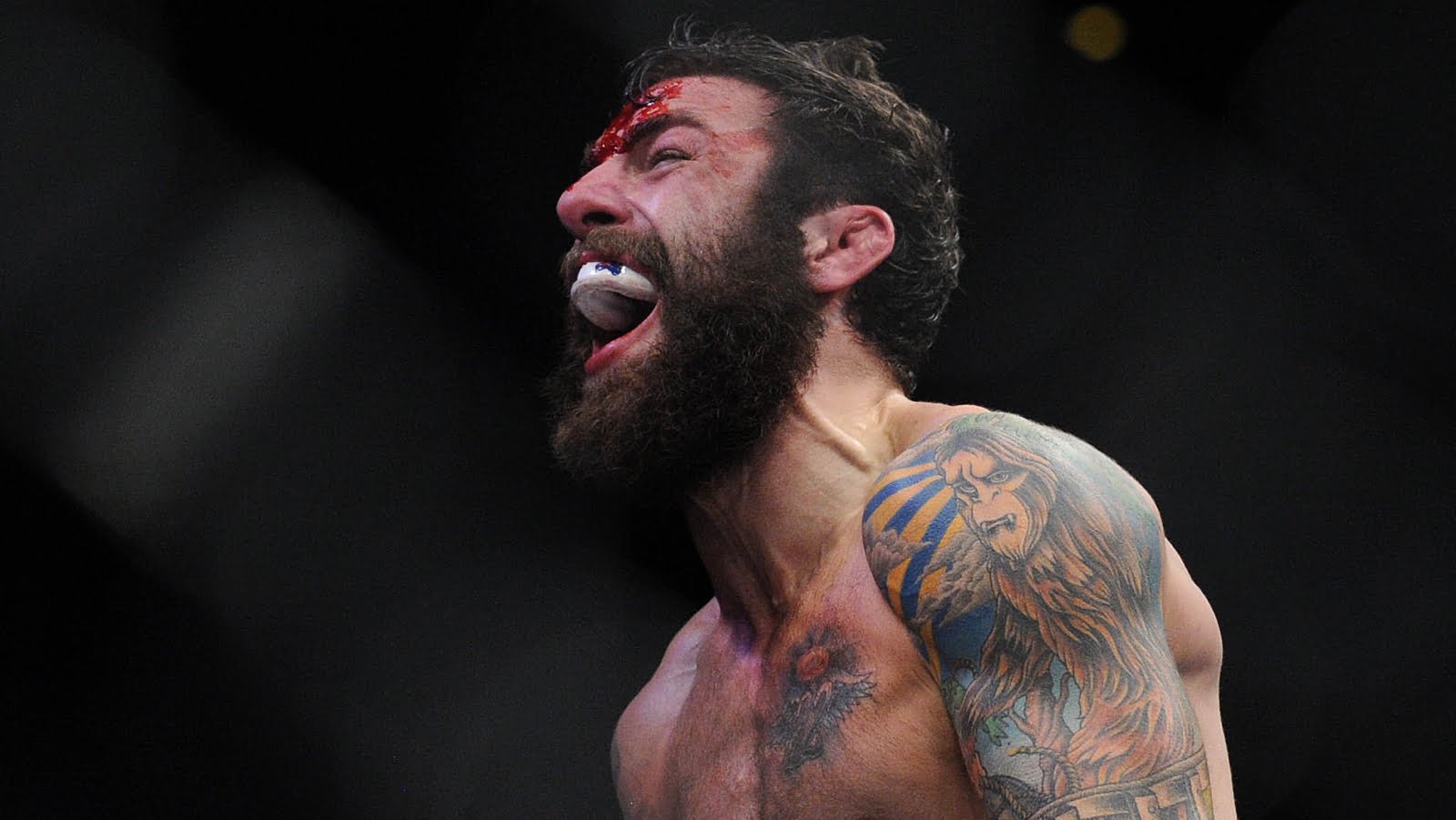
Michael Chiesa
Michael Chiesa built his career in Spokane, training with Sikjitsu before winning the first and only live season of The Ultimate Fighter. His father died during the competition, but Chiesa returned after attending the funeral and went on to submit Al Iaquinta in the final.
At lightweight, submission wins over Jim Miller and Beneil Dariush helped establish him as a top-10 contender. Moving to welterweight in 2018 brought another climb. Chiesa won his first four fights in the division, defeating Carlos Condit, Diego Sanchez, Rafael dos Anjos, and Neil Magny to reach No. 5 in the rankings. His control of dos Anjos over three rounds and Magny over five showed how effectively his grappling translated against larger opponents.
He also built a broadcasting career alongside his fighting commitments, working as a UFC desk analyst and calling fights for LFA. That experience led to a role on UFC commentary, extending his connection to the sport beyond competition. From winning TUF to becoming a contender in two divisions and earning a seat behind the microphone, Chiesa built several successful chapters from the same Spokane foundation.
Rick Story
Raised in Spanaway and later training in Vancouver, Rick Story built his reputation by disrupting other welterweights’ climbs. His pressure, wrestling, and punishing body punches made him a difficult opponent even for fighters with championship credentials.
Story won six consecutive UFC fights during his first major run, handing future champion Johny Hendricks his first professional loss before defeating former title challenger Thiago Alves. Those back-to-back victories established him among the division’s leading contenders.
He later stopped Gunnar Nelson’s unbeaten run in a five-round main event, wearing him down with attacks to the head, body, and legs. A later victory over former Strikeforce welterweight champion Tarec Saffiedine showed that Story could still beat established opposition years after his initial breakthrough.
Story never earned a UFC title shot, but his best wins came against a future champion, a former champion, a title challenger, and an undefeated contender. His résumé deserves more recognition than his lack of a championship might suggest.
Dennis Hallman
Olympia’s Dennis Hallman holds a distinction shared with Georges St-Pierre and B.J. Penn. He defeated Matt Hughes twice. Both victories came by submission in under a minute, years before Hughes completed the championship career that made him a UFC Hall of Famer. Hallman caught him with a guillotine in their first meeting and an armbar in the rematch.
Those results helped earn Hallman a UFC lightweight title shot against Jens Pulver. Although he lost that five-round decision, his career continued across the regional and international circuits, where he accumulated experience against different generations of fighters.
Nearly a decade after his second Hughes victory, Hallman returned to winning form in the UFC. He defeated Ben Saunders and stopped former WEC welterweight champion Karo Parisyan in the first round. The Hughes submissions remain his signature achievements, but his later success showed that his career extended well beyond those early upsets.
Ricky Simón
Vancouver’s Ricky Simón had to build his case twice before reaching the UFC. Winning on Dana White’s Contender Series did not secure him a contract, so he returned to the regional circuit, defeated Chico Camus for the LFA bantamweight championship, and successfully defended it.
Once signed, Simón developed into a top-10 UFC bantamweight. His strongest stretch produced five consecutive wins, including a decision over former title challenger Ray Borg, a knockout of longtime contender Raphael Assunção, and a submission of unbeaten Jack Shore. Three of those five victories came by stoppage.
The Shore performance was particularly convincing. Facing another accomplished grappler, Simón hurt him on the feet before finishing with an arm-triangle choke. He had progressed from a regional champion struggling to secure a UFC opportunity to a contender capable of ending another rising fighter’s unbeaten run.
Bryan Caraway
Yakima’s Bryan Caraway reached No. 4 in the UFC bantamweight rankings, building his strongest run around wrestling, submission threats, and the ability to recover from difficult positions. Before his biggest victories, he had already established himself as a top-10 contender through a stretch of five wins in six fights, all five by submission.
He then defeated former title challenger Eddie Wineland before facing unbeaten Aljamain Sterling. Sterling entered their fight ranked fourth and controlled the opening round, taking Caraway’s back and threatening submissions. Caraway survived, changed the direction of the fight, and won the final two rounds on two judges’ scorecards to hand Sterling his first professional loss.
Sterling’s eventual championship success adds recognition to that result, but he was already a leading contender when Caraway beat him. Consecutive victories over Wineland and Sterling placed Caraway within reach of a title opportunity, even though that opportunity never arrived.
Ed Herman
Vancouver’s Ed Herman had championship credentials before appearing on The Ultimate Fighter. In 2005, he defeated a young Glover Teixeira to win the SportFight light heavyweight title. He also beat former UFC middleweight champion Dave Menne during a regional career that prepared him for much more than a television audition.
Herman reached the TUF 3 final, where his close decision loss to Kendall Grove still earned him a UFC contract. He turned that opportunity into a run spanning 2006 to 2023, recording 13 UFC victories across middleweight and light heavyweight.
His wins included former title challenger David Loiseau, veteran Joe Doerksen, and stoppages of Tim Boetsch and Patrick Cummins. Moving back to light heavyweight gave him another productive chapter after years at middleweight. Regional championships, victories over past and future UFC champions, and success across two divisions made Herman’s career more substantial than his reputation for toughness alone suggests.
Chase Hooper
Enumclaw’s Chase Hooper won regional championships in Combat Games and Dominate FC before earning a developmental deal through Dana White’s Contender Series at 18. He continued gaining experience outside the UFC and entered the promotion as its youngest roster member at the time of his debut.
His strongest competitive breakthrough came after moving from featherweight to lightweight. Hooper won his first five UFC fights at 155 pounds, submitting Jordan Leavitt, Viacheslav Borshchev, and Clay Guida before defeating Jim Miller by unanimous decision. The run demonstrated that his grappling could produce results against fellow submission specialists and experienced veterans.
Against Miller, Hooper also showed how far his striking had developed, landing effectively at distance instead of relying entirely on a submission. His regional titles earned him an early opportunity; that five-fight lightweight streak established what he could do with it.