



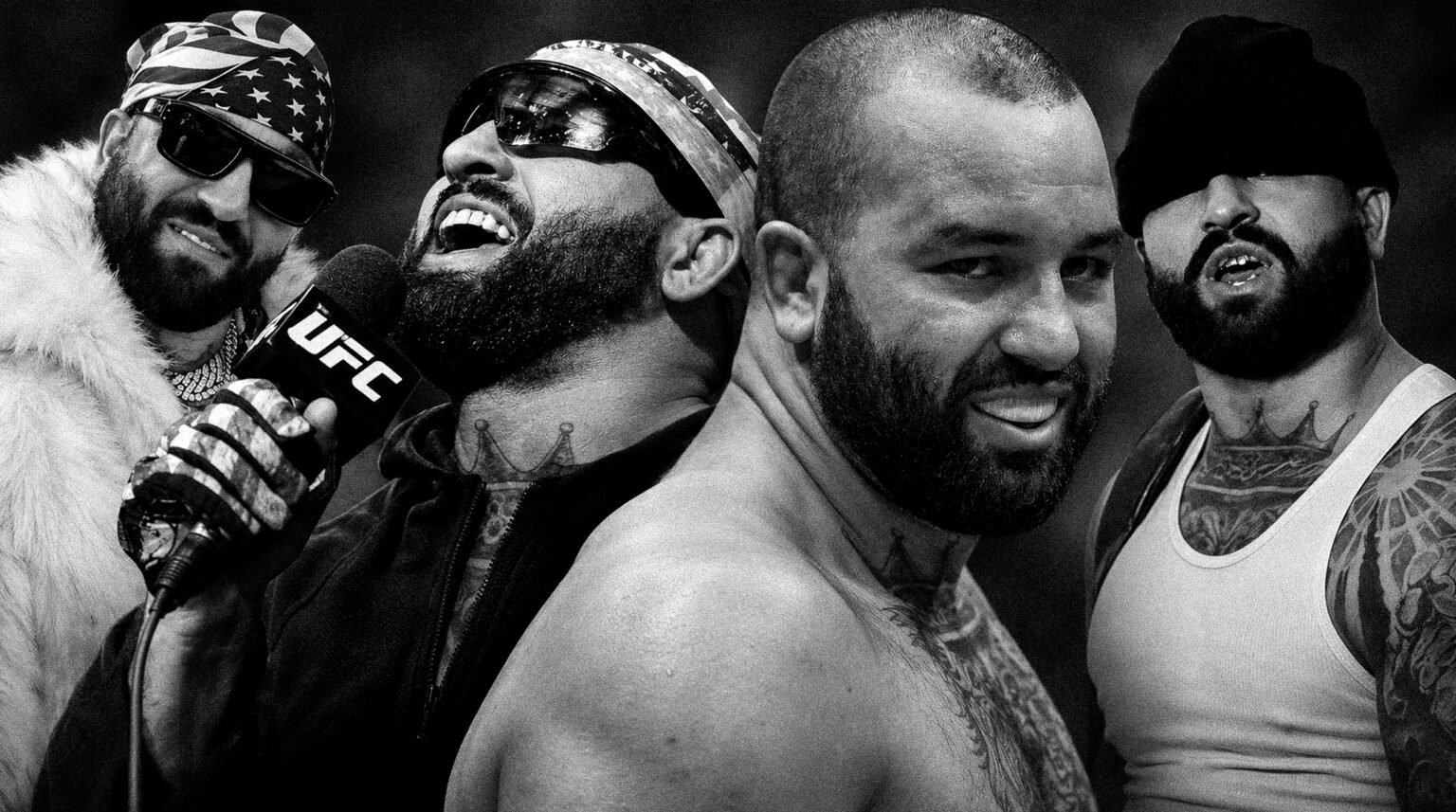

From the practice fields of the NFL to the UFC’s heavyweight title picture, Josh Hokit has made himself difficult to ignore. But how much of his rapid rise can be attributed to his performances, and how much to his ability to make people react?
Just over a year after appearing on Dana White’s Contender Series, the undefeated heavyweight secured a UFC championship opportunity against Ciryl Gane at UFC 334. Victories over established heavyweight names Curtis Blaydes and Derrick Lewis brought his record to 10–0 and put him within reach of a world title remarkably early in his MMA career.
Yet Hokit has become a talking point for reasons that extend well beyond his fighting abilities or record.
A former collegiate wrestler and NFL practice squad player, Hokit has developed a public persona built around theatrical characters, confrontational interviews, and promotional performances that borrow heavily from professional wrestling.
For some, he represents an exciting addition to an MMA landscape that has struggled to produce compelling personalities. For others, his antics are forced, obnoxious, politically charged, and increasingly difficult to separate from genuine controversy.
It raises a question about the UFC’s promotional model. Has Hokit accelerated his career because his ability separates him from his peers, because he understands how to attract attention, or because the promotion values more than competitive credentials when booking big fights?
The answer is probably a combination of all three.
From Fresno State to the Octagon
Before entering MMA, Hokit competed in football and wrestling at Fresno State. He finished fifth at 197 pounds at the 2019 NCAA Championships, earning All-American honors, and received NWCA second-team All-American recognition at heavyweight in 2020.

He pursued professional football with the San Francisco 49ers, spending time on the organization’s practice squad before making his professional MMA debut at Bellator 300 in 2023.
Hokit fought twice under the Bellator banner, including an appearance after PFL acquired the promotion. But his early career moved more slowly than he wanted. He later told MMA Fighting that limited opportunities to compete and a proposed pay cut contributed to his decision to leave.
A move to LFA brought the activity he had been looking for. Three victories in 2025 took him to 5–0 and into Dana White’s Contender Series.
For Hokit, the Contender Series became the gateway to a remarkably short journey toward heavyweight contention. His August 2025 victory over Guilherme Uriel secured a UFC contract, but his appearance also displayed the character that would attract so much attention throughout his rise.
The promotional material surrounding the fight and his post-fight interview drew criticism for racist, misogynistic, and anti-trans remarks. His over-the-top delivery also bore an unmistakable resemblance to Chael Sonnen.
Regardless of the mixed reaction, bigger fights were on the way.
Speedrunning the Heavyweight Division
Less than nine months after his Contender Series blowout, Hokit found himself on the main card of UFC 327 against No. 5-ranked Curtis “Razor” Blaydes. With only two UFC wins behind him, the step up was gigantic. None of that seemed to faze the rising contender, though.
Blaydes had spent years among the heavyweight division’s leading contenders, establishing himself through elite wrestling and an ability to neutralize dangerous opponents. Defeating someone with that level of experience represents a significant statement for any emerging heavyweight. Hokit did it in arguably the best heavyweight fight since the days of Daniel Cormier and Stipe Miocic.
It was a messy but incredible scrap that showcased Hokit’s hand speed, forward pressure, and eagerness to entertain even in the biggest test of his career. Blaydes recovered from the early onslaught and forced him through three grueling rounds before Hokit won a unanimous decision.
From Blaydes to Lewis
Less than three months later came UFC Freedom 250 at the White House, against heavyweight legend “The Black Beast” Derrick Lewis, who presented a different challenge entirely.
One of the most recognizable knockout artists in MMA history, Lewis built his reputation around extraordinary punching power and an ability to finish fights in situations where opponents appeared to hold every technical advantage one could name.
Hokit used his wrestling and speed to suffocate an already past-his-prime Lewis, repeatedly putting him on the defensive before securing a dominant second-round TKO victory.
Blaydes and Lewis on their own do not give Hokit the depth of résumé accumulated by fighters like Tom Aspinall or Alexander Volkov. But his personality and ability to generate hype appear to have helped turn those wins into a title opportunity so quickly.
An Opening at the Top
His undefeated record and rapid progression have also coincided with a heavyweight landscape that hasn’t found its footing since Francis Ngannou’s departure in January 2023.
Aspinall’s eye injury and eventual decision to vacate the championship created uncertainty at the top of the division. Interim champion Gane became undisputed champion, and in September 2026, the UFC announced Hokit as his challenger for UFC 334.
Availability, timing, commercial considerations, persona, and the ability to headline major events can all influence matchmaking decisions. Hokit’s wins put him in contention at a moment when the championship picture opened up. Whether they justified moving him ahead of other contenders is where the debate begins.
Fighter or Performer?
Hokit’s most distinctive characteristic might be his understanding that modern fighters are expected to offer more than performances inside the Octagon. Similar to professional wrestling, his work goes beyond his skill set and into character building, echoing talking points from right-wing political circles with a healthy dose of Chael Sonnen blended in.
His false claim that Michelle Obama is a man drew attention when repeated at the White House following his victory over Lewis. But the political provocations and theatrical interviews were already part of his act before his UFC debut.
It is not an entirely unfamiliar approach, considering Colby Covington carved out his own career in similar fashion, albeit without the over-the-top, cartoonish nature with which Hokit delivers his lines.
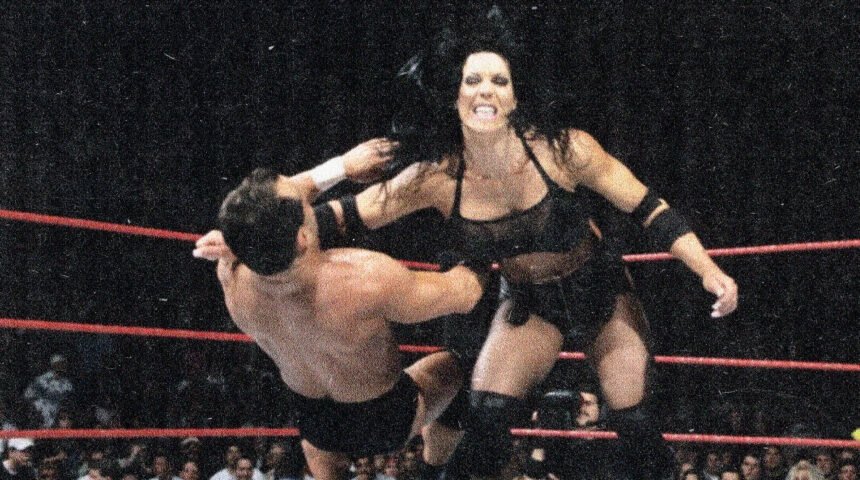
Professional wrestling spent decades demonstrating that audiences can invest in personalities, rivalries, and narratives just as much as the athletic elements on display. The UFC has incorporated similar principles into its own identity.
Turning Controversy Into Attention
Rather than simply discussing his opponents or providing conventional answers during interviews, he attempts to create moments that audiences will remember and share.
At the May 2026 UFC Freedom 250 press conference, his confrontations involving Ilia Topuria and Alex Pereira ended with his removal from the event. Even alongside two of the sport’s biggest names, he found a way to pull attention toward himself.
Acts like Hokit are particularly relevant in an era where a short social media clip can reach audiences independently of the event from which it originated. Reposts and reactions give promotional moments a life beyond the people watching live.
A conventional interview might attract attention from select die-hard fans. An outrageous promotional moment, such as Hokit dragging Topuria’s ex-wife into their exchanges, can reach audiences who have little interest in following the sport itself.
Controversy can travel quickly. Whether it translates into paying customers or lasting interest is harder to establish.
The Attention Economy
The modern UFC operates in an entertainment environment that looks very different from the one in which many of its biggest stars established themselves. Still a sport at its core, it is often presented in a way that makes the spectacle feel just as important as the competition.
Streamers, social media personalities like Nina Drama, and other content creators have expanded how MMA events reach audiences. Collaborations, reaction videos, and live appearances give fighters promotional opportunities beyond the UFC’s own platforms.
Fighters no longer depend entirely on traditional promotion, television appearances, radio shows, or press conferences to establish their public identities. They can build audiences independently, generate viral moments, and attract viewers who might never otherwise watch an MMA event.
A technically excellent fighter who rarely attracts attention may be valuable to the UFC as a competitor. A similarly—or sometimes less—talented fighter who generates widespread interest through self-promotion offers something additional.
That does not necessarily make the second fighter better or more deserving of opportunities. It may make them more commercially useful from the UFC’s perspective.
Hokit appears to embrace this with open arms. His accelerated rise is especially striking alongside the longer road traveled by contenders like Alexander Volkov.
His promotional style might not appeal to everyone, but it gives the UFC material to circulate whenever his name occupies a marquee spot.
Would Other Fighters Receive the Same Opportunity?
Imagine another heavyweight with an identical professional record and the same victories over Blaydes and Lewis, but without the over-the-top theatrics, confrontational interviews, or politically driven trash talk.
Would that fighter have received the same opportunity?
It is difficult to answer definitively, but there is reason to doubt that an identical record would guarantee identical treatment.
The uncertainty surrounding the championship and the timing of Hokit’s surge created an opening that might not have existed under different circumstances. His performances gave him a strong position in a heavyweight division that often lacks the depth of talent found in the lower weight classes.
However, it would be naive to dismiss his promotional appeal as irrelevant.
A fighter who can sell an event, generate discussion, and attract audiences has an obvious advantage over someone who offers the same credentials without comparable public interest.
During TKO’s November 2026 third-quarter earnings call, President and COO Mark Shapiro discussed expanding the UFC’s broadcast reach to increase its audience, viewership, and engagement. Those comments concerned broadcast distribution, but the same audience-growth priorities help explain the appeal of a fighter like Hokit.
The difficult part is determining where that advantage should end and how much weight rankings and results should carry.
If two contenders have comparable credentials, promotional appeal is an understandable consideration. If it allows one fighter to bypass tests that others are expected to pass, the system starts to feel more like WWE.
How Do We Explain Josh Hokit?
His athletic accomplishments are often overshadowed by the things he says. The Hokit experiment can feel like what happens when a fighter creates too much attention to be sidelined in a shifting media environment.
But reducing his opportunity to promotional antics would be unfair. It is still reasonable to question how much his notoriety accelerated the process.
The UFC has never been a pure meritocracy. Its biggest stars have often combined fighting ability with an understanding of how to attract casual fans.
Hokit has managed to turn himself into an attraction in an extraordinarily short period. Whether casuals or die-hards love him, hate him, or cannot stop discussing him, he has become a prominent personality in a division that needs reasons for people to pay attention.
His title opportunity alone raises questions about how the UFC weighs star power against competitive credentials, and whether a quieter contender with the same wins could expect the same treatment.
Ultimately, Josh Hokit represents something the UFC has understood for decades but that the modern digital landscape has amplified. Winning fights makes you a solid fighter, but making people react is what creates stars.