







Intergender wrestling has produced memorable matches and given wrestlers opportunities beyond separate men’s and women’s divisions. But making it a regular attraction presents challenges for major promotions.
WWE and AEW have to consider more than whether two wrestlers can deliver a good match. Audience expectations, the company’s image, and the people making creative decisions all influence what reaches the ring.
The challenge is giving a broader audience a reason to invest without relying on shock alone.
The Matches Have Already Worked on Bigger Stages
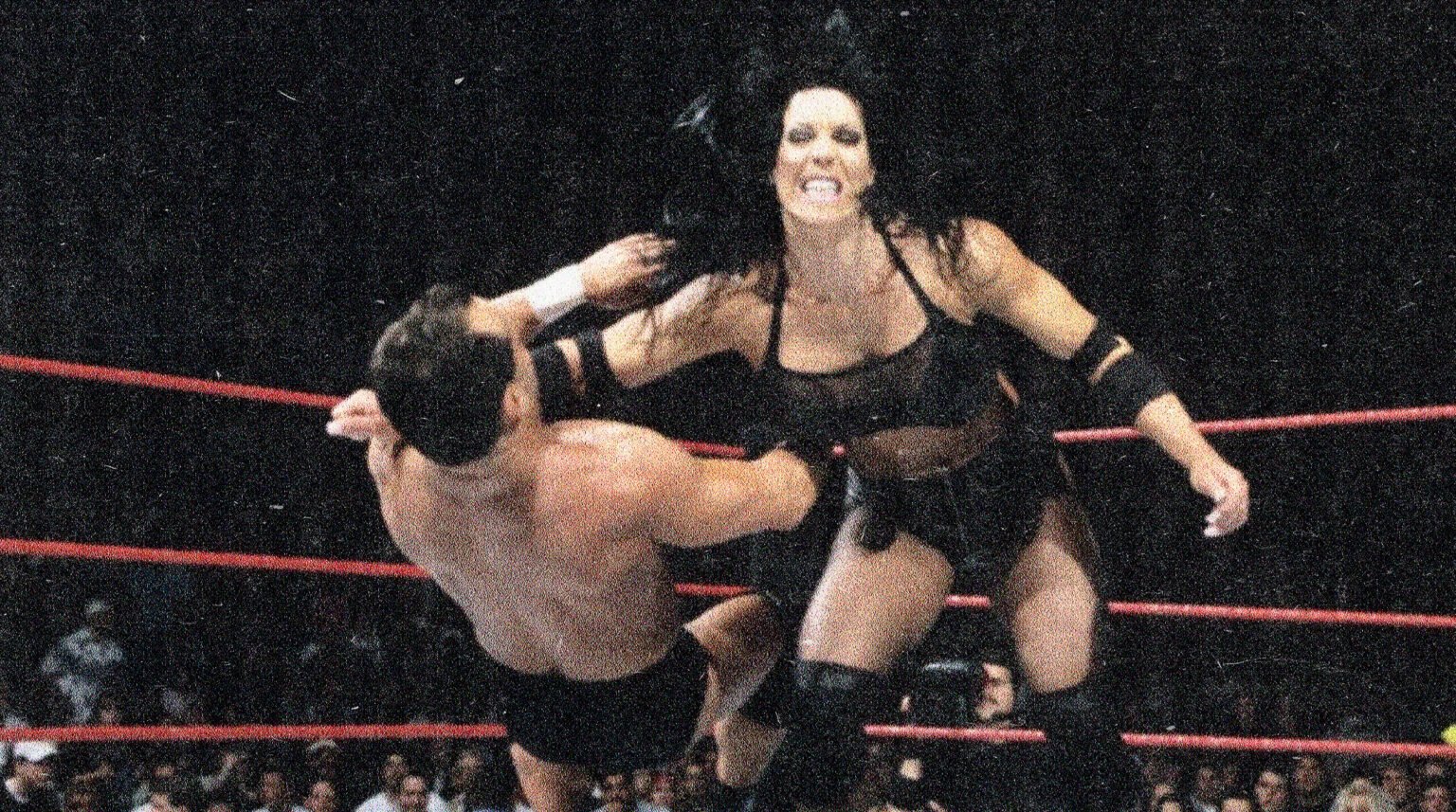
Intergender wrestling has a history beyond independent promotions. Chyna defeated Jeff Jarrett for the Intercontinental Championship at No Mercy in 1999. Years later, Rhea Ripley defeated Akira Tozawa in a singles match on Raw.
Elsewhere, Candice LeRae’s run in PWG included winning the promotion’s tag team championship alongside Joey Ryan against The Young Bucks. Lucha Underground incorporated men and women competing against each other into its presentation.
IMPACT made intergender wrestling a world championship attraction. Tessa Blanchard defeated Sami Callihan in the main event of Hard to Kill in 2020 to win the promotion’s top title.
These matches show how promotions have used intergender wrestling as a special attraction, a championship opportunity, or an established part of their shows. Making it a regular feature requires stories and opportunities that extend beyond a single wrestler or rivalry.
Even when an intergender match fits a storyline, it may not fit the image a promoter wants for the company.
Presentation Shapes What Fans Accept
Wrestling asks audiences to believe in the world a promotion creates. Consistency helps that world make sense.


If a company establishes that men and women can compete for the same opportunities, an intergender match can follow naturally. If it usually presents contact between them as a shocking boundary being crossed, suddenly asking viewers to treat it as ordinary competition requires more work.
Lucha Underground offered a useful example. In a 2016 interview with In Your Head Radio, Johnny Mundo explained that the show treated its wrestlers as larger-than-life superheroes. He argued that its women were presented as capable competitors rather than helpless characters, making those matches fit the surrounding world.
Commentary, offense, selling, and the finish all influence whether a match feels competitive or exploitative.
The Challenge of Reaching a Broader Audience
A major promotion has to consider how a match will land beyond the audience already invested in its wrestlers. A short clip can circulate without the rivalry, character development, or comeback that gives it meaning.
Sponsorship adds another consideration. Major promotions sell advertisers an association with their brand, which makes the imagery they present a business decision as well as a creative one.
A man striking a woman could make a commercial partner uncomfortable, even when the match portrays both wrestlers as capable competitors. Promoters have to weigh that potential reaction against what the match adds to the show.
A promoter’s own preferences also influence those decisions. Following Fyter Fest in 2019, Tony Khan expressed discomfort with a spot involving Jordynne Grace being punched at All In. He said intergender wrestling probably would not be part of AEW’s approach.
AEW later aired an intergender tag match featuring Kenny Omega and Riho against Kip Sabian and Penelope Ford on Dark in February 2020.
Even when an intergender match fits a storyline, it may not fit the image a promoter wants for the company.
Once the novelty wears off, is there a story left to tell?
Discomfort Does Not Disappear Because Wrestling Is Scripted
Watching a man strike a woman can be uncomfortable for some viewers, even in a scripted match. The imagery can evoke real-world violence, particularly when the action centers on a woman being overpowered or humiliated.
For major promotions trying to reach a broad audience, that discomfort presents a challenge. Fans invested in the rivalry may anticipate a comeback or understand why the match is happening. A casual viewer may see only the violence.
How the woman is presented matters. Giving her credible offense, a clear motivation, and a believable chance to win helps establish a competitive match. Prolonged punishment with little opportunity to fight back can make the violence itself the focus.
Opportunity Has to Extend Beyond the Novelty
Another disagreement centers on what progress for women’s wrestling should look like.
In a 2018 interview with Manny Tsigas, Triple H argued that women did not need male opponents to prove their ability. He emphasized giving them opportunities and a platform, though he also acknowledged that intergender moments could work in the right circumstances.
Meaningful championships, developed rivalries, and opportunities to headline give a women’s division lasting importance. Intergender matches can offer additional opportunities when they serve a compelling story.
The question is what the match adds. Does it advance a rivalry, reveal something about a character, or create a worthwhile opportunity? And once the novelty wears off, is there a story left to tell?
Intergender wrestling is a tougher sell when crossing the gender divide is the entire attraction. Its strongest case begins when the audience has a reason to care about the wrestlers on either side of it.