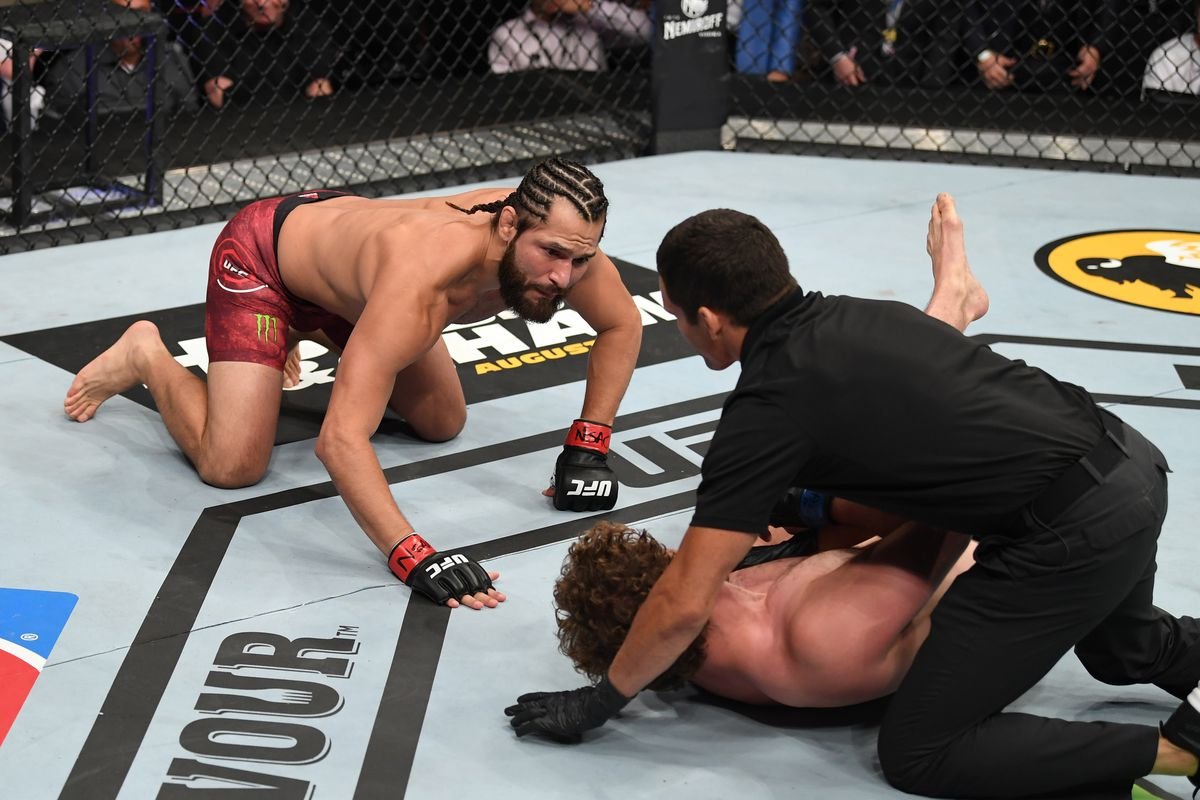








The smaller UFC Octagon gives fighters less room to work than the regular cage.
At the UFC APEX in Las Vegas, the Octagon measures 25 feet across. The standard version measures 30 feet. Five feet might not sound like much, but it can change how fighters use space, defend takedowns and control the pace.
That five-foot difference leaves roughly 31% less floor space in the smaller Octagon. For a fighter trying to maintain distance, or one trying to close it, that is a meaningful change.
Advantages of the Smaller UFC Octagon
With less room to circle away, fighters may have to engage sooner. That can make the smaller cage appealing to fans who enjoy a faster pace and more exchanges.
The fence can also help a fighter defend a takedown. If they can reach it in time, they may be able to stay upright or work back to their feet. In the smaller Octagon, that fence is never as far away.
Those factors could create more opportunities for finishes. But a smaller cage does not guarantee an action-packed fight. The matchup and each fighter’s approach still matter.
Disadvantages of the Smaller UFC Octagon
Less space can limit fighters who rely on movement, distance and angles. Someone who needs room to set up strikes or avoid pressure has less of it in the smaller cage.
The fence can be a disadvantage, too. It may help a fighter defend a takedown, but it also gives an opponent a place to trap them, close the distance and keep them from escaping.


That is what makes the size debate interesting.
The smaller Octagon can encourage exchanges, while the regular cage gives fighters more room to execute their game plans. Neither size decides the fight on its own, but each gives fighters a different problem to solve.