
AEW is Clearly a Threat to WWE — But Can They Keep Pace?

Read Time:3 Minute, 2 Second
For decades, Vince McMahon and WWE have essentially cornered the wrestling market. McMahon found ways to eliminate competition, and eventually bought out his biggest rivals — ECW and WCW. Both companies were viewed as legitimate threats at one point, but once they hit financial trouble, McMahon swooped in and acquired them, removing any real opposition.
Sure, there have been other promotions that lasted. Ring of Honor (ROH) and TNA/Impact Wrestling have both produced top-tier talent and memorable matches. But in the grand scope of mainstream wrestling, neither was seen as a true challenger to WWE’s dominance.
There’s A New Threat Now
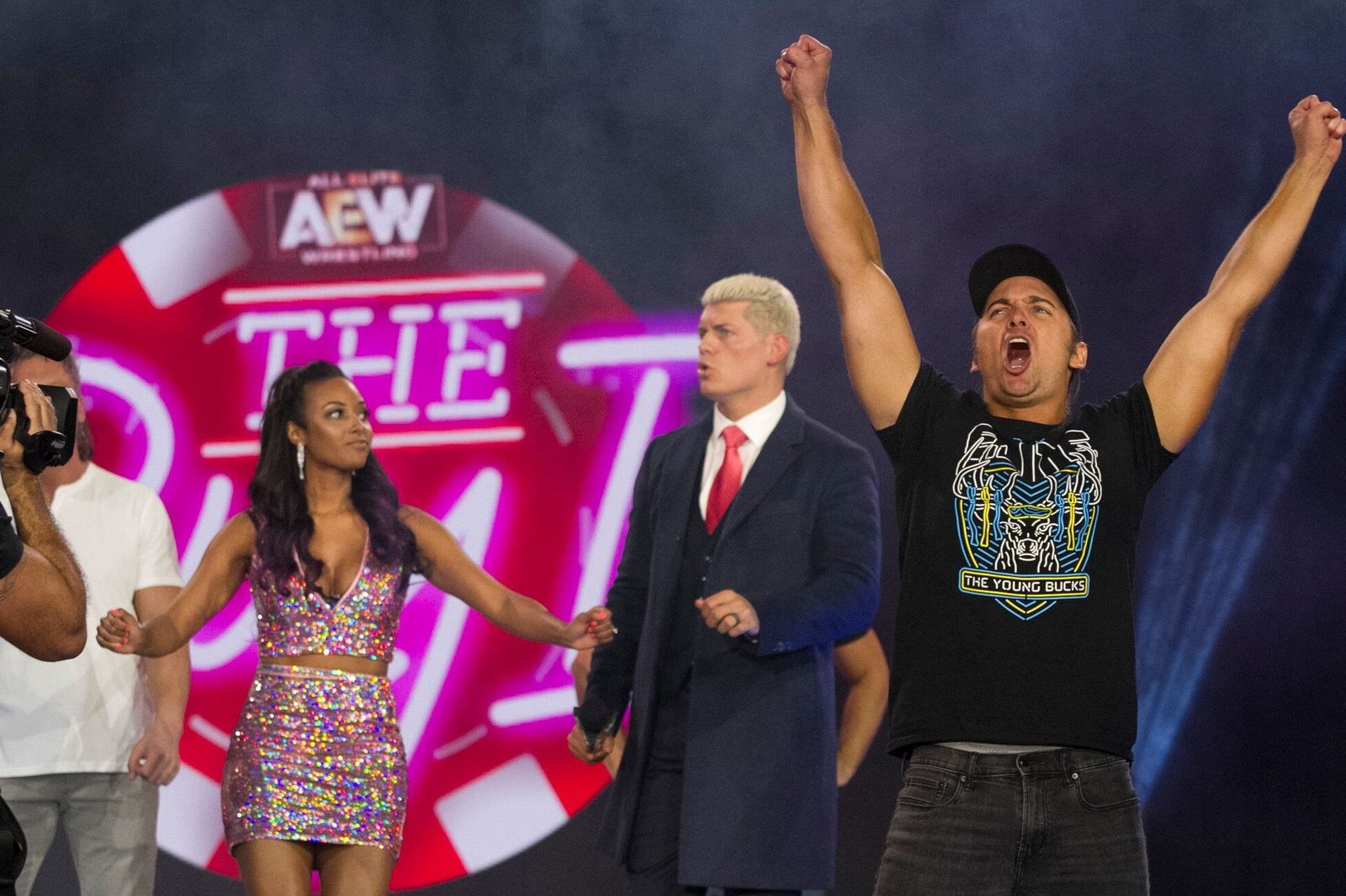
WWE is no longer the only show in town. All Elite Wrestling (AEW) has officially arrived and shaken the industry. The company was formed by Cody Rhodes, the son of Dusty Rhodes, and the Young Bucks, Nick and Matt Jackson, world-traveled tag team legends. But when AEW was first rumored, many fans doubted it. Could it work? Could it actually compete?
The turning point came on September 1, 2018, when Cody and the Bucks produced an independent supershow titled “All In” in Chicago. The event united talent from ROH, NJPW, Impact, AAA, and the NWA, featuring stars like Rey Mysterio, Kazuchika Okada, Kenny Omega, Pentagon Black, Nick Aldis, Jay Lethal, Christopher Daniels, The Briscoes, and more.
Tickets sold out in 30 minutes. Attendance capped at 11,263, the fire code limit. For an independent wrestling event, this was monumental. A clear message was sent: fans wanted an alternative.
After wrapping up their ROH contracts, Cody and the Bucks officially launched AEW in Jacksonville, backed by a major investment from Tony Khan, president of the company and co-owner of the Jacksonville Jaguars. Financial backing is crucial in wrestling; you need it to book arenas, produce television, pay talent, and grow a brand.
AEW became a real threat the moment they secured their TV deal with TNT/TBS. They weren’t directly competing on Monday or Friday nights, but they strategically targeted Tuesday, the night WWE’s blue brand historically aired. Suddenly, for the first time in decades, WWE had competition on network television.
Another major difference: AEW allows its performers to work outside the company. Talent can operate like contractors, picking up dates with ROH, NJPW, Impact, or other promotions. That freedom is a huge selling point. Wrestlers can earn more, expand their audience, and cross-promote AEW to fans worldwide.
So the big question remains…
Can AEW Compete With WWE?
This is the fan in me talking.
Yes — AEW can compete with WWE, but only if they continue to focus on wrestling itself. Fans want wrestling, not three hours of filler content. WWE’s Raw is three hours long, and at least one hour is dedicated to promos, talk segments, or backstage skits. On a good night, we get 90 minutes of actual in-ring wrestling.
If AEW stays true to its identity, wrestling first, entertainment second, it will continue to attract fans who want bell-to-bell action. But if AEW wants to compete directly, the smart target is WWE NXT, not Raw or SmackDown. The main roster shows are sports-entertainment products. NXT is pure wrestling, with strong storytelling built around the ring.
As long as AEW remains a wrestling promotion at its core, fans will stick around. They’ll support it. They’ll help it grow.
In the legendary words of Dustin Rhodes, “Vince better watch his ass.” Because AEW isn’t just here, it’s here to stay. And yes, at this point, it’s obvious:
AEW is a threat to WWE, and will continue to be.

Happy
0 %

Sad
0 %

Excited
0 %

Sleepy
0 %

Angry
0 %

Surprise
0 %
About Post Author


