





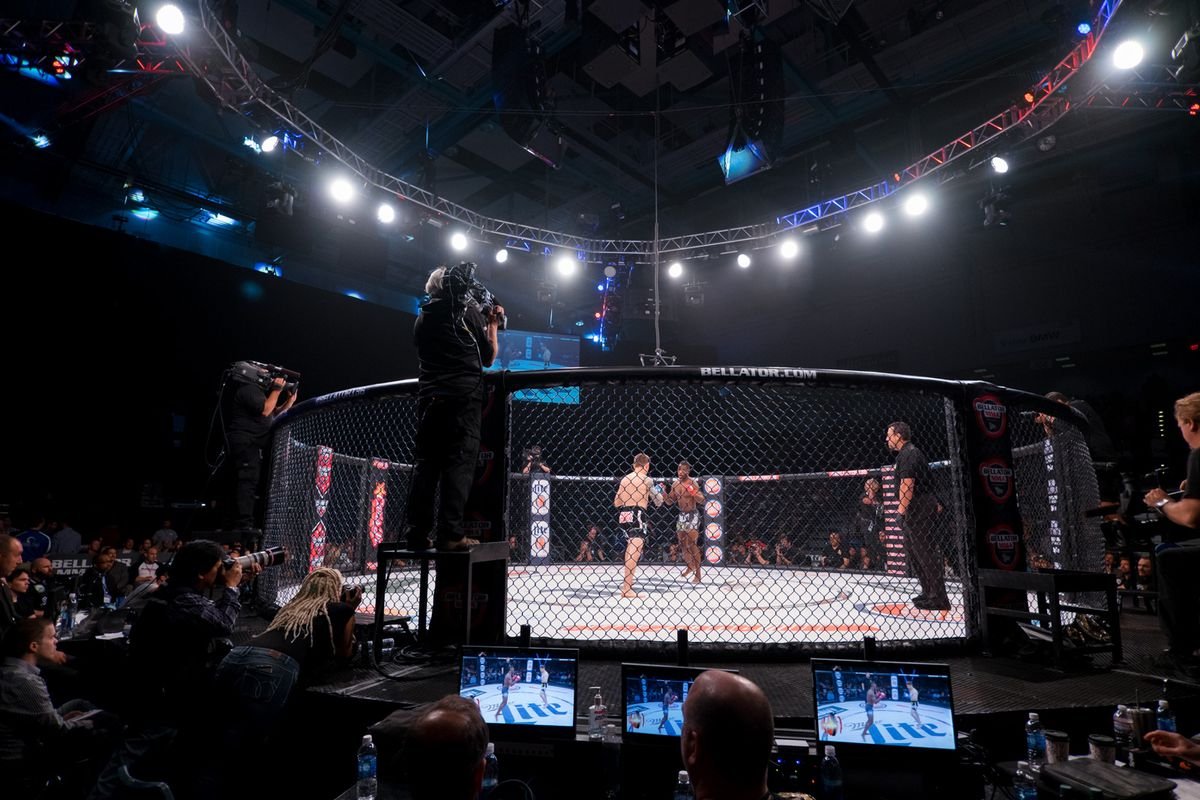

Have you checked out MMA Fighting’s ‘How to Judge an MMA Fight’ article? We went through every question in the three-part quiz. Along the way, we learned more about MMA judging while seeing just how subjective and difficult it can be after watching all the Bellator clips.
Always a Hot Topic
Every few months, judging seems to become the “big issue” in combat sports again… Whether it’s debates over rules and regulations, calls for open scoring, or proposed changes to the criteria itself. Personally, it’s not something we dig into daily while covering the sport, but we’ve always been curious to learn more. If you’re like us, you may even be considering taking one of Mark Goddard’s coaching courses to gain a better understanding.
But when we heard MMA Fighting had put together a new judging-related article, we expected a standard knowledge quiz. Instead, we found something far more interactive and insightful.
Inside the “How to Judge an MMA Fight” Quiz
The article explains the controversy surrounding judging, outlines the 10-point must system, and covers the challenges of picking a winner. But its standout feature is the interactive section, built with the help of real MMA judges.
Here’s how it works:
- You watch clips from Bellator fights (lengths vary per section).
- You score the action based on what you see.
- You then compare your score to a judge’s decision and reasoning.
It’s a great way to see how your instincts line up with professional officials, and where you might be way off.
Part One: Short Clips, Big Decisions
The first section features three clips, each about 90 seconds long.
- Kane Musa vs. Opponent – Musa loses most of the round but drops his opponent late. Easy score for his opponent.
- Lee Chadwick fight – Chadwick gets a takedown, but his opponent’s striking before and after sways the round. Chadwick doesn’t win here.
- Benson Henderson vs. Adam Piccolotti – I picked Piccolotti for early back control, but the judge went with Henderson due to more effective ground-and-pound. Lesson learned: control alone isn’t enough without a real submission threat.
Part Two: Medium-Length Clips with Tricky Scenarios
Clips here run around two and a half minutes, and things get more complicated.


- Ilima-Lei Macfarlane edges her opponent with slightly more accurate and impactful strikes.
- Guillotine choke scenario – The blue corner fighter wins because of a tight choke attempt, despite losing most of the clip otherwise. Submission threats matter.
- AJ Agazarm fight – Even though Agazarm rallies late, his opponent nearly finishes him early. Early fight-ending potential outweighs later control.
Part Three: Full Round Scoring
Here you’re given entire rounds and 30 seconds to submit a score — simulating real judging.
- Lyra vs. Hernandez – I went Hernandez for heavier shots, but the judge valued Lyra’s strong finish more.
- Charlie Ward vs. Carlos – I wrongly picked Carlos for one big strike. The judge awarded Ward for consistent, impactful output throughout.
- Carvalho vs. Lorenz Larkin – Mostly ineffective grappling, with Carvalho winning early and late striking exchanges.
- Logan Storley vs. Michael “Venom” Page (Round 5) – The infamous one. I sided with MVP for landing cleaner strikes, but the judge went with Storley for control time, despite little damage. This raised the question: What truly counts as effective grappling?
Final Thoughts
This quiz is as educational as it is humbling. It shows how even when two people watch the same action, their interpretations of “effective” striking or grappling can differ. It also highlights why fighters, coaches, and fans often clash with judges’ decisions.
If you have any interest in MMA judging, even just a passing curiosity, we highly recommend giving it a try. At the very least, it’ll make you appreciate how challenging the job really is.
Shoutout to the team at MMA Fighting for putting this together. It’s well worth your time and might just change how you watch fights. Here’s the video we published going through the article ourselves: