




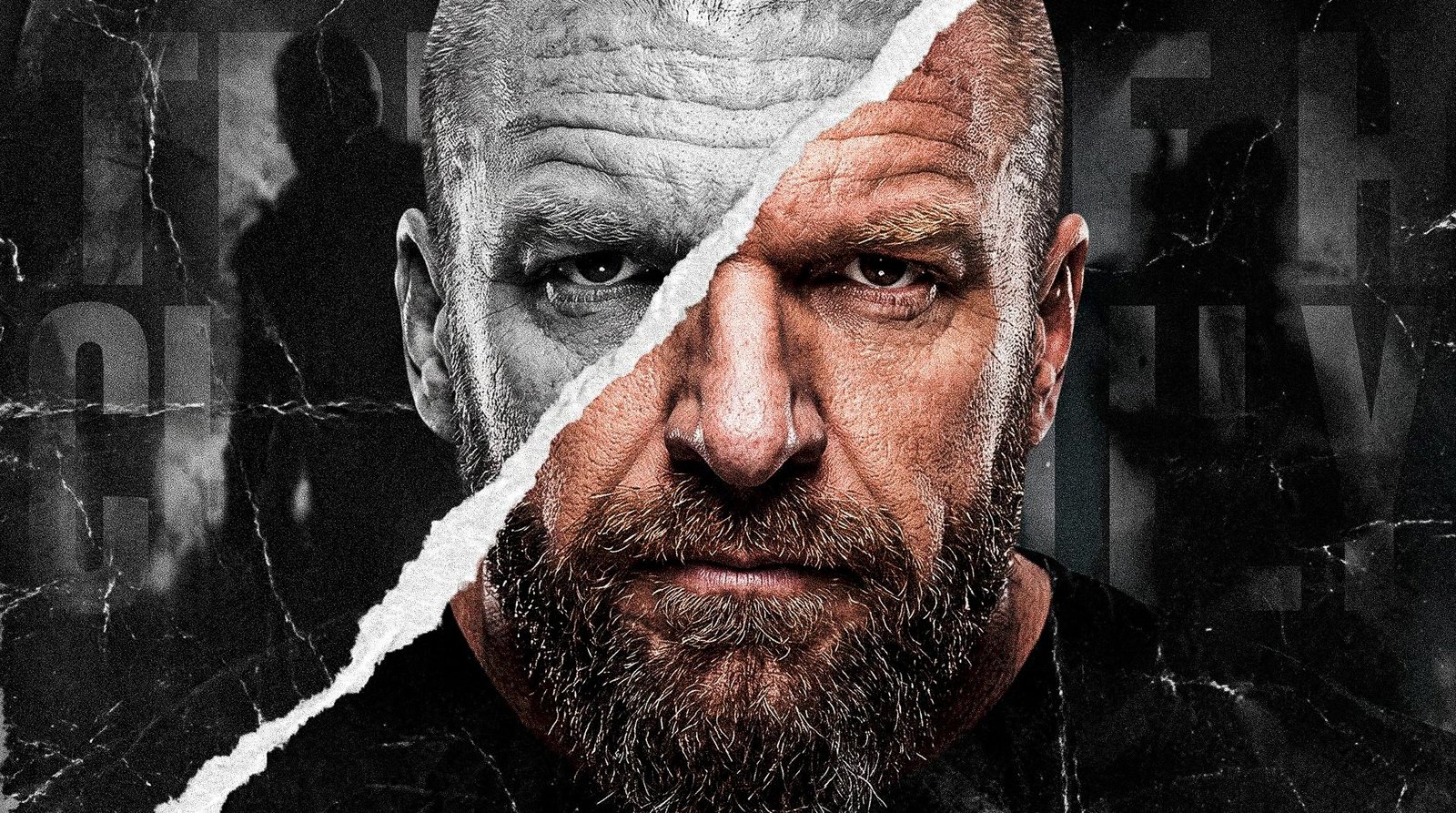

When Paul Levesque took over WWE creative in July 2022, the appeal extended beyond seeing someone new in charge. It was the possibility of discovering what WWE could become under a different creative vision.
As Vince McMahon’s son-in-law and the executive behind NXT’s rise, Levesque had long been viewed as a potential successor. His appointment following McMahon’s retirement gave him the opportunity to shape WWE’s main roster on a much larger scale.
McMahon returned to the company in January 2023 before resigning from TKO a year later following Janel Grant’s lawsuit. Through those leadership changes, Levesque remained the central figure in WWE’s creative direction.
Several years into that tenure, the question deserves to move beyond whether his booking is better than McMahon’s. Has he delivered a product compelling enough to justify remaining the person responsible for its direction?
Triple H Inherited a Strong Foundation
Levesque inherited significant creative advantages. The Bloodline was already established, Roman Reigns occupied the center of WWE’s main-event scene, and Cody Rhodes had returned with a championship pursuit that gave audiences an obvious reason to invest.
Continuing those stories made sense. A new booker does not need to dismantle successful work simply to establish ownership of the product.
Nor should Levesque’s contribution be dismissed because he inherited the foundations. Developing a story, sustaining audience interest, and delivering its payoff still require creative judgment. The existence of an established direction does not guarantee a satisfying destination.
But inherited momentum cannot remain the standard by which an entire tenure is judged.


The longer Levesque leads creative, the more reasonable it becomes to ask what WWE has built beyond its most familiar attractions. Established stars can anchor a show, but the stories around them still need to evolve. Otherwise, continuity becomes an excuse to revisit the same conflicts with diminishing returns.
Long-Term Storytelling Still Needs Progress
Patience can make wrestling better. Rivalries benefit from room to develop, character changes feel more convincing when they are earned, and a delayed payoff can become more satisfying because of the wait.
There is also a difference between allowing a story to develop and keeping it alive because the next major event needs another chapter.
When rivalries repeatedly return to familiar confrontations without changing the stakes, their length becomes difficult to defend. The audience may understand where a story is going and still lose interest in the journey.
John Cena’s heel turn exposed the gap between creating a shocking moment and building a satisfying story around it. His attack on Cody Rhodes at Elimination Chamber 2025, alongside The Rock and Travis Scott, gave WWE a defining moment for his farewell year.
The follow-through never matched that promise. By August 1, WWE was presenting the return of the “real” John Cena ahead of SummerSlam. What should have been a defining exploration of his character instead felt like a detour the company needed to escape before continuing his farewell.
Having Cena become a fan favorite again was not itself the problem. The failure was making his transformation feel more consequential at its beginning than at its conclusion. A story built around the collapse of his principles needed a redemption that carried comparable weight.
For Levesque, that is a significant creative failure. WWE had an established star, decades of audience investment, and a retirement timeline that gave every decision added importance. The resulting story fell short of what those advantages made possible.
Business Pressure Requires More Context
Creative dissatisfaction alone does not establish that Levesque’s position is in danger.
A July 2026 report from the Wrestling Observer covered JPMorgan’s decision to lower its TKO price target from $225 to $222. The concerns included weaker fan sentiment, declining Raw viewership on Netflix, and lower SummerSlam ticket demand.
However, the same report included context that matters. Premium live event viewing appeared to be growing, and fan dissatisfaction was not yet considered a structural problem. It also stated that no immediate leadership shakeup was expected.
The report identified 2028 as a potential point of increased pressure if performance weakened. WWE’s USA Network agreement runs through 2029, and Netflix’s ten-year agreement includes an option to exit after the first five years.
Those arrangements give TKO reasons to care about sustained audience demand.
Business performance also involves more than booking. Ticket prices, distribution, scheduling, and commercial decisions affect how audiences engage with WWE. Creative leadership deserves accountability for the television product, but attributing every disappointing indicator to one person would weaken the argument.
Would a Different Booker Be Enough?
Any discussion about replacing Levesque eventually produces a familiar list of names.
Shawn Michaels offers experience leading NXT creative. Brian Gewirtz has a history as WWE’s head writer and a longstanding working relationship with The Rock. Reporting in February 2024 described Gewirtz as a possible alternative if the company decided to change direction.
That older report should not be mistaken for evidence of an active succession plan.
More importantly, replacing one established WWE figure with another would not automatically address the underlying criticism. The company would still need to decide what it wants from its creative department and how much freedom different voices receive.
If the concern is predictable storytelling, a personnel change should produce a meaningful difference in the television. That means stronger motivations, rivalries that develop between major events, and opportunities for emerging performers to carry stories with actual consequences.
The case for change should be built around those expectations, rather than the assumption that another familiar name would solve everything.
Should TKO Move On?
WWE should move on from Paul Levesque as its head of creative. His tenure has produced moments worth celebrating, but those successes no longer justify the patience being asked of audiences.
Being preferable to a previous regime cannot remain a permanent defense. Levesque deserves to be judged on whether his current approach consistently produces compelling television, meaningful character development, and satisfying payoffs.
A replacement would need to meet those same expectations. Changing the person in charge would accomplish little if WWE preserved the habits that have made its storytelling feel predictable.
TKO may have no immediate business incentive to act. That does not make the creative case for change any less valid. A company can remain commercially successful while falling short of what its talent and audience deserve.
Fans should not have to keep supplying their own reasons to believe the next chapter will be better.