





The calf kick changed how MMA fighters attack the legs. A short, well-timed strike below the knee can disrupt an opponent’s balance, limit their movement, and create openings for punches. Fighters do not always need a dramatic windup or a long combination to make it effective.
- Ricardo Arona and the Calf Kick’s Early Impact
- Benson Henderson and the Art of Disrupting Rhythm
- Jeremy Stephens and the Damage That Adds Up
- Douglas Lima and the Power of Timing
- Pedro Munhoz and Attacking at Every Level
- Justin Gaethje and the Calf Kick Inside the Pocket
- Dustin Poirier and the Calf Kick’s Wider Spotlight
- How the Technique Spread
- The Defensive Side of the Evolution
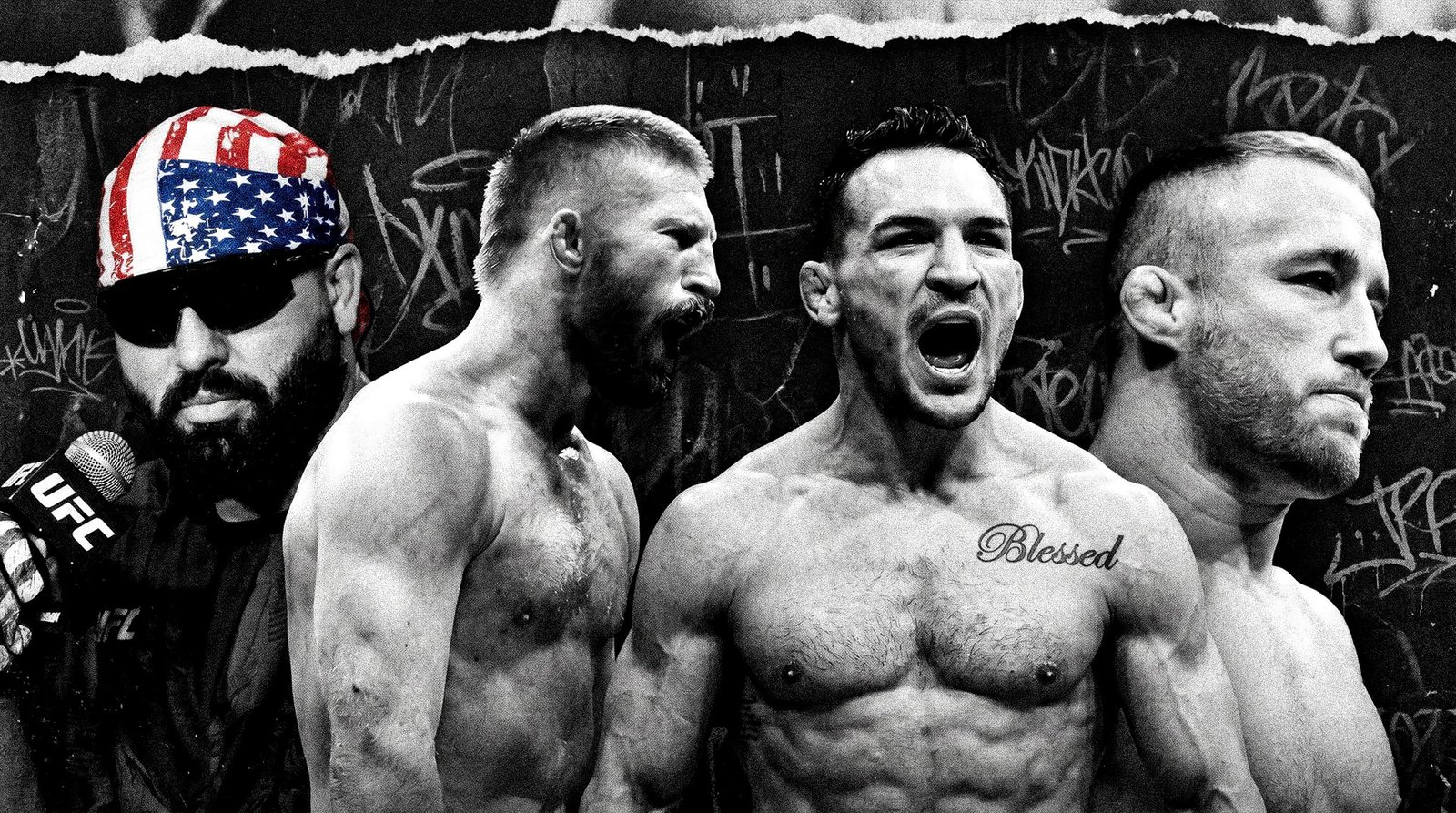
Long before the technique became a regular talking point on UFC broadcasts, Ricardo Arona was using it against elite opposition in PRIDE. Benson Henderson, Jeremy Stephens, Douglas Lima, Pedro Munhoz, and Justin Gaethje later demonstrated different ways to build it into a broader striking game.
Some used the kick to interrupt pressure. Others concealed it behind punches, attacked an opponent’s planted leg, or used the reaction to set up their next strike.
These fighters did not necessarily invent the technique or learn it from one another. Their performances offer a way to trace its growing importance, from an underappreciated attack to a weapon capable of shaping fights at the highest level.
Ricardo Arona and the Calf Kick’s Early Impact
Ricardo Arona is an early example of a fighter using calf kicks effectively on a major MMA stage. Although better known for his grappling, the Brazilian found ways to disrupt dangerous strikers by attacking their base.
His approach was often direct. Rather than always hiding the kick behind a combination, Arona would throw it from range or return it after an opponent attacked his legs. The timing could be just as important as the force behind it.
An opponent recovering their stance after a kick was vulnerable to having that stance disrupted again. Arona did not need an elaborate striking sequence to make them reset.
Ricardo Arona vs. Wanderlei Silva
PRIDE Final Conflict 2005 | August 28, 2005


Arona’s first meeting with Wanderlei Silva provides a useful starting point. Silva entered as PRIDE’s reigning middleweight champion, but their Grand Prix semifinal was a tournament bout rather than a defense of his championship.
Arona won by unanimous decision, advancing to face Mauricio “Shogun” Rua in the final that same night.
The contrast between the two men made this performance stand out. Silva was a feared offensive fighter. Arona’s strongest credentials came from grappling. Attacking low gave Arona another way to interfere with Silva’s forward movement and disrupt his balance.
It would be an overstatement to credit Arona with discovering the calf kick. But he demonstrated its usefulness against high-level opposition well before its later surge in popularity.
Benson Henderson and the Art of Disrupting Rhythm
Benson Henderson showed how attacks to the lower leg could fit into a varied championship-level game.
His kicks were part of a broader set of problems. Opponents also had to account for his punches, clinch work, and takedowns. That variety made it difficult to settle into a stance and concentrate on defending one threat.
Against an opponent looking to plant their feet and box, the low kick offered a way to interrupt their rhythm before an exchange developed.
Benson Henderson vs. Nate Diaz
UFC on FOX 5 | December 8, 2012
Henderson’s successful lightweight title defense against Nate Diaz remains one of the clearest examples from this period. He won every round on all three scorecards, combining leg attacks with wrestling and control throughout the fight.
Diaz wanted to establish his boxing and pressure. Henderson repeatedly disrupted those efforts by attacking low, forcing him to adjust his footing before he could build sustained offense.
Henderson made Diaz work to establish his footing before he could establish his boxing. The calf kicks interrupted his advances and gave Henderson room to circle away or move into another attack. Their value extended beyond damage: they helped Henderson decide when and where exchanges happened.
Henderson showed how naturally the calf kick could fit into a complete MMA game. Protecting against it became harder when the same opponent could follow with punches, enter the clinch, or change levels for a takedown.
Jeremy Stephens and the Damage That Adds Up
Jeremy Stephens brought a different emphasis. His power made opponents respect his punches, but his low kicks could become the most damaging part of the fight.
Melendez’s toughness kept him in the fight, but it could not keep him upright.
Describing Stephens only as a brawler misses the importance of that combination. An opponent occupied with defending his hands still had to contend with attacks below the knee.
His fight with Gilbert Melendez showed how quickly that problem could escalate.
Jeremy Stephens vs. Gilbert Melendez
UFC 215 | September 9, 2017
Melendez’s UFC featherweight debut became a punishing demonstration of Stephens’ leg attacks. Stephens repeatedly compromised his lead leg and won a unanimous decision, with scores of 30–26, 30–26, and 30–25.
Melendez continued trying to engage, but the damage made it increasingly difficult to maintain his footing and put together sustained offense. Stephens could threaten upstairs and return to the leg whenever the opportunity appeared.
Melendez’s toughness kept him in the fight, but it could not keep him upright. Stephens’ kicks repeatedly sent him to the canvas, making the damage impossible to overlook even as Melendez continued trying to exchange.
Stephens could threaten with his hands and return to the leg without needing every kick to produce an immediate opening upstairs. The damage was becoming its own advantage, steadily taking away Melendez’s ability to plant and attack.
Douglas Lima and the Power of Timing
Douglas Lima’s work in Bellator belongs in any discussion of the calf kick’s rise.
The three-time Bellator welterweight champion built a dangerous striking game around powerful punches and punishing low kicks. His timing made those weapons especially effective against opponents stepping forward to attack.
Lima’s first fight with Rory MacDonald demonstrated the damage those kicks could produce. His knockout of Michael “Venom” Page showed how an attack to the leg could create an immediate finishing opportunity.
Douglas Lima vs. Rory MacDonald
Bellator 192 | January 20, 2018
MacDonald won the welterweight title by unanimous decision, but Lima’s attacks to his lead leg became one of the fight’s defining features.
Afterward, MacDonald said the calf kicks had begun hurting him in the first round. He described the resulting leg pain as the worst he had experienced in a fight.
The result also makes this a valuable example of the technique’s limitations. Lima inflicted substantial damage, but MacDonald continued finding opportunities to wrestle and control portions of the contest.
Landing the calf kick did not remove the need to defend takedowns or win other exchanges. MacDonald’s adjustments helped him survive the damage and leave with the championship.
Lima later won their October 2019 rematch, reclaiming the welterweight title and winning Bellator’s welterweight Grand Prix.
Turning a Low Kick Into a Finish
Against Michael “Venom” Page at Bellator 221 on May 11, 2019, Lima turned a momentary loss of balance into a knockout. His low kick knocked Page to the canvas, and he immediately followed with a right uppercut as Page attempted to rise.
The sequence compressed the danger of Lima’s kicking game into a few seconds. He did not need to spend several rounds wearing down Page’s movement. One disruption of his footing created an opening, and Lima finished before he could recover.
Pedro Munhoz and Attacking at Every Level
Pedro Munhoz developed a striking game that made his calf kicks difficult to separate from his other threats.
Known early in his career for his submission ability, particularly his guillotine, Munhoz became increasingly dangerous when opponents stood in front of him. His low attacks gave them another reason to hesitate before stepping into range.
Pedro Munhoz vs. Brett Johns
UFC 227 | August 4, 2018
Munhoz defeated Johns by unanimous decision after a damaging three-round performance. His offense included attacks to the legs and body alongside his punches, giving Johns multiple targets to defend.
Munhoz used his low kicks to interrupt Johns’ entries and make him reset. Attacks to the head and body complicated the response: preparing for another kick to the leg could leave Johns reacting late to a strike elsewhere.
That variety made closing the distance difficult. Johns needed to get close enough to use his grappling, but Munhoz made the approach costly. The calf kick helped him manage that space while keeping other attacks available.
Pedro Munhoz vs. Jimmie Rivera
UFC Fight Night | February 27, 2021
Munhoz’s rematch with Rivera reinforced the importance of his low-kicking game. He repeatedly attacked Rivera’s leg on the way to a unanimous-decision victory, avenging their earlier meeting.
Rivera could still answer with hard punches, but each exchange offered Munhoz another chance to attack the damaged leg. Over three rounds, those repeated kicks helped him reverse the outcome of their first meeting.
Justin Gaethje and the Calf Kick Inside the Pocket
Justin Gaethje helped make low kicks central to his identity as a fighter.
His willingness to throw short kicks during punching exchanges stood out alongside his power and pressure. The attack was not reserved for moments when both fighters stood comfortably at kicking range.
As his UFC career developed, Gaethje became more selective with his offense. His kicks remained a major weapon, but they operated alongside more measured punching and better-chosen exchanges.
That combination was central to one of his most important performances.
Justin Gaethje vs. Tony Ferguson
UFC 249 | May 9, 2020
Gaethje stopped Tony Ferguson in the fifth round to win the interim UFC lightweight title, ending Ferguson’s 12-fight winning streak.
His punching was the most immediately visible part of the performance, but the attacks to Ferguson’s legs added another layer. Ferguson had to navigate the threat of being hit upstairs while dealing with kicks that disrupted his movement and stance.
Gaethje paired the calf kick with a lead hook, threatening Ferguson at two levels in quick succession. The kick disrupted his stance; the hook followed while he was responding to the attack below the knee.
That combination forced Ferguson to account for more than the next kick. Trying to regain his footing could leave him exposed to a punch, while concentrating on Gaethje’s hands gave the low attack another opportunity.
Against Khabib Nurmagomedov at UFC 254 on October 24, 2020, Gaethje faced a different problem. Nurmagomedov submitted him in the second round, imposing a grappling game that Gaethje’s striking could not keep at bay.
Like Lima’s first meeting with MacDonald, the fight demonstrated the limits of relying on damage to the legs. A dangerous calf kick still needed the wrestling, positioning, and defensive work to support it.
The punches ended the contest. The work to the leg helped create the conditions for them.
Dustin Poirier and the Calf Kick’s Wider Spotlight
Dustin Poirier vs. Conor McGregor | UFC 257 | January 23, 2021
The target was identified before the fight. Speaking to MMA Fighting, Thiago Alves explained that he, Mike Brown, and Dyah Davis had noticed McGregor’s wide stance and inward knee position. They believed those habits would leave his lead calf vulnerable, making the kicks a planned part of Poirier’s attack.
Poirier repeatedly attacked McGregor’s lead calf before finishing him with punches in the second round. McGregor acknowledged afterward that the accumulated kicks had compromised his leg.
Poirier’s performance connected years of development to one of MMA’s most closely watched rivalries. The calf kick was already established, but this fight gave a much wider audience a clear example of how it could shape a finish.
The punches ended the contest. The work to the leg helped create the conditions for them.
How the Technique Spread
Following individual fighters tells only part of the story. Coaches and training rooms helped turn an effective attack into a repeatable part of MMA preparation.
In a 2021 interview with Sherdog, American Top Team coach Katel Kubis said he learned the kick from Fabio Noguchi and brought it to ATT in 2009. The same report included a separate account from MMA Masters coach Cesar Carneiro about his use of the technique.
The technique spread through coaching as well as competition. As fighters brought it into major bouts, their success gave other gyms more reason to train both the attack and the response.
The Defensive Side of the Evolution
The calf kick is not an unanswered weapon. Coaches have described defenses that include turning the knee outward to check the strike and withdrawing the leg to avoid contact. The appropriate response depends on positioning and the fighter’s broader style.
The featured fights also show why defending it involves more than one isolated movement. MacDonald found success through wrestling against Lima. Nurmagomedov imposed his grappling against Gaethje. In both cases, the kicker still had to manage the other threats in front of him.
As opponents became more prepared to defend the calf kick, the setup became increasingly important. Punches could disguise it, a change in timing could catch a planted leg, and the threat of another low attack could create an opening to the head or body.
Arona, Henderson, Stephens, Lima, Munhoz, and Gaethje each demonstrated a different part of that process. Poirier’s win over McGregor brought another prominent example.
The calf kick earned its place in MMA because it can change what an opponent is able to do next. Its evolution continues in the setups, responses, and combinations built around it.