



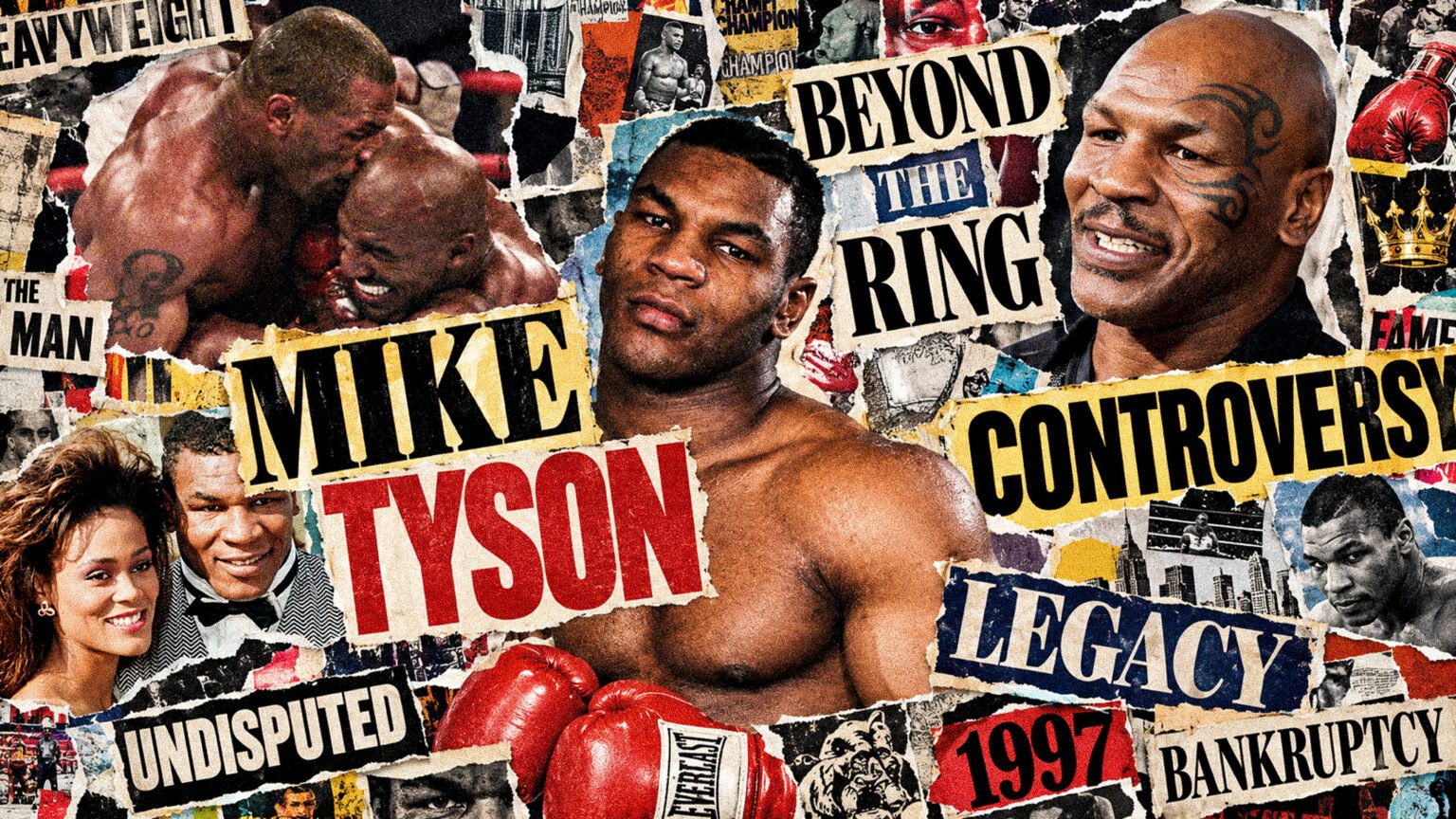

Few boxers in history have commanded attention like Mike Tyson. A former undisputed heavyweight champion known for his explosive power, intimidating presence, and remarkable rise to the very top, ‘Iron Mike’ became one of boxing’s biggest attractions of all time. But his career has also been marked by serious controversies, legal troubles, and incidents that made people question his character.
- The Evander Holyfield Ear-Biting Incident
- Robin Givens’ Allegations and the Turmoil Surrounding Their Marriage
- The 1992 Rape Conviction
- Public Outbursts and the 1998 Road-Rage Case
- The Controversial Fights Against Frans Botha and Orlin Norris
- The Andrew Golota Fight and Failed Drug Test
- The Lennox Lewis Press Conference Brawl
- The Brooklyn Hotel Brawl
- Bankruptcy, Lavish Spending, and the Dispute with Don King
- Mike Tyson’s Legacy Cannot Be Reduced to One Story
Some of those moments became defining chapters in his story. Others raised troubling questions about his conduct, the treatment of people around him, and the extent to which perceived greatness can shape public perceptions of an individual.
The following events trace major controversies and setbacks during Tyson’s boxing career, from his marriage to Robin Givens in the late 1980s to his legal and financial troubles in the early 2000s.
The Evander Holyfield Ear-Biting Incident
Few moments are as synonymous with Mike Tyson as his rematch with Evander Holyfield on June 28, 1997.
The pair had first met in November 1996, with Holyfield defeating Tyson via an 11th-round TKO to claim the WBA Heavyweight Championship. Their rematch offered Tyson an opportunity to reclaim the gold and even the score between them, but the contest became infamous for reasons that no one could have ever predicted.
During the third round of the bout, Tyson bit Holyfield’s right ear, removing a portion of it. Despite this, the fight resumed and Tyson bit Holyfield again, this time on the left ear. Referee Mills Lane disqualified Tyson, bringing the bout to a chaotic end.
Following his actions, the Nevada State Athletic Commission revoked Tyson’s boxing license and fined him $3 million. The decision threatened to derail his career and reinforced concerns about his conduct inside the ring.
Tyson later apologized for the incident, and he and Holyfield eventually developed a more amicable relationship. Nevertheless, the ear-biting incident remains one of boxing’s most recognizable moments, frequently overshadowing Tyson’s achievements as a boxer.
Robin Givens’ Allegations and the Turmoil Surrounding Their Marriage
Tyson’s personal life came under intense scrutiny during his short-lived marriage to actress Robin Givens in 1988. The pair had gotten married in February 1988, after dating for a short period of time, and their relationship imploded on national television later that same year.
In a televised interview with Barbara Walters in September 1988, Givens described the marriage as “pure hell.” She spoke about Tyson’s volatile temper and behavior that she said frightened her. The interview attracted considerable attention because Tyson sat beside her, making the couple’s private difficulties a very public matter.
Reports of alleged abuse had circulated during the marriage. Tyson has acknowledged that, in the same period, he had grabbed and shaken Givens when angry, while denying that he had hit her. The relationship ended soon after that Barbara Walters interview, with Givens filing for divorce in October 1988.
The interview raised questions about the gap between Tyson’s public image and his private relationships.
The 1992 Rape Conviction
Of all the controversies associated with Tyson, his 1992 rape conviction is among the most serious and consequential.
In July 1991, 25-year-old Tyson met 18-year-old Miss Black America pageant contestant Desiree Washington while in Indianapolis. Washington accused Tyson of raping her in a hotel room. At trial, Tyson maintained that the encounter was consensual.
On February 10, 1992, a jury convicted Tyson of rape and two counts of criminal deviate conduct. He was sentenced to ten years in prison, with four years suspended, and served approximately three years before his release in March 1995.
His impact on boxing remains undeniable, but his accomplishments do not erase the harm caused by his actions.
Public Outbursts and the 1998 Road-Rage Case
As Tyson became increasingly erratic over the years, just about anyone who crossed him could be on the receiving end of his volatility.
In September 1988, a television crew from WNBC approached Tyson while he was out running near his home in New Jersey. It is alleged that Tyson threw his Walkman at the crew’s camera and pulled the camera down. Despite this, the station stated that it did not intend to file charges.
A decade later, Tyson faced a more serious legal matter following a traffic collision in Maryland on August 31, 1998. The incident involved Tyson’s second wife, Monica, and two other motorists, who accused the boxer of assaulting them after the collision.
Tyson entered a no-contest plea to misdemeanor assault charges in December 1998. In February 1999, he was sentenced to two years in jail, with one year suspended.
The Controversial Fights Against Frans Botha and Orlin Norris
Tyson’s boxing controversies were not confined to the Holyfield incident either. Several of his other fights also attracted scrutiny over conduct during bouts.
In January 1999, Tyson faced South African heavyweight Frans Botha in Las Vegas. The bout was rough, with repeated clinches that tested the referee’s patience. During the fight, Tyson grabbed and twisted Botha’s arm in an incident that immediately drew the official’s attention. Despite that, the bout continued, with Tyson eventually stopping Botha in the fifth round. Botha later accused Tyson of trying to break his arm.
Later that same year, Tyson fought Orlin Norris in a bout that lasted only one round. After the bell sounded to end that opening round, Tyson landed a punch on Norris that sent him to the canvas. As a result of the punch after the bell, Norris suffered a knee injury and could not continue. The contest was declared a no-contest.
Both fights illustrated the consequences of aggression outside boxing’s rules. Botha’s accusation became part of the story of a Tyson victory. The late punch against Norris left the contest without a winner.
The Andrew Golota Fight and Failed Drug Test
Tyson’s October 2000 bout against Andrew Golota produced another unusual chapter in his career.
Tyson won by technical knockout when Golota refused to continue following two aggressive rounds. However, officials later changed the result to a no contest after Tyson tested positive for marijuana. The failed test raised further questions about his compliance with the sport’s anti-doping rules and the standards expected of professional fighters.
For refusing pre-fight testing, Michigan imposed a three-month license suspension, a $5,000 fine and a required $200,000 charitable donation.
In his 2013 memoir, Undisputed Truth, Tyson described using a prosthetic device called a “whizzer” to substitute someone else’s urine during drug testing. He also addressed the positive marijuana test following the Golota fight, claiming that he had been tested before a member of his team could provide the device.
The contrast between the money he had earned and the financial position he eventually faced made the bankruptcy particularly striking.
The Lennox Lewis Press Conference Brawl
By January 2002, a long-awaited heavyweight showdown between Tyson and Lennox Lewis was in the works. The two fighters were expected to meet in a major championship bout. However, their promotional press conference descended into violence before the fight could be finalized.
When Lewis took his place on the stage at the New York event on January 22, 2002, Tyson moved toward him. A physical confrontation followed, with Tyson throwing a punch toward a member of Lewis’ entourage before the melee spread across the stage. Lewis also threw a punch during the altercation, and members of both camps became involved. The chaos resulted in World Boxing Council president José Sulaiman being knocked down and injured in the moment.
The incident threatened to complicate the arrangements for a fight that was already facing licensing and logistical challenges. The bout was eventually rescheduled for Memphis, Tennessee, where Lewis defeated Tyson by an eighth-round knockout on June 8, 2002.
The brawl demonstrated how Tyson’s behavior outside the ring could jeopardize the opportunities his boxing career created.
The Brooklyn Hotel Brawl
In June 2003, Tyson faced criminal charges following a confrontation at a Brooklyn hotel.
Two men named Samuel Velez and Nestor Alvarez were also involved in the incident. Tyson’s legal team argued that the men had provoked and threatened him. The prosecutors maintained that his response went too far. The confrontation unfolded as Tyson faced mounting legal and financial difficulties, with his boxing career far removed from its peak.
Tyson initially faced assault-related charges. In February 2004, he agreed to plead guilty to disorderly conduct instead of proceeding to trial on the more serious allegations. The agreement included 100 hours of community service and six months of court-ordered counseling. After that was complete, the case was dismissed.
Bankruptcy, Lavish Spending, and the Dispute with Don King
Tyson’s financial collapse belongs to a different part of this history. It involved his spending and financial obligations, alongside disputed allegations about how his earnings had been managed.
In August 2003, Tyson filed for Chapter 11 bankruptcy protection in the US. Reports at the time stated that he had earned hundreds of millions of dollars during his boxing career but was facing substantial debts.
Tyson’s lavish lifestyle included expensive homes, luxury cars, jewelry, gifts for people in his entourage, and even the well-known Bengal tigers. His financial problems were also complicated by taxes, legal expenses, and family obligations. The contrast between the money he had earned and the financial position he eventually faced made the bankruptcy particularly striking.
Tyson also brought a $100 million lawsuit against his former promoter, Don King, alleging that King had financially wronged him. King denied Tyson’s allegations, but the two settled the lawsuit in 2004 for a reported $14 million.
Mike Tyson’s Legacy Cannot Be Reduced to One Story
Tyson’s legacy reflects both his remarkable success as a boxer and the controversies that shaped his life beyond the ring. His career brought extraordinary wealth and opportunities, but also repeated interruptions through prison sentences, suspensions, and confrontations.
His impact on boxing remains undeniable, but his accomplishments do not erase the harm caused by his actions. Allegations, proven crimes, sporting misconduct, and financial setbacks each deserve their own context and seriousness.
Mike Tyson repeatedly found a way back into the ring and public life. His story is as much about those returns as the reasons they became necessary. It’s a story full of second chances, even when he had given people reason to believe he would waste them.