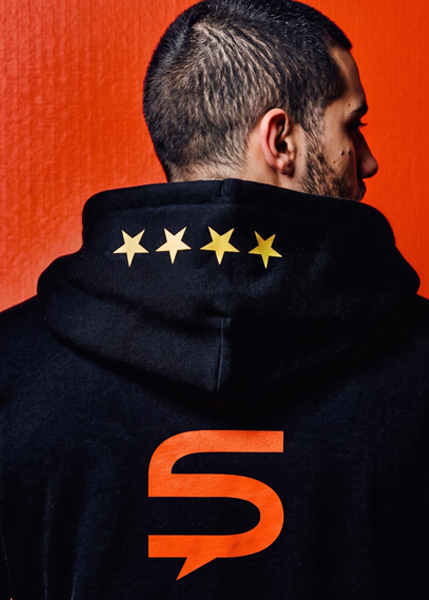






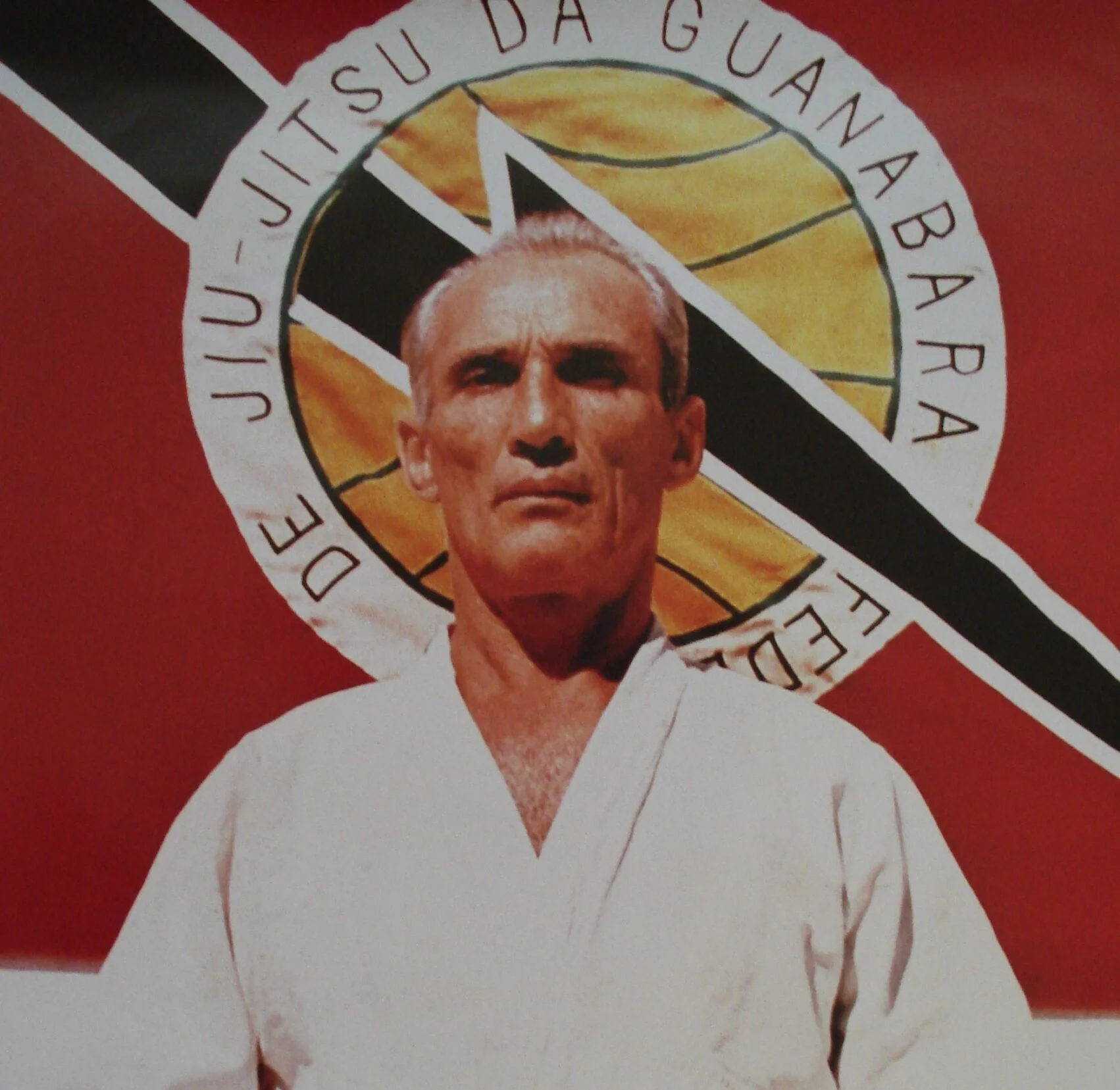

Hélio Gracie helped bring Brazilian jiu-jitsu to the world. Before his name became synonymous with the sport, he was photographed wearing the green uniform of Brazilian Integralism, a fascist movement. The image tells another part of his story.
Historian Leandro Pereira Gonçalves brought renewed attention to the photograph in 2020. It appeared on the June 3, 1936, cover of A Offensiva, an Integralist newspaper, as Gracie signed a contract for a fight with Takeo Yano.

“Helio Gracie, the renowned patrician jiu-jitsu champion, signed on Saturday, in our writing, the respective contract with Empreza Pugilistica Brasileira for the accomplishment of the expected fight with the valued instructor of the Navy Sports League, Takeo Yano”, states the 1936 edition of the A Offensiva.
What was Brazilian Integralism?
Founded by Plínio Salgado in 1932, the Ação Integralista Brasileira was a nationalist, authoritarian movement inspired by European fascism. Its members wore green shirts bearing the Greek letter sigma and rallied around the slogan “God, Fatherland and Family.”
The newspaper photograph was not the only record linking Hélio to the movement. As UOL reported, earlier historical research had identified him in a police record as an Integralist. Gonçalves said Gracie was active in the movement’s Ipanema group.
“When the person wears the green shirt, he is incorporating not only a political party but a way of life. You were an integralist at all times in your life,” claimed historian Leandro Pereira Goncalves.
The Family’s Response
Hélio’s son Rorion disputed the claim that his father had been an active militant. In a response published by UOL, he wrote that “Hélio Gracie nunca foi ideólogo e militante no movimento integralista.” He argued that his father wore the uniform while promoting a sporting event, comparing it to an athlete wearing a sponsor’s logo.
Hélio’s niece Reila acknowledged his connection to Integralism but described his political affiliations as circumstantial. She told UOL she had another photograph of him wearing the movement’s uniform. Gonçalves found no record of Hélio participating in Integralism after World War II.



The Gracie Family’s Controversial History
Other members of the Gracie family have faced questions about their public statements.
In 2012, Renzo Gracie posted a quote attributed to Heinrich Himmler, the Nazi SS leader who played a central role in the Holocaust. When the post resurfaced in 2020, Renzo said he had not known who Himmler was and declined to apologize. He also directed this remark at a French user:
“It’s not my fault that your grandparents let [Nazis] march through your country without a fight.”
The family’s history also includes documented homophobic remarks. Historian José Tufy Cairus cited a 1997 interview in which Hélio described homosexuality as a weakness and a disease. Cairus wrote that Robson and Carlson Gracie expressed similar views about masculinity.
In a separate public debate, Hélio’s son Royce posted a statement supporting Israel and his Jewish friends in February 2024 following the October 7, 2023, attacks. The post drew backlash during Israel’s war in Gaza. The following month, Royce appeared on The Deen Show, where he discussed civilian deaths on both sides and took his shahada, the Islamic declaration of faith, during the appearance.
The 1936 photograph and police record document Hélio’s connection to Integralism. How deeply he was involved, and for how long, remains disputed.