




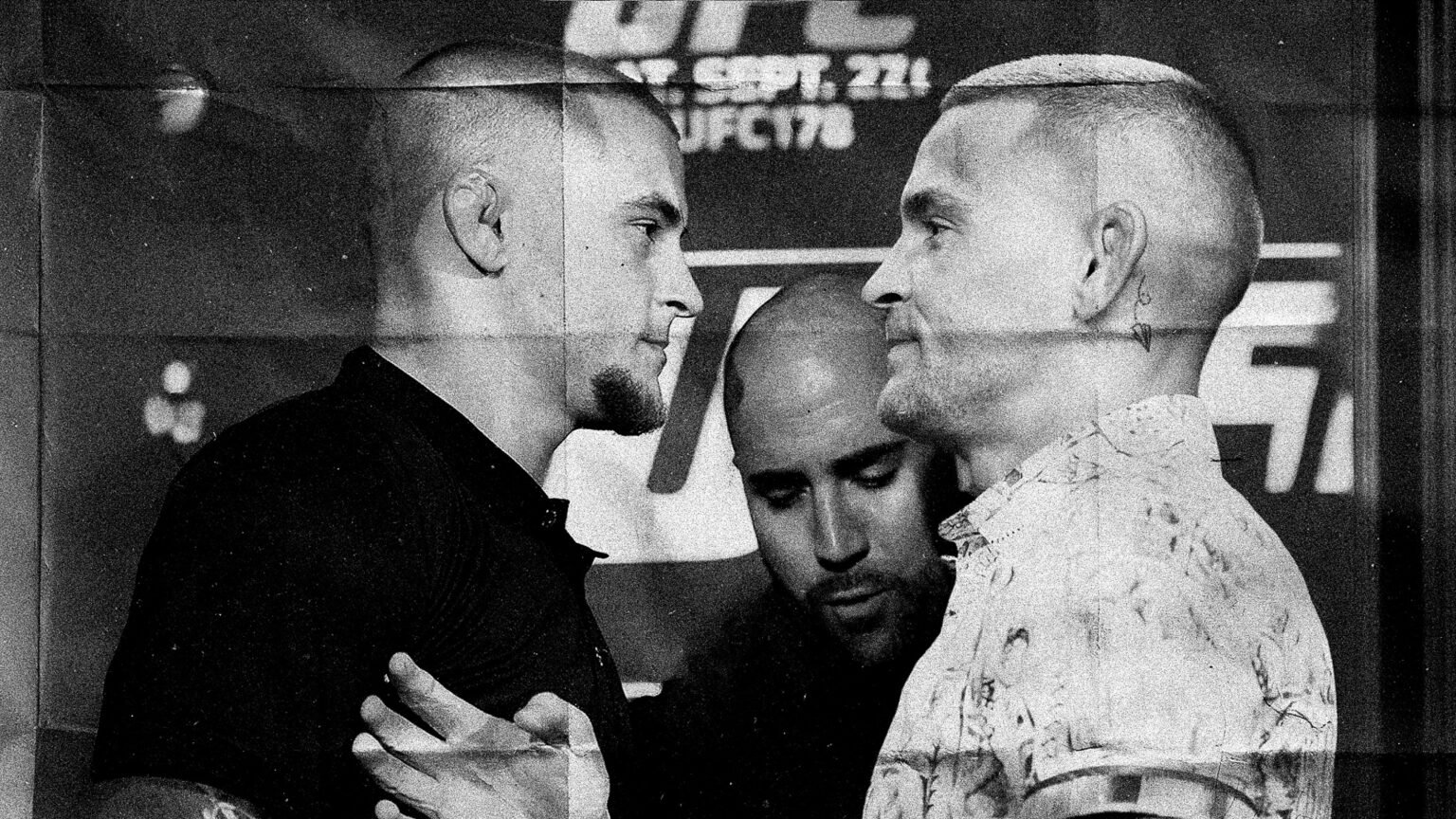

Dustin Poirier left featherweight with eight UFC wins and no title shot. He had beaten Max Holloway, headlined against The Korean Zombie, and established himself as a contender. He had also reached a point where preparing to make weight was taking too much attention away from preparing to fight.
His move to lightweight in 2015 meant leaving behind a place he had spent four years earning. What followed made that decision one of the most consequential of his career.
At 155 pounds, Poirier won an interim UFC championship, beat Conor McGregor twice, and built a résumé against some of his generation’s best fighters.
Comparing his two UFC runs shows how an accomplished young contender became a fighter whose place in the sport extended beyond whether he held its biggest belt.
Featherweight Established the Foundation
Poirier arrived in the UFC in January 2011 at just 21 years old. His debut opponent, Josh Grispi, had been scheduled to challenge José Aldo for the featherweight championship before Aldo withdrew.
Poirier beat Grispi by unanimous decision. In one appearance, he had defeated the man who was supposed to be fighting for the belt.
Three more victories followed, including a first-round submission of Holloway in 2012. That win earned Submission of the Night and began a rivalry that would eventually span two divisions and three fights.
His featherweight run also exposed the distance between being a promising contender and reaching the championship. The Korean Zombie submitted him in a demanding main event, and Cub Swanson later beat him by decision. Poirier rebuilt with three consecutive wins before McGregor stopped him in the first round at UFC 178.

He finished that chapter with an 8–3 UFC record and five finishes. The question was whether continuing to force himself down to 145 pounds was helping him move forward.
Why Poirier Returned to Lightweight
Although his UFC career began at featherweight, Poirier had competed at lightweight before joining the promotion. His 2015 move was a return to familiar territory.
The weight cut had become a burden. In interviews around the transition, he described difficult training camps and the strain of focusing on the scale. After moving up, he told UFC.com that he felt more athletic, explosive, and powerful.
That does not mean the cut explains every featherweight defeat. Poirier himself rejected that excuse for the McGregor loss, crediting his opponent for landing the shot and finishing him.
The change gave him a more manageable preparation process. He still had to become a better fighter.
Lightweight Turned Promise Into a Championship
Poirier opened his UFC lightweight run with four consecutive victories. A knockout loss to Michael Johnson in 2016 interrupted that progress and showed that moving up had not removed every obstacle.
His response produced the strongest stretch of his career.
From February 2017 through April 2019, Poirier went unbeaten across six appearances, with five wins and a no contest. That run included victories over Anthony Pettis, Justin Gaethje, Eddie Alvarez, and Holloway.
Each added something different. Against Gaethje, he survived a punishing fight and found a fourth-round finish. Against Alvarez, he settled a rivalry left unresolved by illegal knees in their first meeting. When he fought Holloway, he proved he could beat an established champion over five rounds.
The Holloway victory at UFC 236 earned him the interim lightweight championship. Seven years after submitting a young Holloway at featherweight, Poirier defeated a much more accomplished version with a belt on the line.
The Two UFC Runs Compared
| UFC career chapter | Featherweight run | Lightweight run |
|---|---|---|
| Period | January 2011–September 2014 | April 2015–July 2025 |
| Record | 8–3 | 14–6, 1 no contest |
| Wins by stoppage | 5 | 10 |
| Championship achievement | No UFC title fight | Interim UFC lightweight champion |
These totals cover each career period, including bouts contested above the division limit after an opponent missed weight.
The records alone do not explain the difference. At lightweight, Poirier sustained his place among leading contenders across a decade.
He beat McGregor twice in 2021, won a five-round battle with Dan Hooker, and finished Michael Chandler and Benoît Saint Denis. Even after losing championship opportunities, he kept producing wins that made him relevant to the next one.
Rivalries That Connected Both Chapters
McGregor and Holloway provide the clearest links between Poirier’s featherweight beginnings and lightweight peak.
McGregor stopped him in 2014. In their 2021 rematch, Poirier became the first fighter to beat McGregor by knockout or TKO in MMA. Their third meeting ended with a doctor stoppage after McGregor suffered a broken leg, leaving Poirier ahead 2–1.
Poirier also finished his trilogy with Holloway ahead 2–1. Holloway won their final meeting by unanimous decision at UFC 318 in July 2025, retaining the BMF title as Poirier retired in Louisiana.
Against Gaethje, the rivalry ended level. Poirier won their 2018 fight before Gaethje took the 2023 rematch with a head-kick knockout. Alvarez never beat him, with their no contest followed by Poirier’s stoppage victory.
What Lightweight Added to His Legacy
Dustin Poirier never won the undisputed UFC lightweight championship. Khabib Nurmagomedov, Charles Oliveira, and Islam Makhachev each stopped him in title fights. Yet his decade in the division produced an interim championship, victories over former champions, and rivalries that connected some of the biggest names of his era.
Featherweight established that Poirier belonged against elite competition. Lightweight gave him the years, opponents, and championship stakes to show how much more he could become.
Leaving 145 pounds meant surrendering ground he had already earned. But the best years of his career came after he let it go.