






“Where can I watch the full video?”
I would’ve read that comment and assumed somebody liked a clip enough to ask for the rest. Then I found it written into a set of instructions.
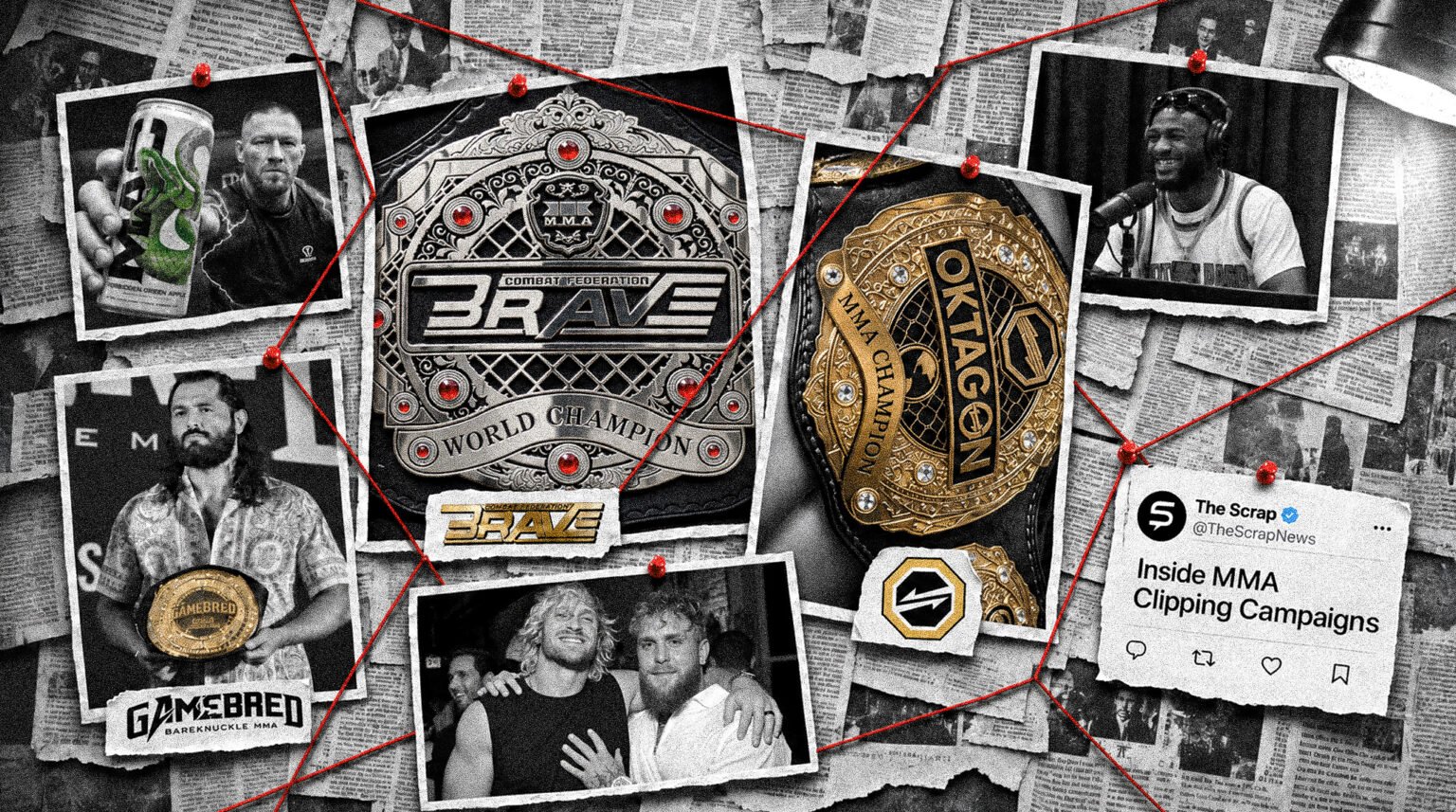
I started looking into clipping campaigns after reading a story about political clipping. The Atlantic reported that the head of the Norwegian company ClipSon ran a Discord server called US Politics Clipping. My immediate thought was that MMA had to have something similar. It made me wonder how many fighters and promotions I’d discovered that way.
In the chatroom for an MMA Clipping campaign, I came across a pinned screenshot with a section called “Comment strategy.” It told the person posting a clip to switch to an alternate account, ask where to watch the full video, then switch back and answer immediately. The suggested reply pointed viewers to Ahmed Amwell’s YouTube channel. The screenshot didn’t say who wrote it, but what stuck with me was that the question I’d taken as a sign of genuine interest was part of the assignment.
On X, my For You feed shows me posts from accounts I don’t follow, too. Sometimes a knockout is good enough that everybody wants to share it. Sometimes several editors have access to the same footage, a set of instructions, and a chance to get paid if enough people watch.
So when the same clip keeps showing up on your feed, how did it get there in the first place?
MMA Was Paying for Fan Edits a Decade Ago
In January 2016, ONE Championship offered $500 to the fan who made the best highlight video each month. Editors could put their skills to work using ONE footage, and the promotion gave people a reason to spend time going through its fights. It’s the earliest example I found in MMA of a promotion putting money behind fan edits. Back then, the pitch was to make something good enough to win. Today, you can browse a list of fighters and find out what a thousand views of each one are worth.
By 2022, former kickboxer Andrew Tate had demonstrated how that financial incentive could shape a feed. An Observer investigation documented how members of his online academy circulated videos of him and earned commissions for bringing in new members. Someone encountering Tate on several different pages had little way of knowing how many of those accounts had the same reason to keep posting him.
Content Rewards says it got its start on Whop in late 2024. By March 2025, Whop was publicly inviting brands, musicians and streamers to pay people to spread their content. The marketplace had some familiar backers. Peter Thiel participated in Whop’s $17 million Series A in 2023. Anti Fund, the venture firm Jake Paul co-founded, also lists Whop in its portfolio. Content Rewards now operates through its own company.
The editor may mean every word, but what I can no longer assume is that their enthusiasm is what prompted the post.
What Happens Before a Clip Reaches You
Clipping Outlaws gave editors working on its $7,500 campaign for OKTAGON 94 a specific assignment in the campaign brief.
“Last time Europe filled a stadium the world saw the record but not the name. Your job is to make sure every clip says Oktagon.”
Editors had to use official footage and tag OKTAGON in the caption. For knockout edits, the brief suggested showing the finish in the first two seconds, replaying it at the end and putting both the fighter’s name and OKTAGON 94 on screen. It even supplied an opening line an editor could use: “no way this happened at oktagon 94.”
Clipping Outlaws also described the two weeks after fight night as the biggest window for the campaign. A fan might share their favorite finish on Saturday and move on to the next card. An editor could go back through the footage on Tuesday, find a walkout they’d overlooked and earn money from that, too. If you came across both posts, you’d see OKTAGON’s name twice, which was part of the assignment.
Getting paid also depended on how people responded. In onboarding materials reviewed by The Scrap, Clipping Outlaws tells members to submit each post within 30 minutes of publishing. Posts with an engagement rate below 1% are ineligible for payment.
A separate document shared through MMA Clipping, The 3-Day Account Warming Guide, coaches editors on making a new page look like an ordinary fan account. For the first clip, it suggests a caption: “bro this moment was too good not to share.” That sounds like somebody telling me why they posted. But now it could also be somebody following the guide.
I notice this most on X, though the platforms vary by campaign. A brief featuring Dillon Danis accepted clips on X, Instagram, TikTok and YouTube. The OKTAGON 94 campaign listed Instagram, TikTok and YouTube.
What makes me think twice about my own feed is how much of that activity can look spontaneous. X says it considers a post’s popularity and how people in my network interact with it when deciding what to recommend. Several pages posting the same footage give it several chances to reach me.
Whether a scripted reply helps any one clip travel further is harder to know. But even if it did nothing for the algorithm, it still could’ve worked on me.
What Can an MMA Fan Make From Clipping?
Say you watch a card, cut a video and it gets 50,000 views. What’s that worth? Under the advertised rates and caps below, here’s what an approved post with 50,000 eligible views could earn.
| Campaign | What the editor is asked to do | Payout at 50,000 eligible views |
|---|---|---|
| OKTAGON 94 | Edit official event footage and tag the promotion. | $50 |
| Up Next Fighting | Turn fight footage, rivalries or funny moments into edits for a combat sports account or UNF fan page. | $50 |
| Aljamain Sterling on Joe Rogan | Showcase Sterling’s personality and direct viewers to his Instagram. | $50 on Instagram or TikTok, $37.50 on YouTube |
| MAC Energy | Edit footage of Conor McGregor and Rob O’Neill, show the brand’s logo and document a majority-U.S. audience of at least 60%. | $100 after the per-post cap |
I get the appeal. If you already watch regional MMA and know which fighter gives a great interview or which prelim is worth staying home for, there’s something pretty cool about getting paid for that knowledge.
Gamebred Bareknuckle MMA specifically asked editors to go through its prelims for celebrations, funny moments and exchanges worth sharing. That’s a promotion putting resources behind the lesser-known names on its own card. A highlight editor now has a financial reason to pay attention before the main event.
An editor might also pick a campaign because the rate looks good. P9 Clipping posted a $1,000 campaign around Aljamain Sterling’s appearance on Joe Rogan’s podcast. A longtime fan could spend an afternoon finding the funniest thing Sterling said. Someone hearing him for the first time while looking for work could pick the exact same moment. Either way, the assignment was to show enough of Sterling’s personality to make viewers want to follow him on Instagram.
So are campaigns paying people to have an opinion? They’re paying people to choose a moment, frame it and put it in front of an audience. Some briefs go as far as suggesting the words an editor can use to sound impressed. The editor may mean every word, but what I can no longer assume is that their enthusiasm is what prompted the post.
One Up Next Fighting listing gives readers a way to judge that for themselves by telling editors to identify the clip as paid and suggesting #ad in the first line. If I already trust a page’s taste in fights, that’s a detail I’d want to know.
Did the Campaigns Actually Work?
Some individual clips took off. For a JAXXON campaign featuring footage from Khamzat Chimaev’s title camp and the buildup to UFC 319, ClipIt links to two YouTube posts it says reached 4.1 million and 2.4 million views. In each case, a single edit reached millions.
The campaign for Jake and Logan Paul’s Paul American shows how quickly views can add up across thousands of posts. In an April 17, 2025 update, Evan Stanfield told participants the $20,000 budget had run out after more than 5,500 submissions. Some editors had already published their videos and were still waiting for approval when the money ran out. Clipping Culture later reported 11 million views across 6,141 videos, an average of about 1,791 views per post.
I used to compare the two edits. Now I think about whether I’m comparing our one post with another campaign’s six thousand chances to get my attention.
A separate McGregor campaign gives us a chance to compare a viral clip with a public business result. ClipIt lists an Instagram edit promoting his $REAL token at 1.3 million views. The token’s April 2025 presale raised about $392,000, short of the roughly $1 million minimum needed to launch. Bidders received refunds. We don’t know how many of those views came before the sale closed, but we do know the clip found a large audience and the sale missed its target.
Gamebred went back for more. Clipping Culture says it ran four campaigns for the promotion in 2026, including separate campaigns for the main card and prelims in May. Across all four, the agency recorded 37.9 million views from 1,032 submissions. If you’re Gamebred, what would you need to see in those numbers to pay for a fifth?
When Can a Promotion Stop Paying?
BRAVE Combat Federation’s numbers bring me back to the fighter who suddenly seems to be everywhere. NovaEyes describes more than 50 million organic views in six weeks from more than 5,000 clips.
During one phase, editors competed for payouts based partly on how much they posted and how their clips performed. The agency also attributes $700,000 in revenue to the campaign. Its public case study gives no count of unique viewers across those accounts and doesn’t explain how it traced that revenue back to the clips.
Even at a smaller scale, 50,000 views leaves a promoter with a pretty basic question. How many people watched? If I see the same finish on four different pages, maybe it takes all four for me to remember the fighter’s name. That repetition might be worth paying for. I’m still one potential customer. The return gets easier to judge if I buy a ticket, seek out the next broadcast or come back to watch that fighter again.
So how long do you keep paying for clips?
If the goal is to get a promotion’s name in front of people during fight week, a campaign has a natural finish line. If the goal is to build a fighter’s following, I’d want to see what happens between campaigns. Do people look up the fighter’s next opponent? Does a fan page post the next interview on its own? Can the promotion name a fighter whose next appearance drew people who discovered them through a paid edit?
Running The Scrap, I’ve wondered why a video I believe in stalls while somebody else’s keeps finding me. I used to compare the two edits. Now I think about whether I’m comparing our one post with another campaign’s six thousand chances to get my attention.
I still trust myself to know when I’ve seen a great fight. But what I’ll think twice about is treating five posts as five people independently telling me I need to watch it. I’d also like to see how many of those pages cover the fighter’s next bout on their own. Because once the checks stop, who still shows up?