






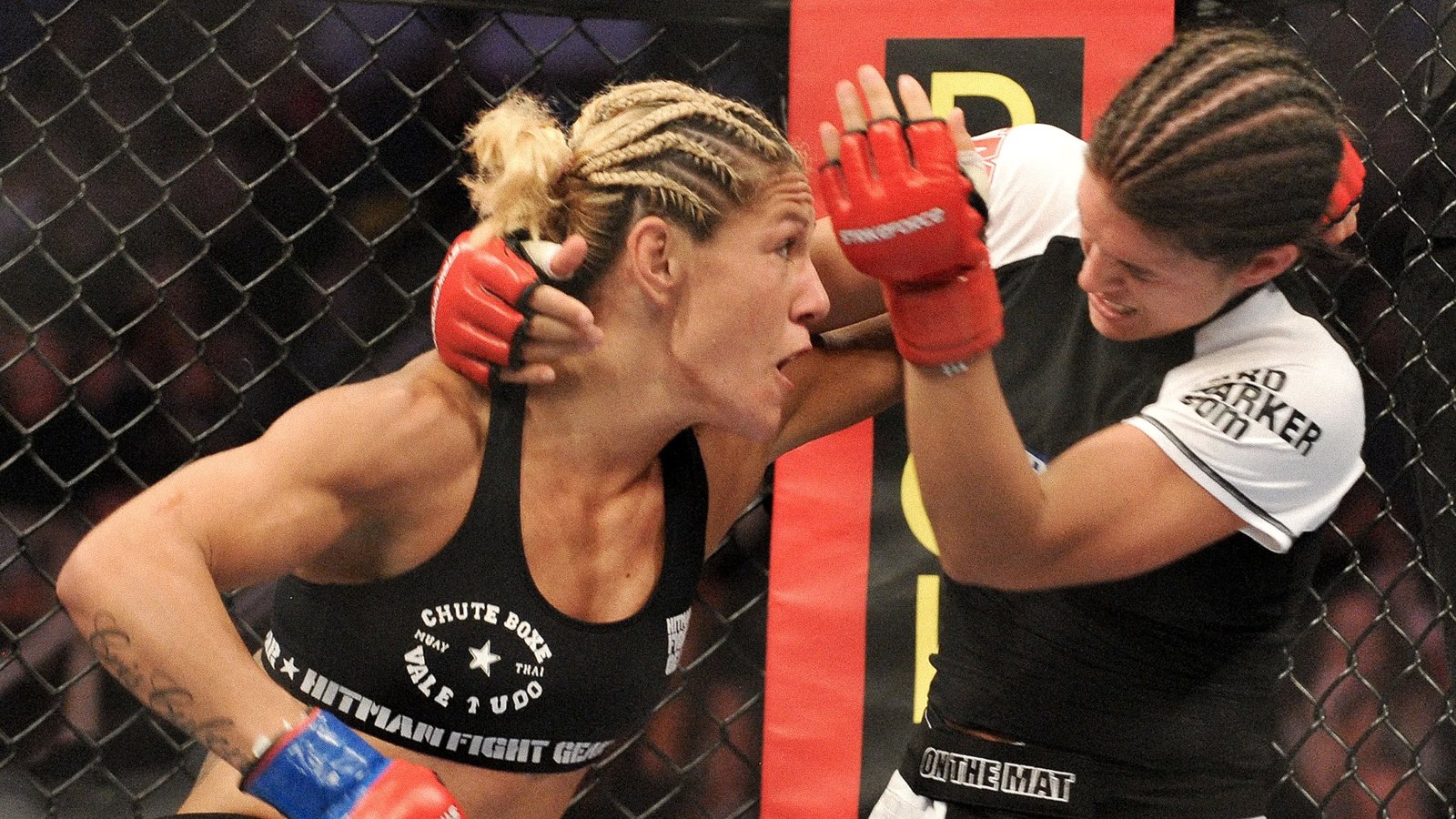

As many know, there was a time in MMA when women, particularly in the Western world, were not permitted to compete professionally.
Despite Japan allowing female competition beginning in the mid-1990s, with the United States following in 1997, an undeserving and honestly needless stigma remained attached to the sport. Sadly, some still cling to this outdated ideology, but women’s competition has long surpassed those critics. That progress is due to a number of pivotal milestones.
There are several moments in Women’s Mixed Martial Arts (WMMA) history that not only put the sport on the map, but helped it flourish into the respected and exciting form of competition it is today. Some may think of the rise of Ronda Rousey, arguably the most pivotal female figure in MMA history, or even Megumi Fujii, an early pioneer whose accomplishments still do not receive the recognition they deserve.
While certain athletes are remembered for their individual achievements, it is often the fights themselves that resonate most with fans. That is absolutely the case with Gina Carano vs. Cris Cyborg, one of the most important fights in the sport’s history.
Strikeforce: Carano vs. Cyborg
Rewind to August 15, 2009. At the time, Gina Carano stood as the face of WMMA. The talent, the charisma, and yes, even the mainstream appeal. Carano had it all. Carrying an undefeated record, the 27-year-old fighter was missing just one thing to cement her status as the women’s pound-for-pound queen. A championship belt.
Despite posting a 4-0 record in EliteXC, the promotion never created a legitimate women’s division, leaving her with no opportunity to compete for a title. Fortunately, Strikeforce recognized the moment and seized the opportunity to make history.
Carano spent much of 2009 preparing for a featherweight clash with a young and hungry contender in Cris Cyborg, Brazil’s answer to Carano. While Cyborg entered the fight with more cage experience, Carano was unquestionably the bigger star.
She had become the first female MMA fighter whose profile extended well beyond the sport itself. With only seven professional fights, she had already proven herself a level above many of her peers. Capturing a championship would only strengthen her growing legacy.



Cyborg, however, was building a legacy of her own. After suffering a loss in her professional debut in 2005, she rebounded in devastating fashion. By the time she faced Carano, Cyborg had assembled a seven-fight winning streak that included five knockouts.
Among those victories was a brutal dismantling of Hitomi Akano, a performance that doubled as her Strikeforce debut and firmly established her as a serious threat.
Carano vs. Cyborg was more than just another title fight. Yes, it would crown Strikeforce’s inaugural women’s featherweight champion. Yes, it would feature the two biggest names in the division. But the most significant statistic was that it marked the first time two women would headline a major MMA event.
Today, fans are accustomed to women headlining major cards, with stars such as Valentina Shevchenko and Amanda Nunes frequently taking center stage. In 2009, however, the idea of women closing out a major MMA event was unprecedented. That is what made the moment so significant.
The Aftermath
When the cage door finally closed, the fight delivered on its historic billing. Carano showed early flashes of success, using her striking to land clean shots and rally the crowd behind her. Cyborg, however, brought relentless pressure and overwhelming physicality.
As the fight progressed, the Brazilian began to assert control with powerful combinations and punishing ground and pound. Late in the opening round, Cyborg overwhelmed Carano against the fence, unleashing a barrage of strikes that forced the referee to step in.
The result crowned Cyborg as Strikeforce’s first women’s featherweight champion and cemented her reputation as one of the most dominant fighters in the sport.
For Carano, the loss marked the end of her MMA career. But, her impact on the sport was undeniable. She helped bring women’s MMA into the mainstream and paved the way for the next generation of fighters.
Cyborg would go on to become one of the most feared competitors in MMA history, capturing titles across multiple promotions and building a legacy as one of the greatest female fighters of all time.
More importantly, the fight itself proved something larger than either athlete. It demonstrated that WMMA could headline major events, attract massive audiences, and deliver unforgettable moments inside the cage.
In many ways, the sport’s modern era of women’s competition can trace its roots back to that night in San Jose.