






The first spinning backfist gave Armen Petrosyan something to react to. The second gave him nowhere to go.
At UFC 308, Sharaputdin Magomedov turned one rotation into another, reversing direction and catching Petrosyan with the return shot. Petrosyan fell. Magomedov walked away. A combination that looked like someone had gotten carried away with a video game controller had just finished a UFC fight.
There are worse introductions to “Shara Bullet.”
The sequence captures what makes his striking so compelling. An opponent can recognize the first attack and still misunderstand where the exchange is going. With Magomedov, the movement you think you have survived can become the setup for the shot that catches you.
Long before that finish, his regional fights offered reasons to pay attention. The kicks came from either side. Knees filled the space when opponents crowded him. Combinations continued through positions where another fighter might have reset.
The UFC gave that creativity a bigger audience. It also gave us a better look at what happens when someone refuses to play along.
A Long Education in Hitting People
Magomedov had spent years finding different ways to hurt people before he reached the UFC. He competed in kickboxing, Muay Thai, and Burmese boxing. UFC’s profile credits him with an 18–2 K-1 record, a Eurasian title in Burmese boxing, and a Russian Muay Thai championship.
He began his professional MMA career in 2017 and beat future UFC fighter Blood Diamond in kickboxing in 2019. His development crossed disciplines, giving him opportunities to learn which attacks worked together and what to do when an opponent interrupted them.


Throwing a hook kick is one skill. Knowing what to throw after it misses, gets blocked, or turns an opponent out of position requires another.
That is where Magomedov becomes especially dangerous. A blocked kick can leave him ready to attack with the other leg. An opponent moving closer can walk into a knee. He recognizes opportunities in the space between attacks, keeping an exchange alive just when the other fighter wants it to end.
The Kick Is Only the Beginning
Watch Magomedov kick for long enough and it starts to feel like someone has unlocked the entire move list.
Side kicks, hook kicks, crescent kicks, axe kicks, and spinning attacks all find their way into his offense. He can connect a hook kick to a roundhouse or follow a side kick with a hooking attack. He attacks comfortably with either leg, giving opponents plenty to track and little time to process it.
Each attack creates a different problem. A straight kick threatens the middle. A round kick can wrap around the guard. A hook kick brings the foot back across from another direction. Adjusting to the first can leave an opponent exposed to the next.
Switching legs makes that sequence harder to interrupt. Defending a kick from the right offers little relief when the left is already coming up. Magomedov can change sides and targets before an opponent has recovered their stance.
His feints add another complication. A lifted knee might draw a defensive reaction without becoming a kick at all. An opponent can brace for contact, shift their weight, or move their guard, revealing an opening before Magomedov commits.
Soon, even the attacks he has not thrown demand attention.
Getting Close Comes With Its Own Problems
Crowding Magomedov can take away the space he needs for his longer kicks. Getting there means entering range of his knees and elbows.
His early fights show how comfortably he attacks in tight quarters. He can bring a leg high with little room to work or drive a knee into the body as an opponent moves in to grab him. Closing the distance changes the weapons they have to worry about.
In the clinch, his hands help create those openings. He can brace a forearm against an opponent to make room for an elbow or control their posture to bring them into a knee. Attacking the body can draw their attention downward before he goes upstairs.
Those small adjustments make his clinch work dangerous. An opponent busy securing a grip or establishing position can give him just enough room to land something damaging.
Getting hold of him is only the beginning of getting him under control.
The Finish That Made the Whole Idea Click
The Petrosyan knockout rewards a second look. The finish came at 4:52 of the second round, but the setup is what makes it worth studying.
The reversal made the sequence so difficult to read. Instead of completing the first attack and resetting, Magomedov sent the next strike back from the opposite direction. Petrosyan had barely dealt with one movement before the other arrived.
It looked like an idea someone might try on a heavy bag for fun. Magomedov had been waiting years to make it work in a fight.
Afterward, he explained that he had practiced the technique since his Muay Thai days, but the threat of being taken down had made him reluctant to use it in MMA. Facing another accomplished striker gave him an opportunity to try it.
The imagination was there long before the opening. Against Petrosyan, he finally had both.
What Happens When He Has to Guess
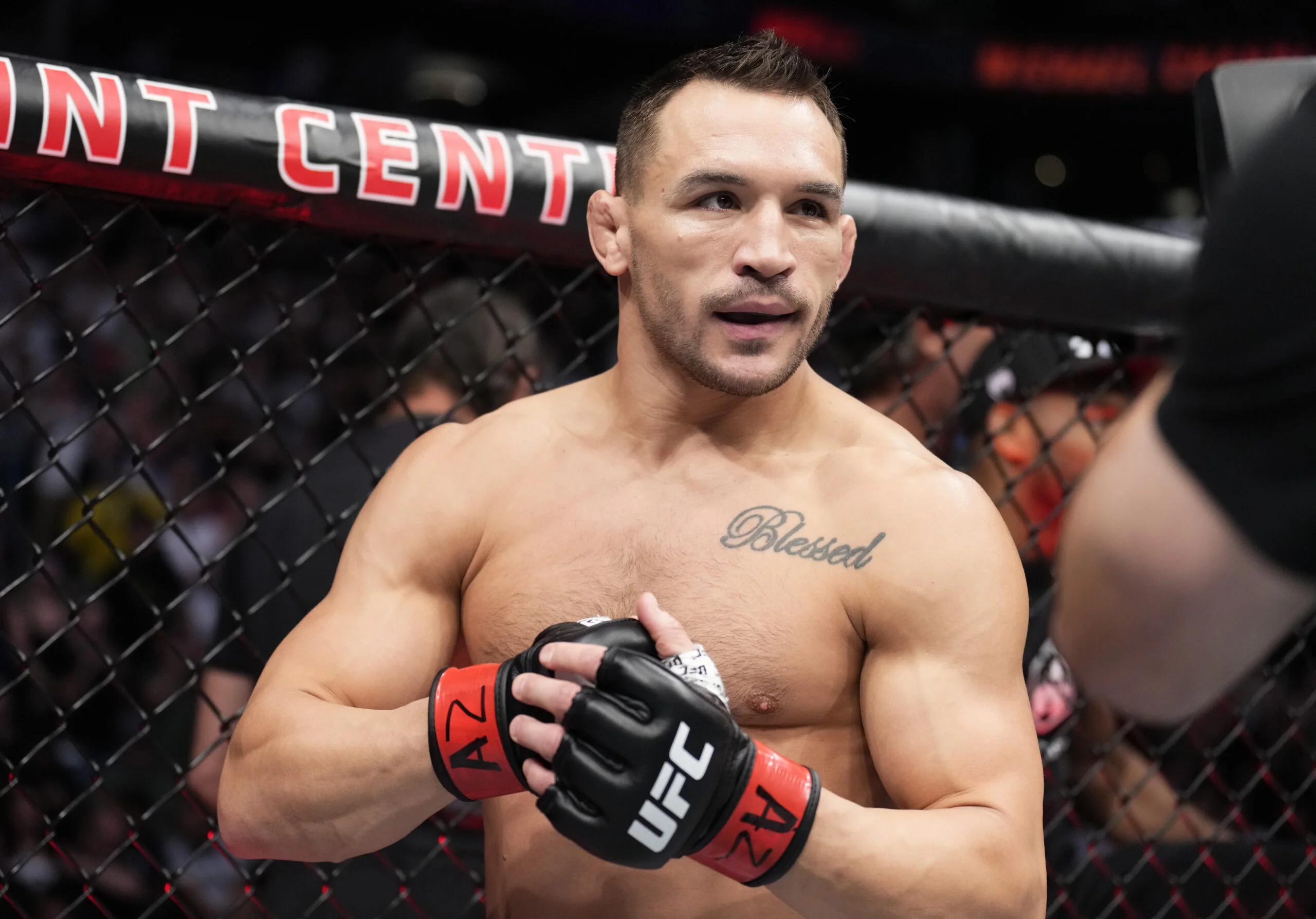
Michael “Venom” Page made Magomedov deal with a problem he usually creates for other people.
Page handed Magomedov his first professional MMA defeat in February 2025, winning a unanimous decision in a tactical striking contest.
Page’s movement and bursts in and out of range disrupted Magomedov’s output. The combinations were harder to build when the target would not remain available for them.
The Page fight showed that beating Magomedov did not necessarily require putting him on his back. A striker could make him uncomfortable by disrupting the distance and timing his offense needed.
That is the tension worth following in his game. His creativity can overwhelm an opponent’s decision-making, but he still has to earn the position to use it. When someone makes him reach, reset, or hesitate, the spectacular combinations become harder to access.
The Petrosyan finish and the Page loss belong in the same portrait. One shows how far his imagination can take him. The other shows the demands of making it work against someone equally capable of creating uncertainty.
Opponents can study every kick Shara Bullet throws. The hard part is recognizing which one they are actually defending.