



After 53 years, the New York Knicks are NBA Champions.
- The Initial Reaction
- WWE Wasn’t Buying Matches — They Were Buying Attention
- The Moment Everything Changed
- Knickshausen Proved The Character Works
- From Wrestling Personality To Mainstream Figure
- The ROI Has Been Insane
- Madison Square Garden Embraces Danhausen
- The Championship Ending
- Why Wrestling Still Needs Characters
- Final Thoughts
Danhausen merchandise is available through both WWE and NBA channels. ESPN featured him throughout its playoff coverage. Photos of Danhausen alongside celebrities such as Ben Stiller circulated across social media during the NBA Finals.
And he has only been under WWE contract for 106 days.
When Danhausen debuted at Elimination Chamber earlier this year, many fans questioned WWE’s decision to sign him. Some wondered whether his unique brand of humor would translate to a global audience. Others questioned whether a character built around curses, human teeth, and absurdity could find lasting success on WWE programming.
Those concerns feel almost impossible to remember now. Four months ago, fans were asking why WWE signed Danhausen.
The better question might be whether anyone expected him to justify the investment so quickly.
The Initial Reaction
In the weeks leading up to Elimination Chamber, mysterious wooden crates began appearing backstage on both Raw and SmackDown.
Delivery drivers repeatedly attempted to hand them off to Raw General Manager Adam Pearce and SmackDown General Manager Nick Aldis, usually at the worst possible moments. The crates carried strict instructions. Do not open until Elimination Chamber in Chicago.
Armed with crowbars, Pearce and Aldis finally opened the crate during the event. Inside sat a wooden coffin. Moments later, three words echoed throughout the arena.
“You. Are. Cursed.”
Danhausen emerged to a mixed reaction. Flanked by dancers wearing his signature face paint, he made his way to the ring, handed Michael Cole a jar of human teeth, briefly entered the ring, and disappeared in a cloud of smoke.
For longtime fans of Danhausen, the debut felt perfectly on brand. For others, it raised immediate questions.
Would this work in WWE? Could the character sustain itself on weekly television? Had WWE signed another niche act that would struggle to connect with a broader audience?
Those concerns were understandable, but they missed an important distinction. Fans evaluated Danhausen as a wrestler. WWE evaluated Danhausen as an attraction.
Those are not always the same thing.
WWE Wasn’t Buying Matches — They Were Buying Attention
WWE already employs some of the best in-ring performers in the world.
The company has championship-caliber athletes, internationally acclaimed technicians, and enough main-event talent to headline multiple premium live events.
Danhausen offers something entirely different.
He provides instant branding, a recognizable identity, and a character that audiences remember after a single appearance. More importantly, he generates attention.
Professional wrestling has always been at its best when it creates personalities that feel larger than life. While match quality remains important, memorable characters are often what bring new viewers through the door.
Danhausen understands that better than most.
Within weeks of signing with WWE, he had become a fixture across social media. He regularly appeared in videos with other WWE talent, interacted with fans online, and generated the kind of organic engagement that companies spend millions of dollars attempting to manufacture.
WWE wasn’t purchasing another wrestler.
They were investing in a character.
The Moment Everything Changed
In early 2026, Danhausen found himself in an unlikely social media feud with ESPN personality Stephen A. Smith.
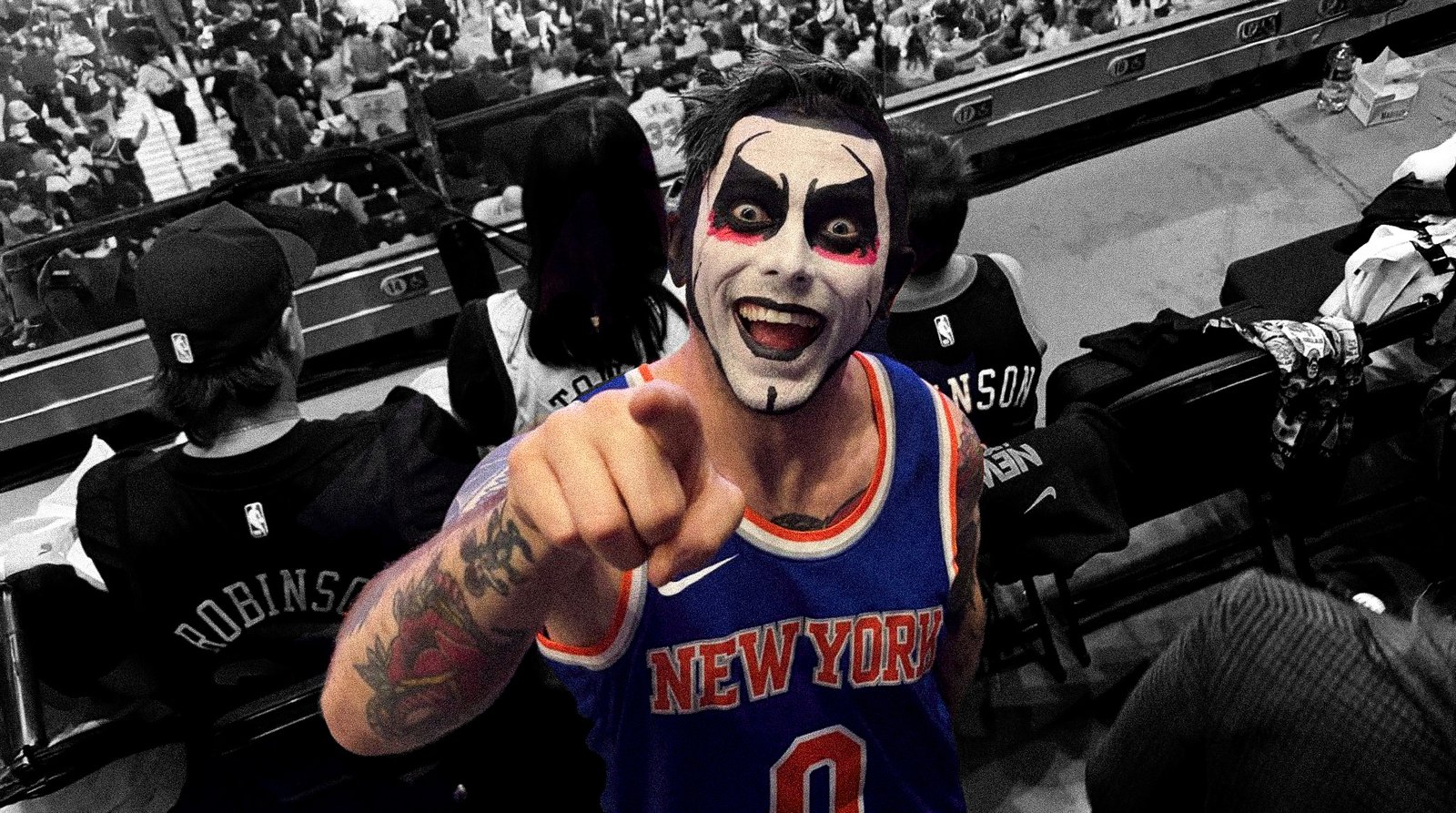
As the exchanges continued, Danhausen did what Danhausen does best. He cursed the New York Knicks.
Initially, the curse felt like another amusing chapter in the character’s ongoing story. Wrestling fans enjoyed the absurdity. Knicks fans largely ignored it.
Then the team began struggling.
As concern spread throughout New York’s fanbase, one Knicks supporter decided to take matters into his own hands.
Justin “J-Starr” Starr of The 10 Count Podcast purchased a Cameo from Danhausen and requested that he remove the curse from the Knicks while redirecting it toward their opponents.
What followed was completely unexpected. The Knicks began winning. Then they kept winning.
As the streak grew, so did the attention surrounding Danhausen and the increasingly popular nickname that fans created for the phenomenon: Knickshausen.
For the first time in his career, Danhausen had crossed beyond wrestling and into mainstream sports culture.
Knickshausen Proved The Character Works
The Knicks didn’t create Danhausen’s appeal. They amplified it.
Long before Knickshausen became part of NBA playoff lore, Danhausen had built a loyal following by committing completely to his character. Every interview, social media post, appearance, and interaction felt consistent with the world he created.
That consistency matters.
Many wrestling characters require extensive knowledge of storylines, championships, and years of continuity. Danhausen requires none of that. Audiences understand him almost immediately. He curses people, he wants human monies, and he collects teeth.
The premise is ridiculous, but it is also memorable. Perhaps that’s why the character connected so quickly with sports fans. You don’t need to understand wrestling to understand Danhausen.
That is a superpower.
The Knicks’ playoff run simply introduced Danhausen to a larger audience. Once people discovered him, many understood the appeal almost immediately.
From Wrestling Personality To Mainstream Figure
The success of Knickshausen arrived at the perfect moment.
As the Knicks advanced through the playoffs, Danhausen’s presence grew alongside them. ESPN discussed the story. Sports media outlets covered it. Social media accounts devoted to basketball suddenly found themselves discussing a professional wrestler.
Very few wrestlers break into mainstream culture without a championship run, a celebrity match, or years of television exposure. Danhausen accomplished it through personality alone.
By the time the NBA Finals arrived, he had become a recognizable part of the story. His appearances generated viral content, his interactions with celebrities attracted attention, and his connection to the Knicks became impossible to ignore.
What began as a wrestling joke had evolved into a genuine pop-culture phenomenon.
The ROI Has Been Insane
Danhausen has been signed with WWE for a little over 100 days.
In that short period of time, he has become one of the company’s most visible performers despite never holding a championship, headlining a premium live event, or receiving the type of sustained television push typically associated with WWE’s biggest stars.
That’s where the return on investment becomes impossible to ignore.
The wrestling business has changed dramatically over the last decade. Television ratings, social media engagement, merchandise sales, and mainstream visibility all matter as much as wins and losses inside the ring. WWE understands this better than anyone.
Danhausen checks every box.
His merchandise consistently performs well, while his social media presence generates engagement far beyond traditional wrestling audiences. Just as importantly, the character creates conversation wherever he appears. As a result, he markets WWE to audiences who may never have watched a wrestling match in their lives.
Madison Square Garden Embraces Danhausen
As New York advanced through the NBA Finals, Danhausen masks began appearing throughout Madison Square Garden. Suddenly, his likeness was attached to one of the biggest stories in professional sports.
When Danhausen attended Game 3 of the Finals, he immediately became part of the spectacle. Photos with Ben Stiller, Tina Fey, Mariska Hargitay, and other celebrity Knicks fans spread rapidly across social media. Sports outlets covered his appearances. Wrestling media amplified them even further.
The remarkable part is that none of this felt forced. There was no major marketing campaign.
Unlike many crossover success stories, Knickshausen wasn’t the result of a carefully coordinated marketing strategy. No corporate partnership drove the narrative, and no advertising campaign pushed it into the spotlight.
Fans embraced Danhausen organically because they enjoyed the character, and that kind of goodwill is incredibly difficult to manufacture.
In an era when companies spend millions trying to create viral moments, this one happened naturally.
For WWE, the value extends far beyond merchandise sales or social media impressions. Danhausen became a positive ambassador for the company during one of the biggest sporting events of the year. Every appearance generated publicity. Every interaction created content. Every mention introduced new audiences to WWE.
For a performer barely four months into his tenure, that’s an extraordinary return on investment.
The Championship Ending
As the playoffs progressed, the connection between Danhausen and the Knicks only grew stronger.
What began as an amusing social media exchange evolved into one of the most entertaining side stories of the NBA postseason. The Knicks continued winning. The mythology continued growing. And suddenly, a championship no longer felt impossible.
Even when the streak finally ended, the story wasn’t finished.
New York responded by overcoming a 29-point deficit in Game 4, completing the largest comeback in NBA Finals history. Days later, the Knicks defeated the Spurs in Game 5 to capture their first NBA Championship since 1973.
Whether Danhausen deserved any credit was beside the point.
People cared.
Fans embraced the story because it was fun. Sports fans shared it because it was memorable. Wrestling fans celebrated because one of their own had somehow become part of the biggest basketball story in America.
The relationship between Danhausen and the Knicks appears far from over. Reports have already suggested that WWE and TKO intend to further expand the connection following the championship victory. With the championship parade looming and Saturday Night’s Main Event scheduled for Madison Square Garden next month, the opportunities seem endless.
For a character that many fans initially dismissed, the championship provided the perfect ending.
Or perhaps, the perfect beginning.
As J-Starr reflected following the final buzzer:
“The Knickshausen did it. I hugged my wife, dad, mom and sister. I cried tears of joy. I couldn’t believe this journey that we all just went on together. I wanted to thank Danhausen, which I did. I wanted to thank the Knicks fans that believed and never gave up on the Knickshausen.
We witnessed history and I thought I was dreaming.
KNICKSHAUSEN. THEN. NOW. FOREVER.”
Why Wrestling Still Needs Characters
Professional wrestling has never been more athletic.
Today’s performers execute moves that would have seemed impossible a generation ago. Match quality continues to improve. The overall talent level throughout the industry remains remarkably high.
All of those things matter. But characters matter too.
The greatest stars in wrestling history weren’t remembered solely because of what they did inside the ring. Fans remember them because they connected emotionally. They created moments. They became stories that extended beyond wrestling itself.
Danhausen is the latest reminder of that reality.
The Knicks championship story doesn’t happen without a memorable character at its center. Fans didn’t rally around a five-star match. They rallied around a personality they found entertaining. They embraced a joke that gradually transformed into something larger than anyone expected.
Wrestling often struggles when it forgets that distinction. People absolutely appreciate great matches. They respect athletic excellence.
But when they tell stories years later, they rarely begin with a match rating. They begin with a moment. A character. A story.
Danhausen became that story.
Final Thoughts
When Danhausen arrived in WWE, the reaction was mixed.
Some fans immediately embraced the signing. Others questioned whether a character built around curses, human teeth, and absurd humor could find a meaningful place on WWE programming. In a company loaded with elite athletes and established stars, it wasn’t immediately obvious where Danhausen fit.
A little more than 100 days later, that uncertainty feels almost impossible to remember.
Danhausen didn’t become a success story because he won a championship or headlined a premium live event. He became a success story because he did something far more difficult — he captured people’s attention.
Through social media, merchandise, fan interaction, and an unexpected connection to one of the most memorable NBA championship runs in recent history, he reached audiences that many wrestlers spend entire careers trying to reach.
The Knicks didn’t make Danhausen popular. They simply introduced him to millions of people who had never encountered him before. Once they did, many of them understood exactly what wrestling fans had known for years. There is nobody else quite like Danhausen.
For WWE, that uniqueness has already proven valuable. In just four months, the company gained a performer who generates conversation, creates memorable moments, and can seamlessly cross into mainstream culture without ever abandoning the character that made him successful in the first place.
Not every signing needs to produce a world champion. Sometimes the most valuable additions to a roster are the ones who make people pay attention.
Danhausen has done exactly that.
And somewhere along the way, he became part of a championship story that nobody could have predicted.