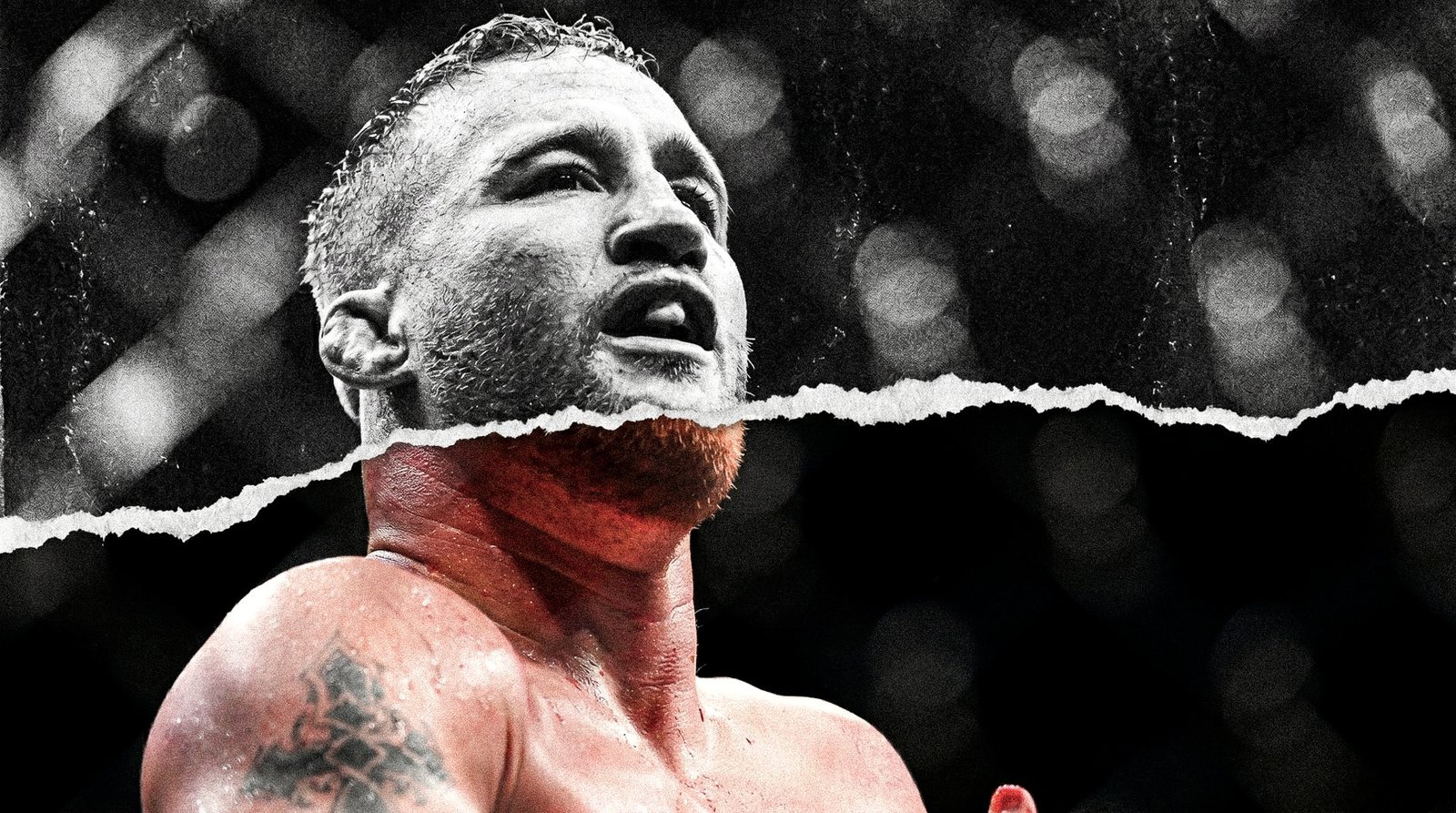







Sean Strickland walked into UFC 293 as an unlikely challenger to Israel Adesanya. He left Sydney with the middleweight title.
Strickland dropped Adesanya in the first round and won a unanimous decision, with all three judges scoring the fight 49–46. His words had made him impossible to ignore before the fight. His performance made it impossible to dismiss him afterward.
That tension runs through his career. Strickland has won the UFC middleweight title twice, drawn disciplinary action for a confrontation outside the Octagon and spoken openly about painful parts of his life. His interviews can be difficult to watch. His fights demand attention for entirely different reasons.
No Filter & No Limits
Strickland’s comments about violence were drawing attention well before he became champion. After beating Uriah Hall in 2021, he told reporters he would love to kill someone in a fight.
During that same press conference, he spoke about enjoying fighting and getting paid while dismissing the appeal of fame. The comments showed two sides of how he talked about the sport. A disturbing appetite for violence and a blunt view of fighting as his job.
There’s no telling where a Strickland interview will go, which is part of why people keep watching. Some fans praise his bluntness; others find his comments cruel. Calling every offensive remark a joke lets him off too easily.
His confrontations have also gone beyond interviews. Strickland and Dricus du Plessis fought in the crowd at UFC 296. In 2025, the Nevada Athletic Commission suspended Strickland for six months and fined him $5,000 after he entered the cage and struck a fighter at a regional event.
At that point, calling him unpredictable described more than his interviews.

The Fighter Behind the Noise
Strickland’s public life can be chaotic, but his fighting style is built on repetition, which is what makes him so strange to watch.
He moves forward, works behind his jab, defends well and keeps throwing. Against Adesanya, that approach was part of a deliberate plan to push the champion back toward the fence. Coach Eric Nicksick later explained what the team wanted to do.
Strickland didn’t win the title because he was willing to say anything before the fight. He won because he and his team understood how to make Adesanya uncomfortable for five rounds.
His next title fights showed how difficult it is to keep winning at that level. Du Plessis took the belt from him by split decision at UFC 297, then won their rematch by a much clearer unanimous decision at UFC 312.
Strickland returned in February 2026 and stopped Anthony Hernandez in the third round. In May, he handed Khamzat Chimaev his first loss by split decision at UFC 328 and became a two-time middleweight champion.
It’s tempting to let the personality overshadow that run. Beating Adesanya and Chimaev to win two titles says plenty about Strickland as a fighter, even if nothing about the way he fights is as loud as the way he talks.
When Strickland Opened Up
Speaking with Theo Von on This Past Weekend after UFC 296, Strickland explained why du Plessis’ comments about his childhood had hit him so hard. He grew emotional while describing his father’s alleged abuse and his fear, as a child, that his father would kill his mother. The interview gave a more personal account of the pain behind their confrontation in the crowd.
In March 2024, Strickland shared a video about struggling with his mental health despite having achieved much of what he wanted. It was a candid moment from someone whose most widely shared clips tend to be confrontational.
His July 2026 interview on The Shawn Ryan Show went much further. Across a conversation lasting more than four hours, Strickland discussed his childhood, violence, time in jail, his mental health and how fighting became part of his life.
He recounted an incident from his younger years in which a woman named Jackie stopped him while he was handling a loaded revolver and considering pulling the trigger. Those are Strickland’s accounts of his life, shared in the interview.
Strickland also criticized what he called the UFC’s “predatory” pay for fighters near the bottom of the roster. He spoke about the pressure to turn yourself into a character for money. Those comments add a question to the one people have long asked about his persona. How much of the Strickland we see is simply him, and how much has the attention around him encouraged him to keep going further?
We explored that question in our video on the difference between what Strickland says and what he actually means:
UFC Freedom 250 Put It All on Display
The UFC’s White House event brought Strickland’s politics, his relationship with the promotion and his instinct for spectacle into the same story.
Strickland claimed he was told he could not attend UFC Freedom 250 because of comments he had made about President Donald Trump, Israel and Prime Minister Benjamin Netanyahu amid the war with Iran. He said he had expected an invitation after regaining the title.
Dana White rejected the idea that Strickland was banned, saying attendance was limited and Strickland had not been invited.
Strickland showed up in Washington anyway. On June 14, he made an unplanned appearance at the Freedom 250 fan fest on the Ellipse and was escorted away by police. Despite his initial suggestion that he might face a disorderly conduct charge, he was neither arrested nor cited.
More Than a Soundbite
Strickland knew how to draw attention before he had a title.
Ahead of UFC 293, he worked with Full Violence on a mock presidential campaign and gave outlets plenty to talk about. We put together this video of some of his moments at the time:
Strickland’s story includes title wins over Adesanya and Chimaev, a suspension for his actions at a regional fight, and a long-form interview in which he shared painful details of his life.
Even his absence from the UFC Freedom 250 card became a story.
You never know what Sean Strickland will say next. By now, there is plenty to examine beyond what he says.