





Bullet Club gave fans a reason to follow wrestlers across promotions, countries, and time zones. Its members helped bring new eyes to New Japan Pro-Wrestling, turned their popularity into a merchandise business, and built relationships that helped lay the groundwork for AEW.
The faction also survived departures that could have ended it. Each generation inherited a recognizable name and the opportunity to make it mean something different.
By the time Bullet Club’s NJPW run ended in January 2026, its influence had already spread well beyond Japan. Its offshoots tell much of that story, from an early expansion into Mexico to alliances that continued in AEW.
The shared name opened doors. What happened afterward depended on the wrestlers using it.
What Made Bullet Club Different?
Bullet Club formed at Wrestling Dontaku on May 3, 2013, with Prince Devitt, Karl Anderson, Bad Luck Fale, and Tama Tonga. Their attack on Hiroshi Tanahashi established a group willing to disrupt New Japan’s established order.
The presentation borrowed openly from American wrestling. Interference, disrespect, and familiar gestures connected Bullet Club to the rebellious appeal of the nWo and D-Generation X. In NJPW, that approach positioned its members as outsiders prepared to help each other win.
But the wrestling mattered just as much. The cheating could provoke a crowd, and the talent gave those crowds a reason to care about the next match.
Devitt’s swagger helped establish the group. AJ Styles brought an international reputation that strengthened its main-event presence. Kenny Omega and The Young Bucks expanded its appeal through ambitious matches, humor, and a growing connection with fans outside Japan.
Successive versions offered different reasons to watch. That flexibility became one of Bullet Club’s greatest strengths.


How Bullet Club Reached Beyond Japan
Bullet Club began crossing borders during its first year. In CMLL, Tama Tonga joined Rey Bucanero, El Terrible, and La Comandante as Bullet Club Latinoamérica. The Mexican branch showed how wrestlers could bring the concept into another promotion and build on relationships already established there.
Its reach grew through merchandise, too. A Bullet Club shirt became an invitation to talk wrestling with someone who followed the same world you did.
The recognizable design helped, but fans also had individual favorites beneath that shared branding. They could support Omega, The Young Bucks, or Cody Rhodes and still feel connected to something larger.
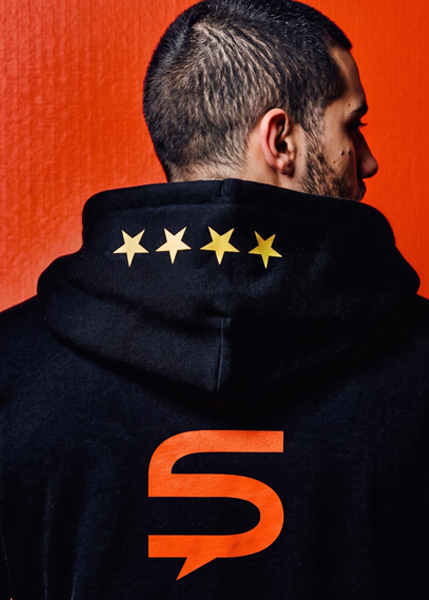
By 2017, Bullet Club and Elite merchandise was reaching Hot Topic stores. Wrestlers building careers outside WWE now had their shirts on racks in American malls, giving fans another way to discover and support them.
Within Bullet Club, Omega and The Young Bucks developed The Elite into a recognizable group of its own. Their Being the Elite YouTube series gave fans a regular place to follow their humor, friendships, and developing storylines between wrestling appearances.
That following helped Cody and The Young Bucks sell tickets to All In in 2018. The initial allocation sold out in under 30 minutes. It showed that the audience they had cultivated would show up for an event built around them.
Bullet Club was one important part of the path that led to AEW’s launch in 2019. NJPW, Ring of Honor, the independent scene, and eventually Tony Khan’s investment all mattered. Within that larger story, Bullet Club helped several future AEW founders build the recognition and relationships they brought into the company.
A Shared Name Across Different Promotions
Bullet Club’s expansion also gave wrestlers outside its main NJPW lineup opportunities to make the name their own.
Bullet Club’s influence even reached WWE. AJ Styles reunited with Karl Anderson and Luke Gallows as The Club in 2016, drawing on their history together in Japan. They later adopted The O.C. name in 2019, billing themselves as the original, official, and only club that mattered. WWE used different branding, but the reunion drew on their history together before WWE.
In Impact Wrestling, Chris Bey and Ace Austin became prominent representatives of the faction. Austin joined in June 2022, and the pair developed their partnership as ABC. Their tag championship victory over the Motor City Machine Guns in March 2023 gave Bullet Club another success beyond Japan.
Bad Luck Fale extended the group’s presence into the Australian scene through Rogue Army. Alongside Jack Bonza and other recruits, the founding Bullet Club member helped establish a regional branch featured in NJPW’s Tamashii events.
Jay White took another route after leaving NJPW. In April 2023, he and Juice Robinson introduced Bullet Club Gold in AEW, also calling themselves the Bang Bang Gang. Austin and Colten Gunn officially joined that July.
White’s scheming, Robinson’s unpredictable energy, and The Gunns’ arrogance gave the group its own chemistry. The Bang Bang Gang name became increasingly central to the act, allowing it to develop beyond its connection to the Japanese faction.
The shared name opened doors. What happened afterward depended on the wrestlers using it.
How Bullet Club Changed in NJPW
Back in Japan, every major departure left Bullet Club with a difficult assignment. The next version needed to benefit from the group’s history and give fans something new to invest in.
Jay White offered a calculating, manipulative presence. His version could draw on the faction’s established reputation without trying to recreate Omega’s relationship with the audience.
The challenge became more complicated as Bullet Club developed increasingly distinct branches within NJPW itself.
House of Torture formed in September 2021 around EVIL, Dick Togo, Yujiro Takahashi, and SHO. Its reliance on interference made cheating central to its matches. For viewers frustrated by repeated distractions and referee bumps, the predictability could become exhausting.
David Finlay’s War Dogs offered another direction. With Gabe Kidd, Clark Connors, Drilla Moloney, and Alex Coughlin, the group emphasized aggression and a willingness to turn matches into violent confrontations. Their February 2024 cage match against United Empire pushed that approach through more than an hour of escalating brutality.
The War Dogs gave fans a different reason to follow Bullet Club. Their members had something to prove, and their confrontations offered a ferocity that separated them from House of Torture’s interference-driven routines.
Eventually, the branches fought over the right to remain in the faction. In May 2025, the War Dogs defeated House of Torture at Wrestling Dontaku in a cage match that forced the losing side out of Bullet Club.
Why Bullet Club Ended in NJPW
The nWo comparison followed Bullet Club for understandable reasons. Both turned an outsider image into a powerful brand, then expanded through new members, divisions, and leadership disputes.
Bullet Club also faced a question familiar to any long-running faction. How much room did its history leave for the wrestlers carrying it forward?
Speaking on Talk Is Jericho in 2026, Finlay said he had wanted to end Bullet Club after becoming its leader in 2023. According to Finlay, NJPW resisted because the faction still generated money. The War Dogs became the compromise, allowing his group to develop its own act within the existing brand.
Bullet Club still had commercial value, but its leader wanted room to move beyond it.
The eventual ending came through a merger. After working alongside the former Los Ingobernables de Japón members known as Unaffiliated, the remaining Bullet Club contingent joined them in forming Unbound Co. Yota Tsuji announced the new group at New Year Dash on January 5, 2026.
Tsuji subsequently explained that the War Dogs members had expressed interest in joining something new during discussions about the faction’s name. He also made clear that relinquishing Bullet Club was their decision.
An alliance had developed into a team, and its members chose a name they could share. Bullet Club’s NJPW run concluded with wrestlers committing to their next project together.
Bullet Club had helped create the wrestling world its members moved on to.
From the Bang Bang Gang to The Cut
The connections continued in AEW.
Finlay, Kidd, and Connors brought their partnership to the company as The Dogs. In October 2026, the Bang Bang Gang and The Dogs joined forces as The Cut, putting White and Finlay on the same side.
Their past immediately became part of the story. White openly questioned whether he and Finlay could trust each other, then acknowledged the advantage of working together. On the October 28 episode of Dynamite, the two former Bullet Club leaders teamed against Jon Moxley and Daniel Garcia.
The Cut reunited former Bullet Club members under another name, drawing on relationships and rivalries that fans had followed across companies. Leaving the faction had never meant leaving its history behind.
Bullet Club began with four wrestlers disrupting New Japan’s established order. Its members went on to sell shirts in American malls, fill an arena for All In, and help launch a promotion that changed where wrestlers could work and what fans could watch.
By the time NJPW retired the name, Bullet Club had helped create the wrestling world its members moved on to.