



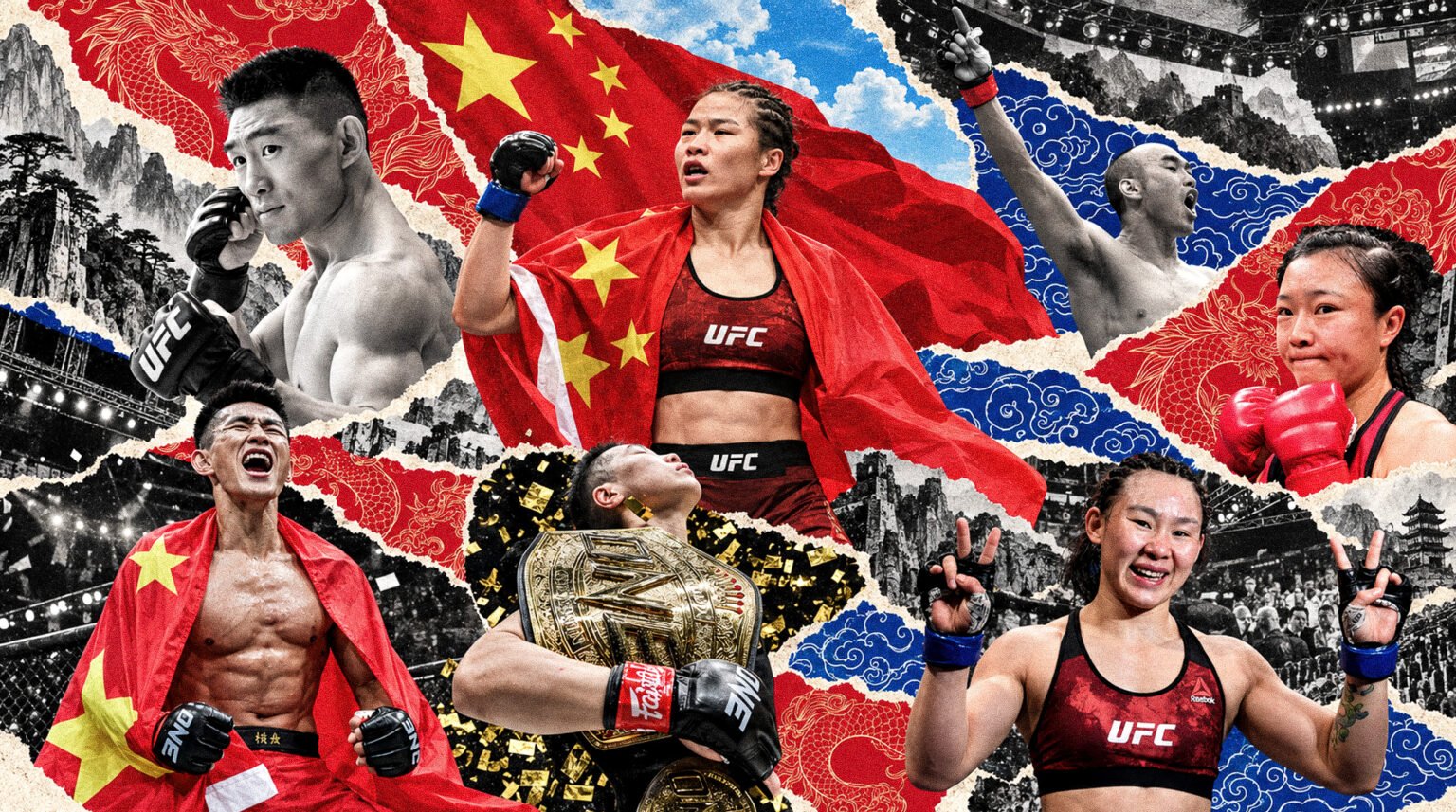

Chinese MMA took a defining step forward when Zhang Weili stopped Jessica Andrade in 42 seconds to win the UFC strawweight championship on August 31, 2019.
Inside the arena in Shenzhen, the celebration extended beyond one fighter winning a belt. China finally had a UFC champion, and she had claimed the title in front of a home crowd.
But the work that made that moment possible had begun long before Weili entered the Octagon. Fighters had been building careers through domestic promotions, coaches were preparing athletes for international competition, and Chinese women were already breaking through on major stages.
The years that followed gave Shenzhen greater significance. Weili reclaimed championship gold, Yan Xiaonan joined her in a historic title fight, and more fighters found routes into the sport’s biggest promotions.
China’s rise in MMA is a story of those breakthroughs and the work required to make them repeatable.
Zhang Tiequan Opened the Door
Before Zhang Weili became a champion, Zhang Tiequan helped establish a Chinese presence in the UFC.
After competing in WEC in 2010, “The Wolf” joined the UFC following the promotions’ merger. At UFC 127 in February 2011, he submitted Jason Reinhardt with a guillotine in just 48 seconds, becoming the first fighter from China to compete and win in the Octagon.
His UFC career did not develop into a championship run. Yet judging his significance solely through wins and losses overlooks the circumstances of his arrival. He was entering a promotion where athletes from his country had no established history.
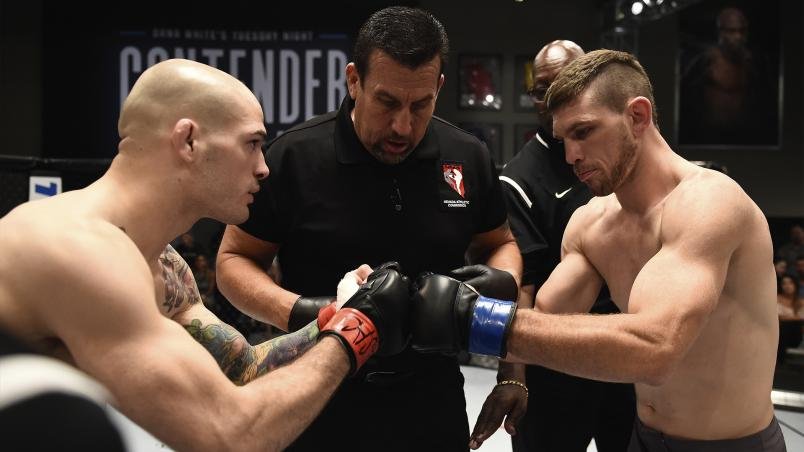

His contribution also extended into coaching. Zhang served as a team coach on The Ultimate Fighter: China, while Li Jingliang has identified him as one of the coaches who helped shape his career. The connection between those two fighters makes the early development of Chinese MMA more tangible. Experience gained abroad could be passed to the next athlete preparing for the same challenge.
That transfer of knowledge was essential. Getting one fighter into the UFC created an opening. Preparing others to succeed there required considerably more work.
Chinese Women Set the Championship Standard
China’s first major MMA world championship arrived before Weili’s breakthrough in Shenzhen.
In January 2018, Xiong Jingnan stopped Tiffany Teo in the fourth round to capture ONE Championship’s inaugural women’s strawweight title. Her victory established a milestone that belongs at the center of any account of Chinese MMA’s growth.
Xiong then demonstrated that she could defend that position against elite opposition. In March 2019, she survived a difficult challenge from atomweight champion Angela Lee before stopping her in the fifth round. It was Lee’s first professional defeat.
Meanwhile, Yan Xiaonan had opened another door. She became the first Chinese woman to compete in the UFC, making her promotional debut in 2017. Her arrival preceded Weili’s and gave China another athlete capable of building a career in the strawweight division.
These were distinct achievements. Xiong established championship success in ONE. Yan broke through first in the UFC. Weili would deliver the victory that brought China its first UFC belt.
Together, they made women central to the country’s emergence in international MMA. Their accomplishments gave the sport several examples of what Chinese fighters could achieve, across different careers and competitive environments.
Zhang Weili Changed the Expectations
Weili’s victory over Andrade was remarkable for how quickly it happened. The champion had little time to settle before punches, elbows, and knees overwhelmed her.
In less than a minute, Weili changed her own career and gave Chinese MMA its most prominent UFC milestone.
What followed gave that breakthrough lasting weight.
At UFC 281 in November 2022, Weili submitted Carla Esparza to become a two-time strawweight champion. Regaining the belt showed that her place at the top could survive setbacks and the demands of rebuilding.
Then came a matchup that would have been difficult to imagine during Zhang Tiequan’s early UFC appearances.
At UFC 300 in April 2024, Weili defended her championship against Yan Xiaonan in the promotion’s first all-China title fight. Weili won by unanimous decision, but the significance extended beyond the result. Two Chinese women had reached the point where they could contest a UFC championship against each other.
Shenzhen had established that a Chinese fighter could become UFC champion. UFC 300 showed that the country could produce a challenger worthy of sharing that stage.
Weili’s subsequent move to challenge Valentina Shevchenko for the flyweight championship ended in a decision defeat at UFC 322 in November 2025. Her career has involved the same difficult choices, competitive limits, and setbacks that shape other elite fighters. Its influence does not depend on an uninterrupted run of victories.
The Growth Extended Beyond One Champion
Li Jingliang helped give Chinese MMA a sustained presence in the UFC’s welterweight division.
His first-round knockout of Santiago Ponzinibbio in January 2021 provided a particularly important example of his ability to beat established opposition. Performances like that gave fans a reason to follow Chinese fighters beyond the symbolism of representing their country.
Song Yadong carried that progression into the bantamweight division. His UFC career developed from an early breakthrough into repeated opportunities against high-level opponents. In 2026, victories over Deiveson Figueiredo and Umar Nurmagomedov added significant results to that progression.
Success outside the UFC also broadened the picture.
In August 2022, Tang Kai defeated Thanh Le by unanimous decision to claim ONE Championship’s featherweight title, becoming the first Chinese man to win an MMA world championship in a major promotion. His achievement added a men’s championship breakthrough alongside the success Chinese women had already established.
These careers unfolded in different divisions, promotions, and training environments. Taken together, however, they show why China’s development goes beyond Weili’s achievements too.
Building the Fighters Behind the Breakthroughs
Champions are the most visible evidence of progress. The less visible work involves giving developing athletes the preparation and competitive experience to reach that level.
The connection between Zhang Tiequan and Li Jingliang illustrates the importance of coaching relationships. Domestic competition also gave fighters opportunities to build experience before reaching international audiences. Weili’s pre-UFC career included a substantial run through Kunlun Fight, while Xiong also competed there before becoming a ONE champion.
Those stages serve a practical purpose. Fighters need opportunities to discover which parts of their game hold up under pressure, where they are vulnerable, and what must improve before the opposition becomes more demanding.
The UFC added another layer when it opened its Performance Institute in Shanghai in June 2019. The facility was designed to support athlete development in China and the wider Asia-Pacific region, bringing training and performance resources into the UFC’s regional operation.
Its opening also helps explain the timing of China’s growth. The investment was already underway before Weili won the title in Shenzhen. Her championship arrived amid a broader effort to develop talent and expand the promotion’s presence.
The Shanghai facility should not receive sole credit for the athletes who followed. Fighters arrive with experience built through their own coaches, gyms, and previous competition. Its significance lies in adding resources to that development process.
A Clearer Route to International Competition
Training resources are only part of the equation. Fighters also need opportunities to demonstrate that they are ready for the next level.
Launched in 2022, Road to UFC created a tournament route through which prospects from across Asia could compete for UFC contracts. For Chinese athletes, it added another way to move from regional competition toward the international roster.
The program produced another notable moment in November 2024, when Shi Ming knocked out Feng Xiaocan to win its women’s strawweight final in Macau. Two Chinese fighters were competing for a UFC opportunity in the same year that Weili and Yan contested a UFC championship.
Those bouts occupied very different places in the sport. One awarded a route into the promotion; the other determined a world champion. Together, they offered a useful view of progress at multiple stages of a fighter’s career.
Winning a contract still guarantees very little. The adjustment to UFC opposition can expose weaknesses that regional success did not. Development must continue after the signing announcement.
But a recurring opportunity to earn that contract gives prospects something concrete to work toward.
The Next Test for Chinese MMA
China has produced major champions, established contenders, and fighters capable of winning on prominent international cards. The challenge is sustaining that progress across successive generations.
A strong MMA scene needs more than a handful of exceptional athletes. It needs capable coaches, reliable competition, and enough opportunities for developing fighters to improve without every defeat becoming the end of the road.
The next measure of growth will be how consistently those conditions produce athletes who can build lasting careers. Championship wins will remain the most celebrated moments, but the depth beneath those champions will determine how much of the progress endures.
When Weili won in Shenzhen, the celebration captured the excitement of a first. The years since have supplied more achievements, more routes into major promotions, and more fighters for the next generation to follow.
Chinese MMA has given aspiring athletes proof of what is possible. Its future depends on how many are given the preparation and opportunity to pursue it.