


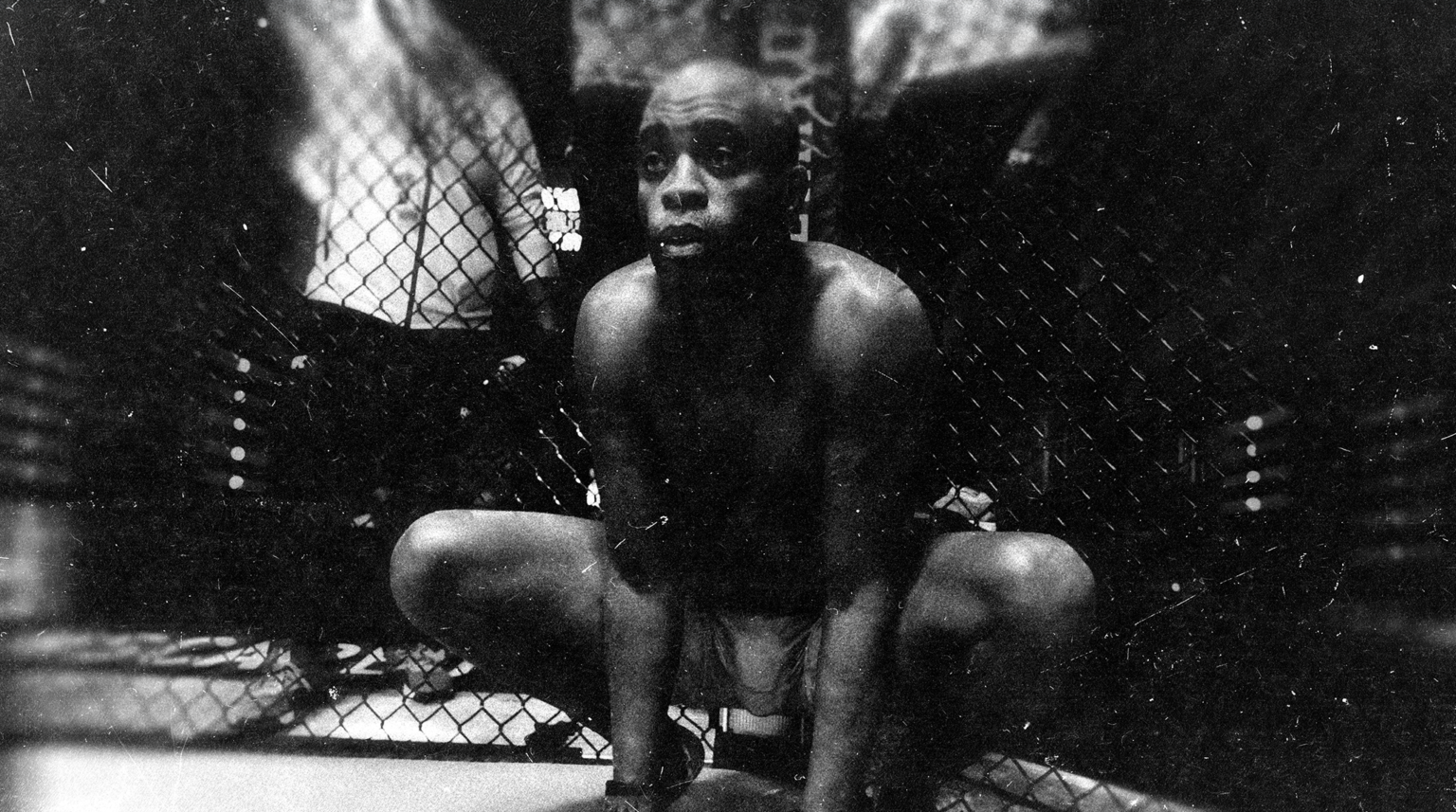

Anderson Silva gave the UFC something every promotion wants but cannot manufacture. At his best, he could make elite competition look hopelessly outmatched.
- Forty-Nine Seconds to Make an Impression
- A Reign Fans Could Measure an Era Against
- Performances That Sold the Possibilities of MMA
- A Champion at the Center of Brazil’s Growth
- The Rival Who Made Dominance Feel Vulnerable
- The End of the Reign
- Making Greatness an Attraction
- Explore the Building the UFC Series
Opponents swung at empty space. Champions found themselves trapped in positions they could not escape. A fight that appeared competitive on paper could end with a sequence viewers immediately wanted to watch again.
That ability made Silva central to the UFC’s growth. His championship reign gave the middleweight division a lasting identity, his performances supplied unforgettable highlights, and his popularity helped strengthen the promotion’s connection with Brazil. Watching him meant finding out what an exceptional fighter might do next.
Forty-Nine Seconds to Make an Impression
Silva arrived in the UFC as an experienced fighter whose reputation had developed through organizations including PRIDE and Cage Rage. For many viewers introduced to MMA through The Ultimate Fighter, however, his debut opponent was the more familiar name.
Chris Leben had become a recognizable personality on the show’s first season and entered their June 2006 meeting with momentum. Silva stopped him in 49 seconds.
The speed mattered, but the precision was more revealing. Leben’s aggression brought him into exchanges Silva appeared to read before they developed. The newcomer landed cleanly and repeatedly, turning an anticipated test into an introduction that demanded attention.
Four months later, Silva challenged Rich Franklin for the middleweight championship at UFC 64. Franklin was an established champion, yet Silva controlled him in the clinch and finished him with knees in the first round.
Two UFC appearances had changed the division. The promotion had acquired a fighter who could defeat recognizable opposition in ways that made audiences reconsider the gap between excellent and exceptional.
A Reign Fans Could Measure an Era Against
Silva’s championship success became one of the constants of the UFC’s expansion.
He held the middleweight title from October 2006 until July 2013, completing 10 successful defenses. His first 16 UFC appearances all ended in victory, with 14 finishes across that run.
Those numbers explain the longevity, but the appeal came from how differently he could win.
He could hurt opponents at kicking range, punish them for closing the distance, or finish a fight on the ground. His timing made familiar techniques look unfamiliar because of when he chose to use them. A small movement could create an opening that another fighter might never recognize.
For the UFC, that gave the middleweight championship a story that could continue across years. Every challenger arrived with a proposed answer to Silva’s abilities. Fans watched to discover whether that answer would survive contact with him.
His dominance also created expectations he did not always satisfy. Defenses against Patrick Côté, Thales Leites, and Demian Maia drew criticism for stretches of inactivity or showboating. The frustration reflected the standard his best performances had established. Audiences knew what he could do and wanted to see it.
That tension became part of following Silva. He could be elusive in ways that were mesmerizing or maddening, sometimes within the same fight.
Performances That Sold the Possibilities of MMA
Silva’s meeting with Forrest Griffin at UFC 101 in 2009 showed how far his appeal extended beyond defending one championship.
Griffin was a former light heavyweight champion, competing in his own division against the middleweight titleholder. Silva knocked him out in the first round, slipping punches and returning shots with a composure that made the difference between them startling.
The performance was easy to appreciate without understanding rankings or title histories. Viewers could see one accomplished fighter struggling to touch another.
That accessibility mattered. A remarkable sequence could introduce Silva to someone who had never watched a full event, then give that person a reason to seek out his next appearance.
His knockout of Vitor Belfort at UFC 126 in February 2011 supplied another such moment. Silva landed a front kick to the face before finishing the fight with punches, retaining his championship against a dangerous and highly recognizable Brazilian opponent.
It became one of the defining images of his career because it captured the appeal so clearly. Silva could produce something unexpected against someone who understood exactly how dangerous he was.
The UFC could promote his fights around the possibility of witnessing another moment like it.
A Champion at the Center of Brazil’s Growth
Brazil’s relationship with MMA long preceded Silva’s UFC career. The Gracie family, vale tudo, and generations of Brazilian fighters had already shaped the sport.
Silva’s contribution came through becoming a contemporary champion whose recognition extended beyond that established audience. His fight with Belfort was particularly important in broadening his profile at home, bringing together two prominent Brazilian names in a matchup with national interest.
Later in 2011, he headlined UFC 134 against Yushin Okami in Rio de Janeiro. The event marked the UFC’s return to Brazil after an absence of nearly 13 years. Silva stopped Okami in the second round to retain his championship.
His position on that card carried meaning beyond the result. A Brazilian champion who had built his UFC reign abroad was now leading the promotion’s return in front of a home audience.
The card’s appeal drew on several Brazilian stars and a deep local connection to fighting. Silva gave it a central figure whose achievements represented the highest level of the promotion.
Where his international audience could marvel at his skill, Brazilian supporters could also see a champion representing them. That combination helped the UFC connect its global ambitions with a country central to MMA’s history.
The Rival Who Made Dominance Feel Vulnerable
Chael Sonnen gave Silva’s reign a different kind of attraction.
His relentless verbal attacks created a personal rivalry, but their first fight supplied the competitive uncertainty that made it endure. At UFC 117 in August 2010, Sonnen controlled much of the contest with wrestling and ground strikes.
Silva entered the final round facing the likely end of his championship reign. Instead, he caught Sonnen in a triangle submission and retained the belt.
It was a dramatic addition to the Silva story. The champion who had made some opponents look helpless now had to escape a fight he was losing.
For the UFC, that produced a compelling reason to stage the rematch. Sonnen had demonstrated that his challenge involved more than talking. Silva had demonstrated that controlling him for most of a fight still might not be enough.
Their second meeting at UFC 148 in July 2012 ended with Silva stopping Sonnen in the second round. It was his 10th successful title defense and a decisive conclusion to the most personal rivalry of his championship years.
The two fights expanded the ways audiences could invest in him. There was the brilliance of an apparently untouchable champion, the suspense of seeing him vulnerable, and the satisfaction of watching a heated dispute reach its conclusion.
The End of the Reign
Chris Weidman ended Silva’s championship run at UFC 162 in July 2013, knocking him out in the second round. Their December rematch ended when Silva broke his leg after Weidman checked a kick.
The defeats abruptly changed a division that had spent years revolving around one champion.
Silva continued competing, but his later career did not reproduce the consistency of his prime. It also included a significant disciplinary setback. Following failed drug tests connected to UFC 183 in 2015, the Nevada Athletic Commission suspended him for one year, fined him, and overturned his victory over Nick Diaz to a no contest. That sanction is part of his record and complicates assessments of his legacy.
His UFC run concluded with a loss to Uriah Hall in 2020.
After leaving the promotion, Silva continued competing in boxing, earning wins over former world champion Julio César Chávez Jr. and fellow UFC Hall of Famer Tito Ortiz in 2021. Those appearances gave fans another opportunity to watch the striking ability that had made him such a compelling attraction in MMA.
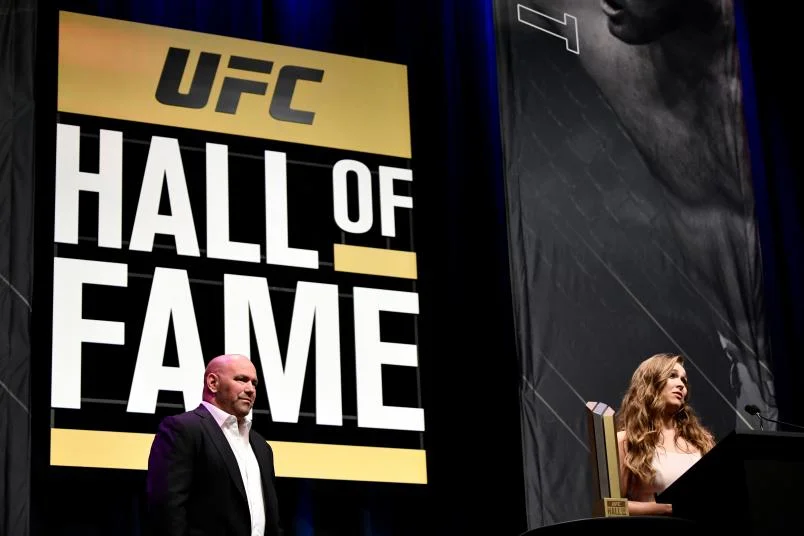
In 2023, he was inducted into the UFC Hall of Fame.
The later setbacks matter, but they do not change the role his championship years played in the UFC’s development or diminish the resurgence he experienced afterward.
Making Greatness an Attraction
Silva helped build the UFC by making extraordinary ability something audiences would return to watch.
His reign provided continuity as the promotion expanded. His highlights gave new viewers an immediate way to appreciate the skill involved. His connection with Brazil helped place a dominant UFC champion at the center of a broader national conversation.
He also gave opponents an opportunity that grew with every defense. Beating Silva meant more than winning a belt. It meant solving a fighter who had repeatedly made that task look impossible.
Anderson Silva made the UFC a place to watch someone test the limits of what a fighter could do. At his best, the question was not simply whether he would win, but whether anyone had seen a champion win quite like that before.
Explore the Building the UFC Series
From proving what worked inside the Octagon to bringing millions of new fans to the sport, these fighters helped shape the UFC at pivotal points in its history. Explore their stories:
- Royce Gracie
- Ken Shamrock
- Randy Couture
- Tito Ortiz
- Matt Hughes
- Chuck Liddell
- Forrest Griffin
- Georges St-Pierre
- Anderson Silva
- Ronda Rousey
- Conor McGregor