



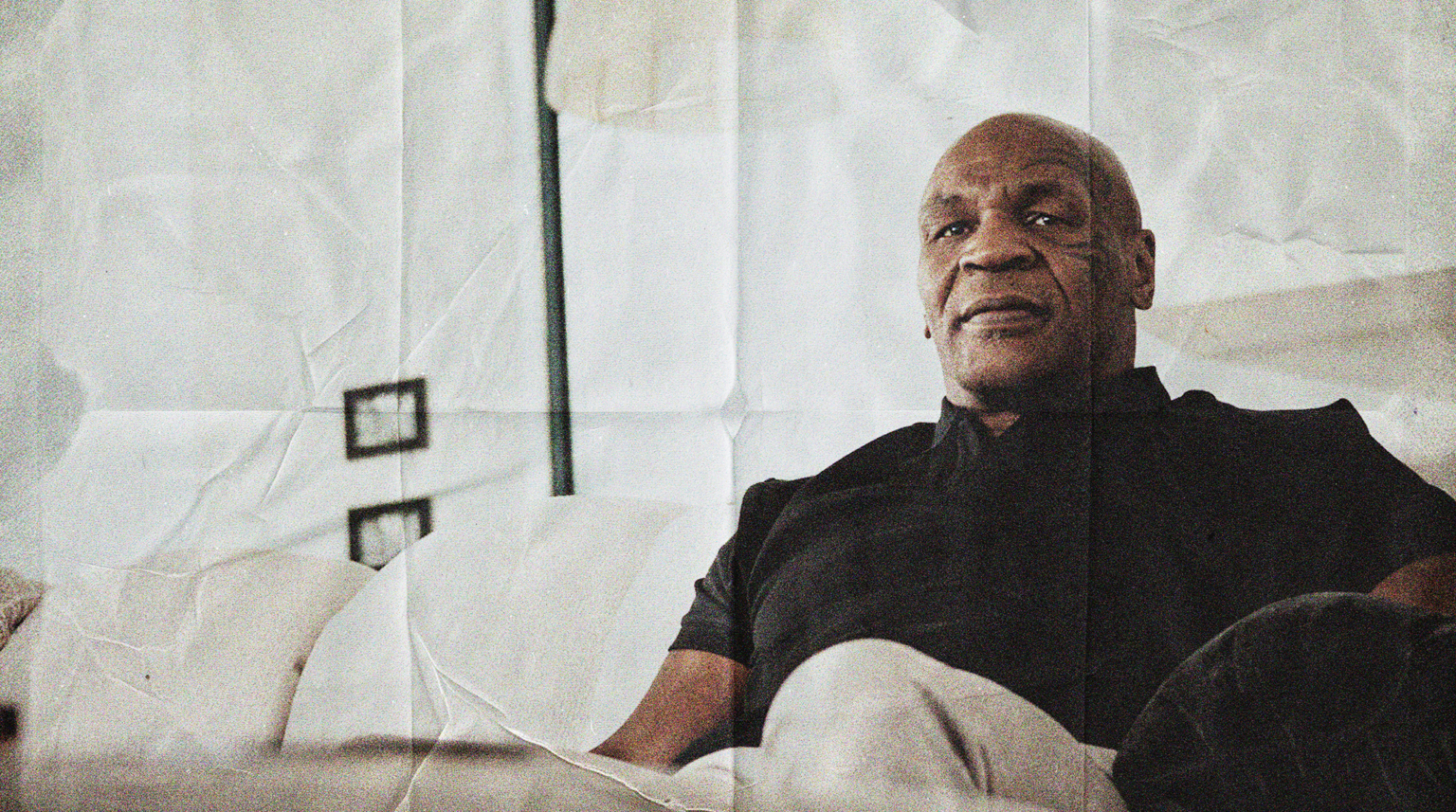

Netflix’s Mike Tyson documentary TYSON revisits the experiences that helped shape one of boxing’s most fascinating and polarizing figures. His life has been documented through countless interviews, headlines, and controversies, but the four-part series brings those familiar chapters together.
From the influence of his mentor, Cus D’Amato, to his struggles outside the ring, the series explores the personal battles behind his rise, downfall, and attempts at reinvention.
Here are five takeaways from the documentary and the moments that stand out.
How Cus D’Amato Gave Tyson a Sense of Belonging
Before Mike Tyson became the youngest heavyweight champion in boxing history, he was a troubled young boy in Brownsville, Brooklyn. TYSON explores how his relationship with legendary trainer Cus D’Amato became about far more than developing his raw, extraordinary punching power.
Tyson’s childhood was marked by bullying, trouble with the law, and a growing reputation for violence. But his love of pigeons also played a role in his early introduction to fighting. In the series, Tyson revealed that, after another boy killed one of his birds, he knocked him out, and his ability to hurt people with devastating force became apparent.
This path eventually led him to Tryon School for Boys, where his boxing potential began to emerge. Under the guidance of boxing coach Bobby Stewart, Tyson began developing the skills that would eventually lead him to D’Amato. His improvement extended beyond the ring, with Tyson making remarkable progress in his classes too.
D’Amato recognized his potential early, predicting that Tyson would become the youngest heavyweight champion in history. The legendary trainer also provided Tyson with structure, discipline, and a sense of family that the young boxer had struggled to find all his life. D’Amato took Tyson in along with other juvenile boys who were training to become boxers.
Tyson described the years between ages 14 and 18 as the best of his life. D’Amato’s illness and subsequent death came in late 1985, before the 19-year-old Tyson reached the pinnacle of heavyweight boxing, and that left a void that he struggled to fill.


The series highlights an important distinction in Tyson’s story. D’Amato did not simply help create a champion. He gave a troubled teenager a place to belong. In his absence, a whole new world of turbulence and instability in Tyson’s life opened up.
The Turmoil Behind Tyson’s Marriage to Robin Givens
Mike Tyson’s marriage to actress Robin Givens became one of the most controversial chapters of his life. It all culminated in allegations of domestic abuse, tensions over his career, and a televised interview that dramatically changed public perception of the heavyweight champion. In TYSON, Tyson and his inner circle revisit the events surrounding the marriage.
The series explores the tensions between Tyson, Givens, and her mother, Ruth Ropher, including Ropher’s involvement in the couple’s relationship and Tyson’s affairs. Journalist Wallace Matthews also recounts an encounter in which he was called into Ropher’s office and told that Tyson was abusing his wife, and Givens even appeared and confirmed the story herself. According to Matthews’ account, the allegations were ready to be published, only for the mother and daughter to subsequently retract their claims.
The controversy reached a wider audience during the couple’s 20/20 interview with Barbara Walters. Givens described her marriage as “torture, pure hell” and said she was “very, very much afraid” while Tyson sat right next to her. In the documentary, Tyson says he had expected a more conversational interview about their life together and felt blindsided by the discussion of their marriage.
Tyson also addressed the physical conflict within their relationship in the documentary, telling director Floyd Russ:
We fought each other. We fought, yes. I know people say, “She can’t fight you. You’re Mike Tyson.” But we fought.
The series further examines Tyson’s belief that Givens and her mother were trying to have him institutionalized by portraying him as mentally unwell. Tyson recalls being taken to Givens’ psychiatrist and being labeled a “manic depressive.” He says medication was prescribed.
When asked whether he was medicated during the Barbara Walters interview, Tyson responds:
Yes, probably. Antidepressants, I believe.
Tyson’s childhood friend, William ‘Ouie’ Fagan, expresses a similar suspicion about Tyson’s condition during the broadcast, saying:
They had to have him drugged up. I believe he was. He never said it, but I believe he was.
Decades later, Tyson says he harbors no resentment toward his ex-wife.
How do I feel about Robin today? I don’t have no hard feelings about her. I’m not angry at her. I don’t wanna fight with her. I didn’t make a bad decision there. I fell in love with somebody. I don’t look at that as a bad decision. S*** happens, you know? It was kind of bulls***, though, huh?
How Tyson’s First Loss Exposed His Vulnerabilities
For years, Tyson‘s reputation as a destructive force in the heavyweight division made him appear almost invincible. That aura collapsed on February 11, 1990, when James “Buster” Douglas stopped him in Tokyo, Japan, in one of boxing’s most famous upsets.
TYSON examines the circumstances surrounding the defeat, including Tyson’s lack of preparation, his pre-fight partying, and the admission that he entered the fight believing he could win without being in peak physical condition.
Tyson and his team underestimated Douglas, who was widely regarded as an unlikely challenger to the heavyweight champion. Douglas, fresh off the loss of his mother just three weeks prior, arrived in Tokyo prepared to seize his opportunity and produced a performance that would change both men’s careers.
Douglas knocked Tyson out in the 10th round, ending his unbeaten professional run. This also shattered the perception that his power and reputation could overcome any and all opponents. The result was more than a historic upset. It exposed the risks of allowing success to breed complacency, especially in a sport where preparation, conditioning, and concentration can determine the outcome of an exchange.
TYSON also features musician Bobby Brown reflecting on the night before the fight. Brown recalled how he and Tyson spent the evening drinking and partying together. His account adds to the series’ portrait of a champion whose focus had drifted from the challenge ahead.
Tyson’s loss also came during a period of growing instability outside the ring. The series connects his declining discipline with the personal and professional turmoil surrounding him, showing how his life was becoming increasingly difficult to manage.
Tyson’s Admission That He Was Addicted to Chaos
One of the most revealing threads running through TYSON is Tyson’s own admission that he became “addicted to chaos.” In the series, he notes that his earliest memories include him seeking attention. He then recalled a disturbing childhood incident that showed just how far he was willing to go just to be noticed:
Everybody was drunk, high, talking. And I wanted to be a part of that energy, and nobody would listen to me, so I tried to hurt myself. I had to put Drano on my thumb and put it in my mouth. And I had to go to the hospital.
The recollection offers a troubling glimpse into Tyson’s early experiences and his attempts to find a place within his surroundings. As the series showcases throughout the four parts, his need for attention would take different forms as he grew older.
During his professional career, Tyson became associated with a series of notorious incidents. His ear-bite disqualification against Evander Holyfield in their 1997 rematch remains one of boxing’s most infamous moments. Years later, a press conference ahead of his fight with Lennox Lewis descended into a physical altercation. This further reinforced Tyson’s reputation for volatility.
Reflecting on the person he became, Tyson acknowledges the darker side of his behavior:
This is the dark side of me. That’s just who I became. Addicted to chaos.
The series connects that admission with the attention and notoriety his controversies generated. His behavior could attract headlines and public fascination, even when it damaged his reputation or jeopardized his career.
The attention he struggled to receive as a child contrasts with the never-ending public scrutiny he experienced as an adult. That raises the question of whether becoming one of the most recognizable figures in sport ever truly gave him the sense of belonging that he had been searching for.
How Tyson Rebuilt His Life After Boxing
Tyson’s story did not end when his boxing career began to decline. His later years brought financial difficulties, personal tragedy, and serious struggles with substance abuse, forcing him to confront who he was outside the squared circle. The fame that had once defined his life could not shield him from the difficulties of adjusting to a world in which boxing was no longer his primary purpose.
One of the most devastating events explored in the series is the death of his daughter, Exodus, in 2009. The four-year-old passed away following an accident involving a treadmill at the family home. Tyson describes the profound impact of the loss and recalls relying heavily on cocaine and alcohol during that period.
In TYSON, the former heavyweight champion reflects on how he eventually moved away from those substances. He credited his experiences with 5-MeO-DMT, a powerful psychedelic he refers to as “the toad.” Tyson describes the experience as part of a broader attempt to confront himself and break free from his destructive behavior.
The documentary features an emotionally charged moment where Tyson takes the psychedelic, breaks down in tears, and reflects on his relationship with his identity. In a particularly surreal moment, Tyson even persuaded director Floyd Russ to take the substance alongside him.
The Search for Stability
TYSON revisits stories explored in earlier documentaries and shows about Mike Tyson, bringing familiar chapters of his life together across four parts.
What makes this four-part series compelling is the way it connects Tyson’s extraordinary sporting achievements with his personal struggles. It’s the juxtaposition of a man shaped by his astronomical fame and his attempts to find stability.
Ultimately, the series leaves viewers with a question that extends beyond boxing. After a lifetime spent in the spotlight, can Mike Tyson find lasting peace away from it?