


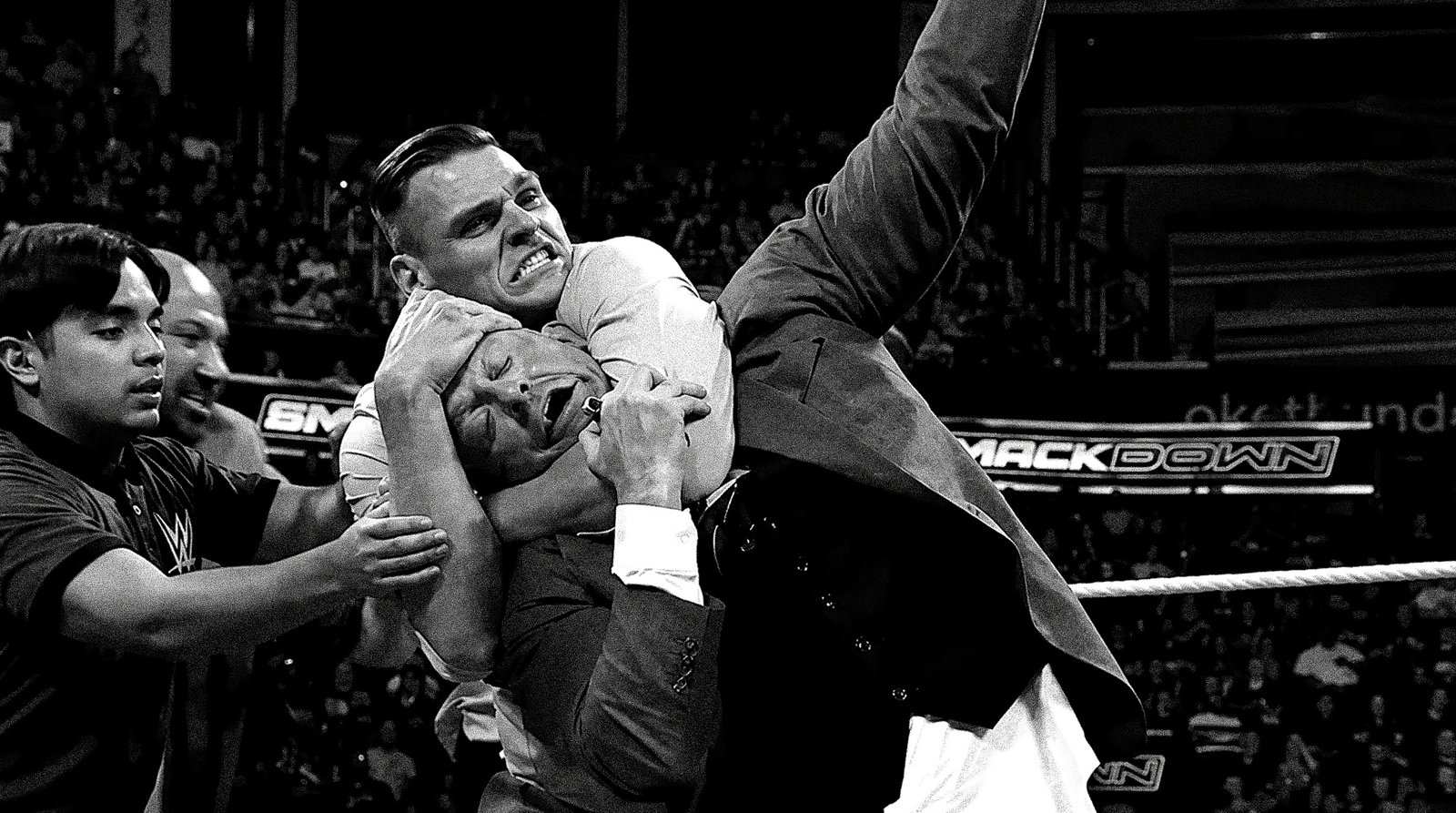

Gunther’s heel work is built around a frustrating proposition for wrestling fans. You want someone to shut him up, but you believe he can beat the person who tries.
For years, fans have debated who the best heel in the business is. Some point to the deafening boos. Others favor the sharpest insults, the most outrageous betrayals, or the ability to turn an entire arena against someone with a microphone.
Gunther makes his case through something more straightforward. His arrogance is backed by ability, and he uses that ability to punish the people fans want to believe in.
Gunther Believes His Own Hype
The strength of Gunther’s character is that he has evolved without abandoning what made him compelling in the first place. His presentation establishes him as a wrestler who expects to dominate. Every chop, every suplex, and every dismissive look reinforces his belief that the person across from him is beneath him.
His microphone work follows the same approach.
Gunther rarely needs to shout to make a threat feel serious. He speaks with the confidence of someone who considers the outcome obvious. An opponent might have the crowd, a celebrated career, or an emotional reason to win. Gunther treats none of those things as evidence that they can beat him.
That gives his arrogance a foundation. Fans can reject his attitude while recognizing the danger he presents.
His victories also give him ammunition. Beating a beloved opponent is one thing. Returning to remind everyone that their support couldn’t save that opponent makes the result part of the next confrontation.

The Career Killer
Gunther’s matches against Goldberg and John Cena gave that approach an especially cruel edge.
He defeated Goldberg in his farewell match in July 2025. In December of that year, he made Cena submit in the final match of Cena’s retirement tour.
Neither occasion needed an elaborate explanation of what was at stake emotionally. Fans were watching performers whose careers had shaped their relationship with wrestling. The farewell itself gave them a reason to care.
Gunther was the obstacle to a happy ending.
Cena’s defeat was particularly effective because submission cut against the perseverance so closely associated with his character. Gunther could do more than claim he had beaten Cena. He could remind fans how he had beaten him.
His subsequent mockery extended the resentment beyond the match. The result was already painful for Cena’s supporters. Gunther’s satisfaction gave them another reason to want someone to repay him.
The “career killer” identity gives his accomplishments an emotional cost. His résumé contains moments other people would rather remember differently.
Making the Mismatch Matter
His match with Pat McAfee at Backlash 2025 demonstrated another strength of that presentation.
The appeal didn’t depend on treating McAfee as Gunther’s equal. The imbalance helped establish the stakes. McAfee was stepping into a confrontation with someone whose offense made the consequences easy to imagine.
Gunther’s credibility gave the audience a reason to worry about what would happen once the bell rang.
That is a valuable quality in a heel. A rivalry doesn’t always need championship implications to create investment. Sometimes, a vulnerable opponent and a believable threat are enough.
The challenge is giving fans enough resistance to support without erasing the danger. Gunther’s style makes even small moments of defiance feel costly. Getting back up means risking another chop. Fighting back means inviting another punishing exchange.
Every Comeback Has to Be Earned
Some viewers find Gunther’s deliberate pace less exciting than a faster, more spectacular style. But that pace serves his character.
He makes opponents work for openings. He interrupts their momentum, punishes their mistakes, and forces them to fight through exchanges that seem to favor him.
For the audience, that creates a reason to watch each attempt at a comeback. A successful strike or an escape can feel significant because Gunther has established how difficult progress will be.
His opponents don’t need to dominate him to give the crowd hope. They need to show that his control can be broken.
That also makes his arrogance vulnerable. When someone survives what he expected to finish them, the match begins challenging his view of himself. Fans get to watch an opponent fight for the victory while Gunther fights to preserve his superiority.
A Villain Worth Beating
Being a great heel involves more than drawing the loudest boos. The reaction needs somewhere to go. Fans need a reason to invest in the person trying to beat you.
Gunther gives them that reason through the relationship between his words and his wrestling. He promises punishment, delivers enough of it to remain credible, and makes his success unpleasant for anyone supporting the other side.
He doesn’t have to win every match for that approach to work. The possibility of defeat is part of the appeal. Every opponent offers another chance to see his certainty collapse.
Gunther makes being the villain look simple because so much of his character serves the same purpose. He gives fans a wrestler they can believe in and an outcome they want to resist.
The better he proves himself to be, the more satisfying it becomes to watch someone beat him.