


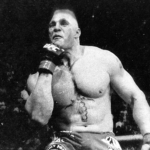

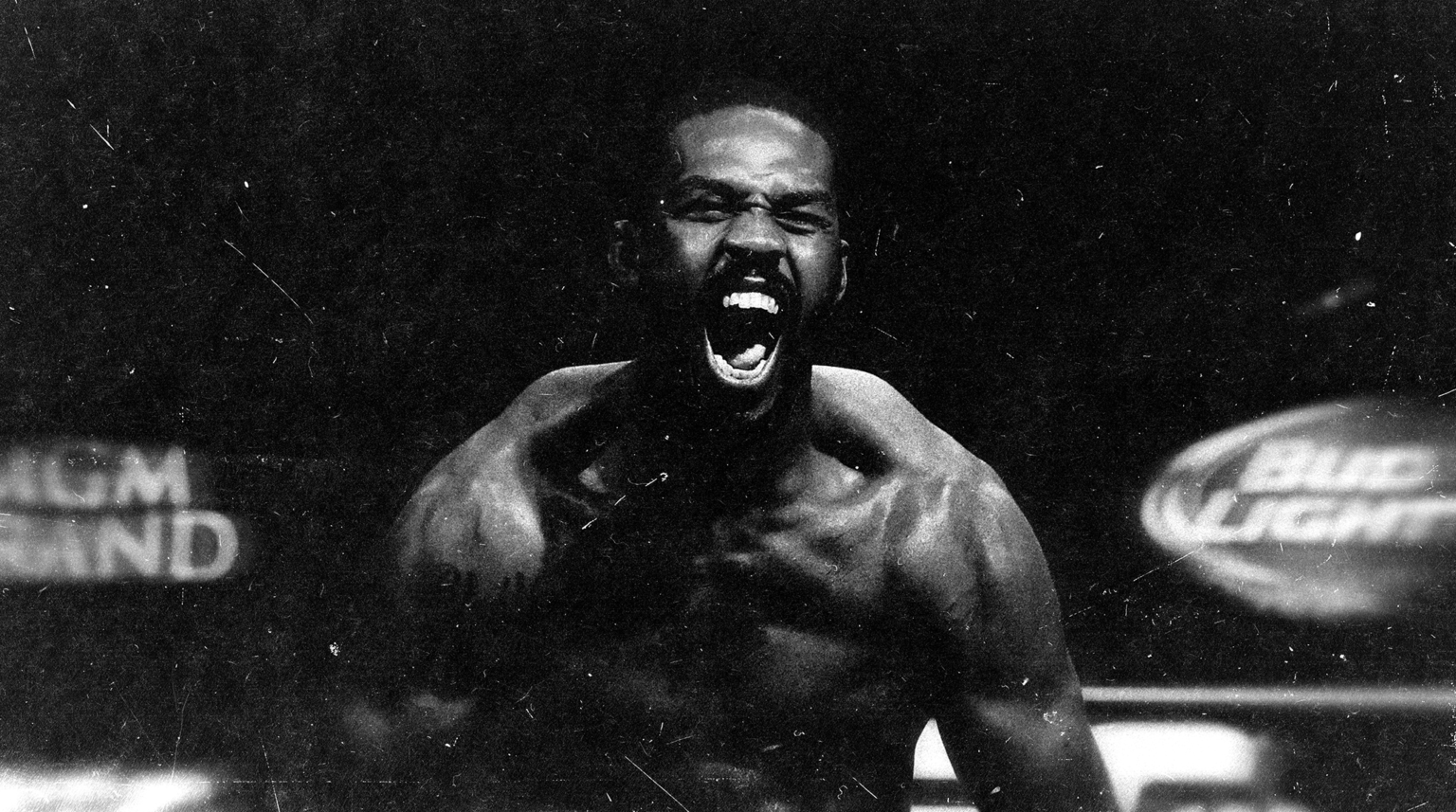

Jon Jones helped the UFC sell the possibility of watching an exceptional fighter make history. His championship rise was so fast, and his performances against established stars so convincing, that each new challenger brought a question larger than who would hold the belt.
How good could he become, and who could stop him?
That interest eventually produced major business. Rivalries with Rashad Evans and Daniel Cormier turned championship fights into personal confrontations, giving viewers reasons to watch beyond an appreciation of technique.
His contribution also came with disruption. Failed drug tests, a result overturned, and championship interruptions complicated what the UFC could build around him.
Jones became one of the promotion’s defining attractions through both the level he reached and the investment audiences made in seeing him challenged.
A New Champion Takes Over
At UFC 128 in March 2011, Jones stopped Mauricio “Shogun” Rua to win the light heavyweight championship. He was 23, making him the youngest champion in UFC history.
The performance mattered as much as the age. Rua was an established champion with an elite reputation. Jones overwhelmed him, making a major change at the top look startlingly decisive.
His approach gave opponents problems at nearly every distance. Long kicks and unpredictable strikes complicated their attempts to close in. Wrestling, trips, and elbows made reaching him no guarantee of finding a comfortable position.

He could be creative without losing control of the fight. Techniques that looked unusual were part of an approach that repeatedly denied opponents the exchanges they wanted.
Before the year ended, Jones had submitted former champions Quinton “Rampage” Jackson and Lyoto Machida. In one championship year, he had beaten three fighters who had already helped define the division.
The UFC had a young champion whose performances made future possibilities feel unusually expansive. Fans were watching someone establish his place among fighters they already knew.
When Championship Stakes Became Personal
Jones’s fight with Rashad Evans gave that competitive rise a different kind of appeal.
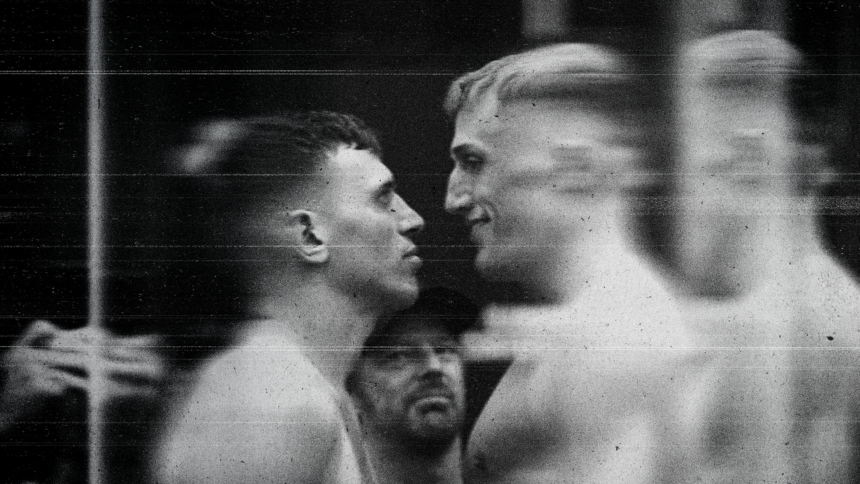
The former training partners became opponents, with their fractured relationship providing a personal story behind the championship matchup. Familiarity added tension. Evans knew the fighter he was challenging, and Jones had to defend his position against someone who had once shared his gym.
At UFC 145 in April 2012, Jones won a unanimous decision. The event reportedly generated approximately 700,000 pay-per-view purchases.
That result provided an early demonstration of his commercial potential. His ability supplied the championship stakes, and the relationship between the fighters made the contest accessible to viewers who did not need a technical explanation to understand the conflict.
Jones could draw interest through admiration, resentment, or curiosity. An audience did not have to agree about him to want to see what happened when the cage closed.
A Challenger Makes Greatness Look Difficult
Alexander Gustafsson supplied a different test at UFC 165 in September 2013.
His movement, boxing, and ability to compete with Jones in the wrestling exchanges made the champion look more vulnerable than audiences had become accustomed to seeing. Jones had to respond under sustained pressure across five rounds.
He retained the title by unanimous decision after a demanding, closely contested fight. Their performance later entered the UFC Hall of Fame’s Fight Wing.
The fight added something important to Jones’s appeal. Dominance could make a champion impressive while making individual defenses feel predictable. Gustafsson showed that a challenger could force Jones into a contest whose outcome remained uncertain deep into the fight.
Jones’s response gave fans another way to assess him. They had seen how effectively he could overwhelm opponents. Now they had watched him make adjustments when an opponent refused to be overwhelmed.
For the UFC, both kinds of performance had value. The champion could offer a display of extraordinary ability or become part of a compelling struggle to retain his place.
The Rivalry That Delivered Major Business
Daniel Cormier brought the combination of credentials and personal hostility that made a Jones fight feel especially consequential.
Their rivalry gave audiences two elite competitors who wanted more than possession of the same belt. Each wanted to establish his superiority over someone he openly disliked.
Jones won their first meeting at UFC 182 in January 2015 by unanimous decision. Early reporting estimated between 740,000 and 820,000 pay-per-view purchases, making it the UFC’s strongest estimated result in roughly a year.
Their eventual rematch at UFC 214 in July 2017 was estimated at approximately 860,000 purchases. Those figures belong to the matchup and the wider card, with Cormier essential to the rivalry’s appeal. They nevertheless demonstrate that Jones could help deliver substantial business.
The rematch initially ended with Jones stopping Cormier. Following a positive drug test, the California State Athletic Commission overturned the result to a no-contest.
Success Interrupted
Jones’s first championship reign ended outside the Octagon. In April 2015, the UFC suspended him and stripped his title amid the fallout from a hit-and-run incident.
Another interruption followed in 2016. His scheduled rematch with Cormier was removed from UFC 200 after a potential anti-doping violation. The case resulted in a one-year suspension.
The separate violation associated with UFC 214 produced a 15-month sanction. In that case, the arbitrator found that Jones had not intentionally cheated, but the violation and its consequences remained.
These episodes affected the UFC directly. Championship plans changed, opponents lost scheduled opportunities, and major events required adjustments.
They also complicated assessments of his competitive legacy. Fans could recognize his ability while questioning how to assess a résumé interrupted by anti-doping sanctions.
Another Division, Another Reason to Watch
Jones regained the light heavyweight championship against Gustafsson in December 2018 and defended it before vacating the belt in 2020.
His move to heavyweight created a new question around a familiar attraction. Would the advantages that had made him so effective at light heavyweight translate against larger opponents?
At UFC 285 in March 2023, Jones submitted Ciryl Gane in just over two minutes to win the vacant heavyweight championship. After three years away from competition, he had added a second division’s title to his career.
He defended against Stipe Miocic at UFC 309 in November 2024, winning by third-round stoppage. The matchup placed his pursuit of further championship recognition opposite an accomplished former heavyweight champion.
In June 2025, the UFC announced Jones’s retirement and elevated interim champion Tom Aspinall to undisputed champion. Jones re-entered the promotion’s drug-testing pool the following month, leaving open the possibility of another return.
Jones had won his first UFC championship in 2011 and successfully defended the UFC heavyweight title in 2024. Across that span, he defeated opponents from different generations and remained a major attraction. His move to heavyweight gave the promotion another chapter in a championship career audiences had followed for more than a decade.
An Attraction Across Generations
Jones gave the UFC a championship story that lasted across generations of opponents. He defeated established stars to reach the top, turned away challengers seeking to replace him, and eventually won a title in a second division.
His rivalries added commercial power to those achievements. Evans and Cormier brought personal stakes, while Gustafsson showed how compelling a fight could become when Jones had to battle to retain his championship. Different opponents gave audiences different reasons to watch.
The longevity made each new challenge more meaningful. By the time Jones reached heavyweight, viewers had more than a decade of performances against which to measure him. The UFC could promote his next fight through both the opponent in front of him and the history he brought into the cage.
Jon Jones helped build the UFC by sustaining interest in what an exceptional champion could accomplish. From winning the light heavyweight title at 23 to defending the heavyweight championship more than 13 years later, he kept giving the promotion achievements to sell and audiences a reason to watch.
Explore the Building the UFC Series
From proving what worked inside the Octagon to bringing millions of new fans to the sport, these fighters helped shape the UFC at pivotal points in its history. Explore their stories:
- Royce Gracie
- Ken Shamrock
- Randy Couture
- Tito Ortiz
- Matt Hughes
- Chuck Liddell
- Forrest Griffin
- Georges St-Pierre
- Anderson Silva
- B.J. Penn
- Brock Lesnar
- Jon Jones
- Ronda Rousey
- Conor McGregor