




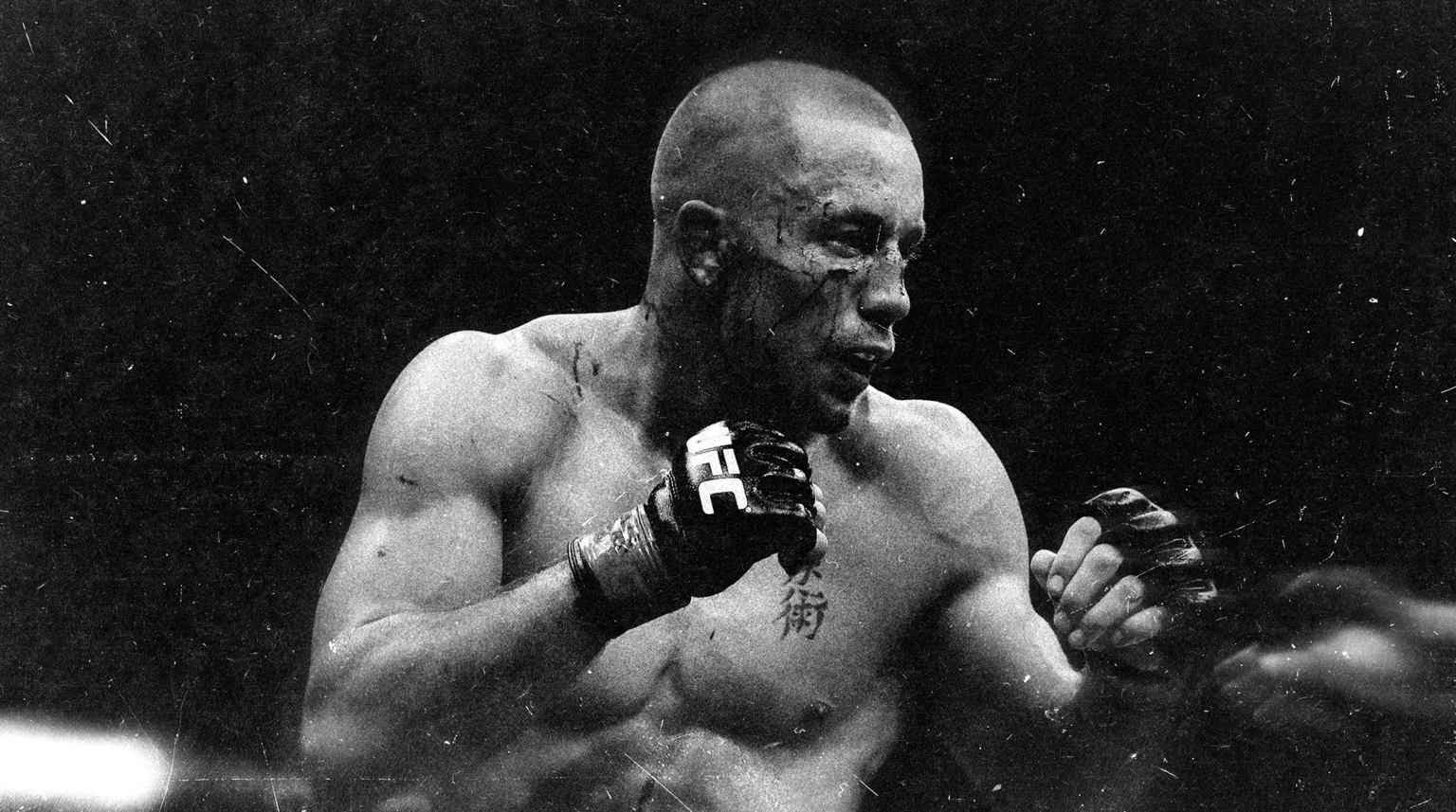

Georges St-Pierre gave Canadian fans a champion to rally around and the UFC a star who could help turn that support into something much bigger. His rise brought together sustained excellence, national pride, and a connection with audiences that extended beyond the Octagon.
The promotion had staged international events before his arrival, but St-Pierre helped demonstrate how deeply it could establish itself in another country. With a Canadian headliner competing at the highest level, a UFC championship fight became a homegrown sporting occasion.
His contribution was visible in packed arenas, a landmark stadium event, and a championship reign that gave fans a reason to keep watching. Canada already had an MMA community. St-Pierre helped bring it to a much larger stage.
A Champion Canada Could Rally Around
St-Pierre made his UFC debut on January 31, 2004, defeating Karo Parisyan at UFC 46. The young fighter from Quebec entered a welterweight division where Matt Hughes was the established standard, and his first opportunity to challenge that standard ended in defeat.
Hughes submitted him later that year at UFC 50. St-Pierre worked his way back, eventually stopping Hughes in their rematch at UFC 65 in 2006 to become welterweight champion.
Canada had already produced a UFC champion in Carlos Newton. St-Pierre built on that foundation, giving the country another elite fighter whose ambitions could draw fans into the sport.
His appeal also extended beyond his nationality. He was athletic, technically versatile, and visibly committed to improving. His respectful public manner offered an approachable introduction to a sport still fighting stereotypes about the people who competed in it.
Then came the setback that made his championship story more complicated.


Matt Serra stopped St-Pierre at UFC 69 in 2007, ending his first reign in his opening defense. Reaching the top had not made him untouchable. For fans following his rise, the question became whether he could recover and establish himself there again.
The answer would arrive on home soil.
Bringing the Octagon to Canada
The UFC held its first Canadian event at UFC 83 in Montreal in April 2008. St-Pierre headlined against Serra, bringing a personal opportunity for redemption into the center of a national milestone.
He stopped Serra in the second round to unify the welterweight championship. The promotion’s Canadian debut ended with its biggest homegrown star reclaiming his place at the top.
The pairing mattered. The UFC was bringing its product into a new live market, but fans already had a relationship with the fighter leading the card. They understood his ability, had watched his setback, and could now participate in his return.
That connection helped make the event more than an imported spectacle. There was a local story at its center, with stakes that extended beyond discovering who would win a fight.
St-Pierre did not single-handedly create Canadian interest in MMA. Fighters, gyms, regional promotions, and fans had already built a foundation. His success gave that community a highly visible representative and the UFC a compelling headliner for its arrival.
A Stadium-Sized Statement
The clearest demonstration of that relationship came at UFC 129 on April 30, 2011.
St-Pierre defended his title against Jake Shields at Toronto’s Rogers Centre in front of 55,724 fans. The event established a UFC attendance record at the time and generated a reported gate of approximately $12 million.
Those figures made the scale of Canadian demand difficult to dismiss. The UFC could build a stadium event around its welterweight champion and draw an audience far beyond the capacity of its usual arenas.
St-Pierre defeated Shields by decision, adding another successful defense to his reign. But the image of the packed Rogers Centre carried significance beyond the result. It showed what the promotion could achieve when an established fan base, a major event, and a national sporting figure came together.
For a company pursuing international growth, that was a powerful example. Expanding into a market meant more than booking a venue. Giving audiences someone they cared about could make the event feel like theirs.
St-Pierre supplied that connection while continuing to meet the competitive demands that made it sustainable.
Excellence That Sustained the Interest
National pride could bring attention to St-Pierre, but his performances gave it staying power.
After regaining the undisputed welterweight championship, he completed nine consecutive successful defenses. His opponents included B.J. Penn, Thiago Alves, Dan Hardy, Josh Koscheck, Carlos Condit, and Nick Diaz.
His game also illustrated how sophisticated MMA had become. Striking, wrestling, and positional control worked together. Opponents had to prepare for the transitions between them as much as the individual techniques.
St-Pierre could use the threat of a takedown to create striking opportunities, then change levels when an opponent committed to defending his punches. His ability to dictate where and how exchanges happened made him difficult to solve.
That approach did not always produce the dramatic finishes some viewers wanted. It did, however, establish a sustained standard of championship performance. Challengers brought different strengths, and St-Pierre repeatedly found ways to limit them.
For the UFC, his consistency meant that its Canadian star remained relevant across years of growth. His audience had a continuing story to follow, with each defense testing how long he could remain ahead of the division.
A Legacy Beyond One Division
St-Pierre stepped away after defeating Johny Hendricks in 2013. Nearly four years later, he returned at UFC 217 and submitted Michael Bisping to win the middleweight championship.
The victory made him a UFC champion in two weight classes and provided a remarkable final competitive chapter. He finished his professional career with a 26-2 record, having avenged both defeats.
His place in Canadian sports also extended beyond the promotion’s own recognition. In 2023, he became the first MMA fighter inducted into Canada’s Sports Hall of Fame, another indication of how far his influence had reached.
Arguments about the greatest fighter of all time will continue, but his importance to building the UFC does not depend on winning that debate.
St-Pierre helped turn Canadian enthusiasm into landmark events. He gave the promotion a champion whose professionalism broadened its public image and whose sustained success kept fans invested.
Canada was already part of MMA’s story. Georges St-Pierre helped make it central to the UFC’s growth.
Explore the Building the UFC Series
From proving what worked inside the Octagon to bringing millions of new fans to the sport, these fighters helped shape the UFC at pivotal points in its history. Explore their stories:
- Royce Gracie
- Ken Shamrock
- Randy Couture
- Tito Ortiz
- Matt Hughes
- Chuck Liddell
- Forrest Griffin
- Georges St-Pierre
- Anderson Silva
- B.J. Penn
- Brock Lesnar
- Jon Jones
- Ronda Rousey
- Conor McGregor